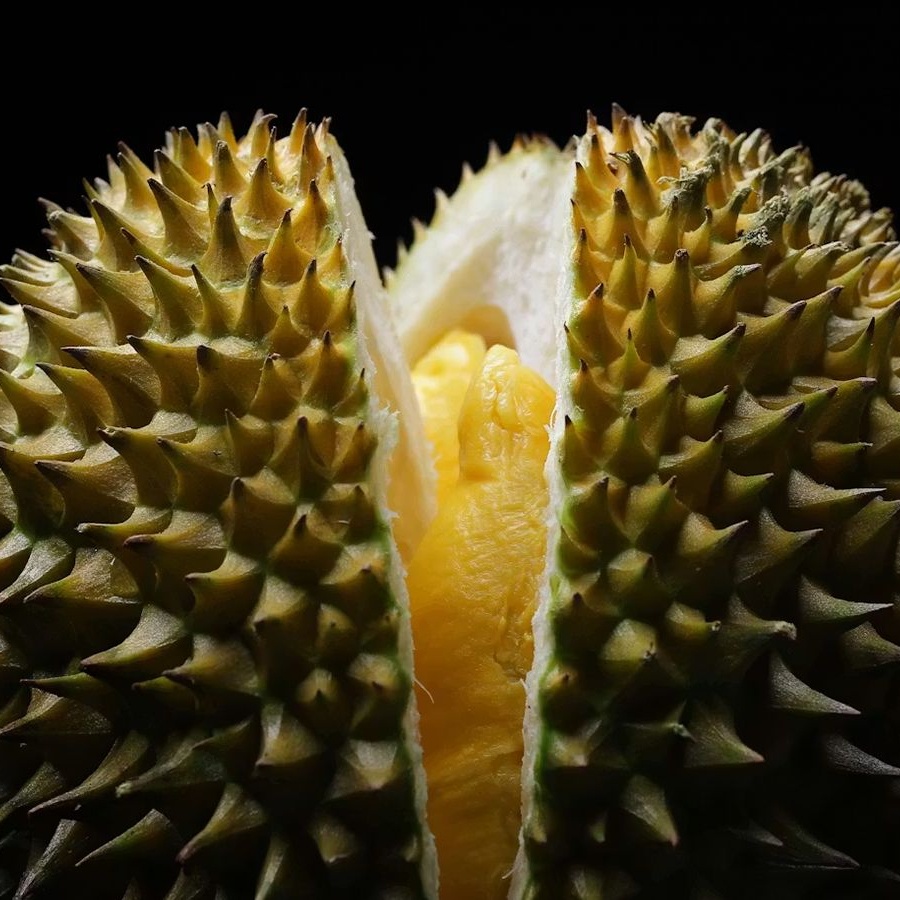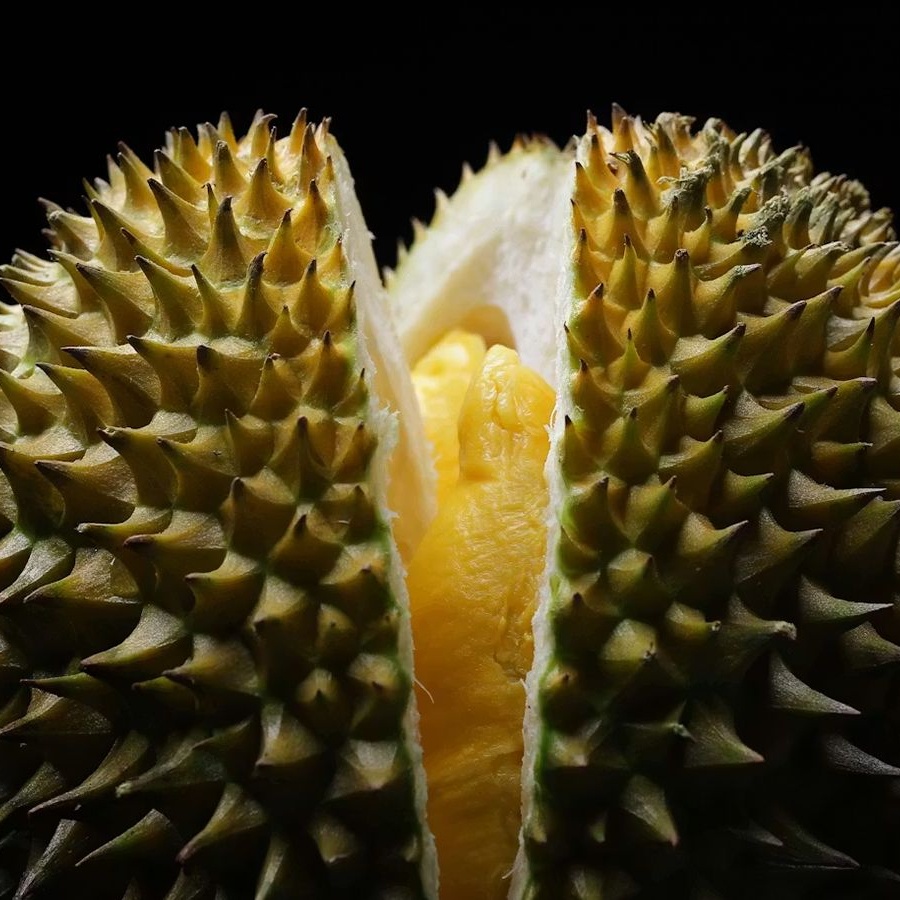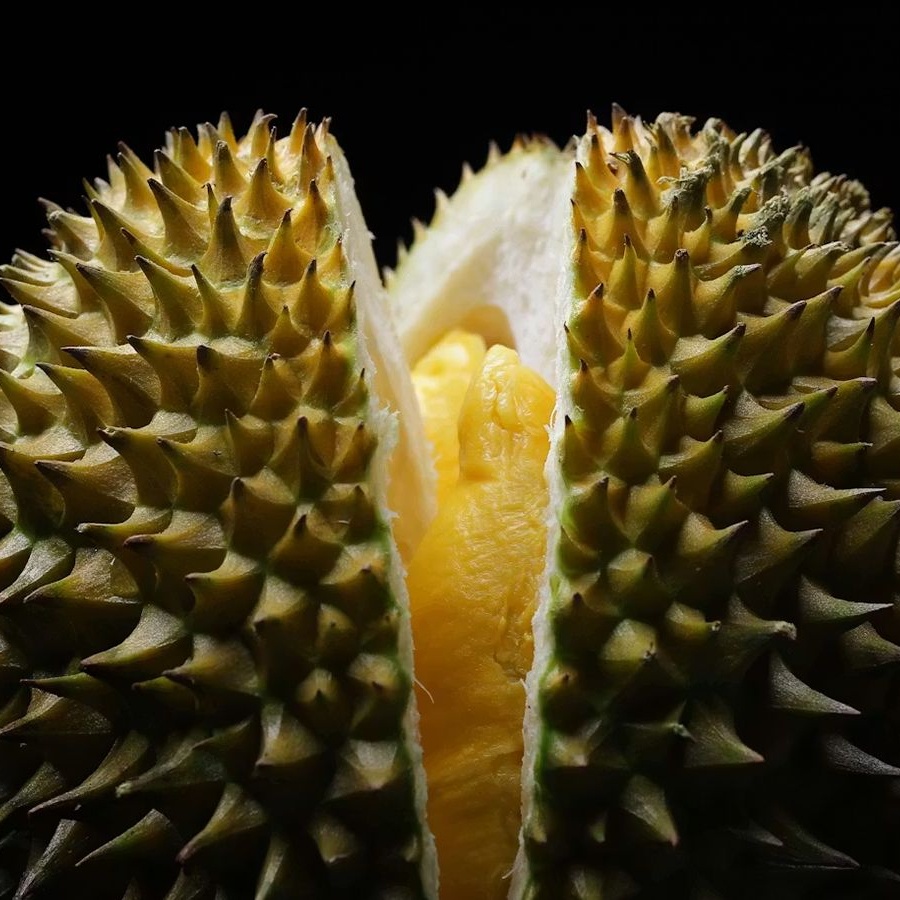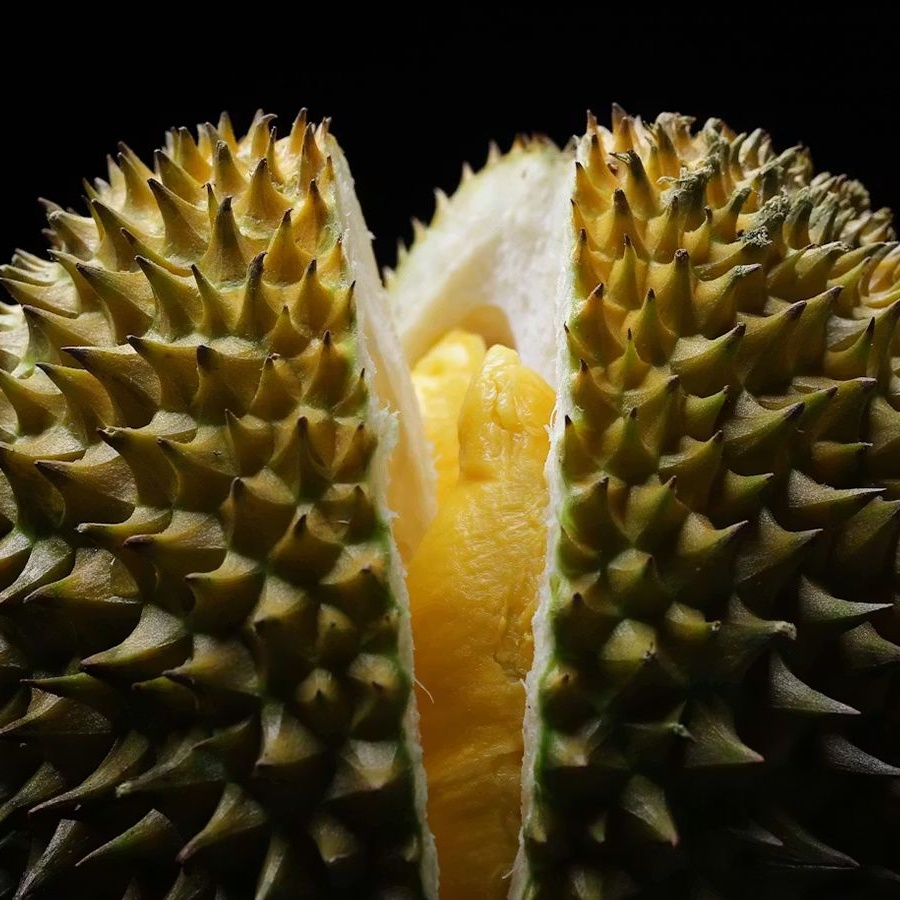





The first thing everyone tells you about durian is how it smells. Long before I first landed in Singapore, I had read all about its funky folklore. Onions. Garlic. Drains. Sewage. Gym socks. Gas leaks. Or as Anthony Bourdain put it: “Like French kissing your dead grandmother.”
As a food writer, I thought I’d encounter it once, taste it, and probably be done with it. Instead, I found an entire city celebrating it.
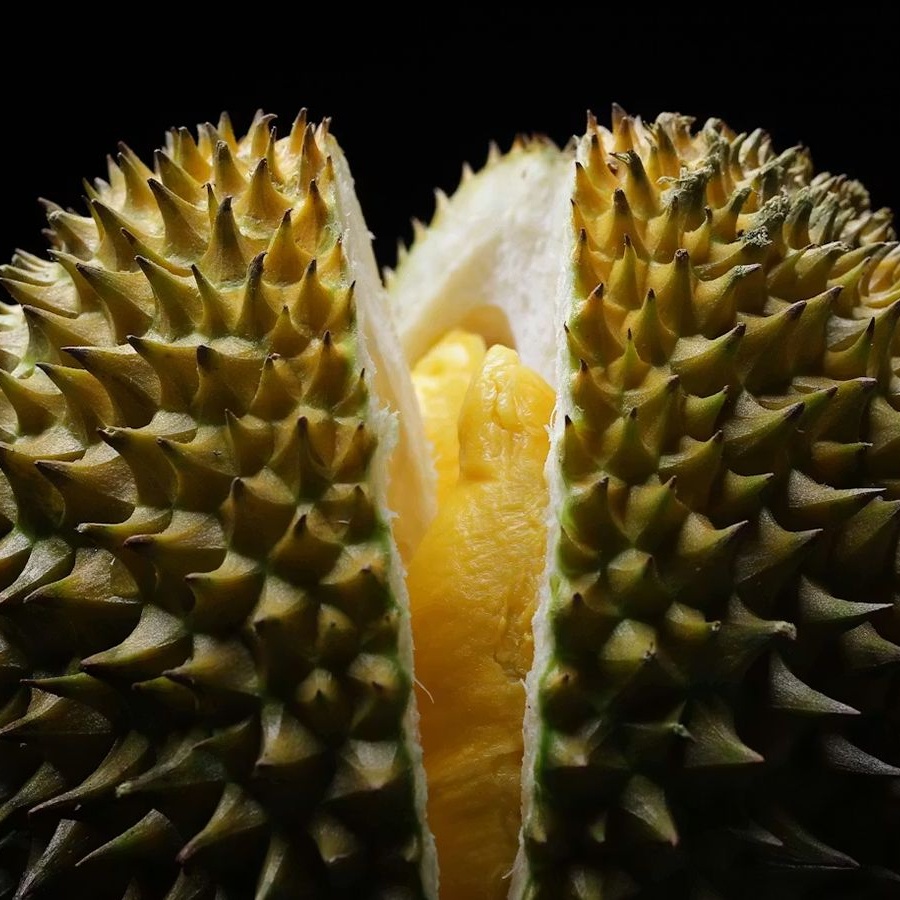
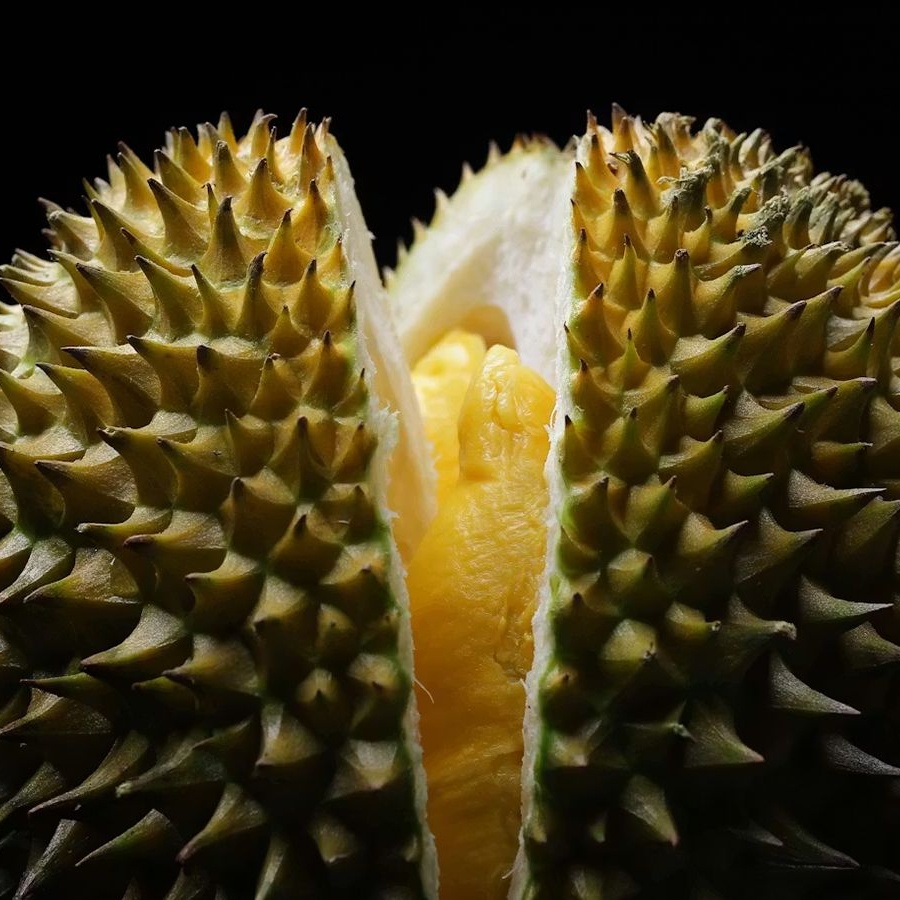
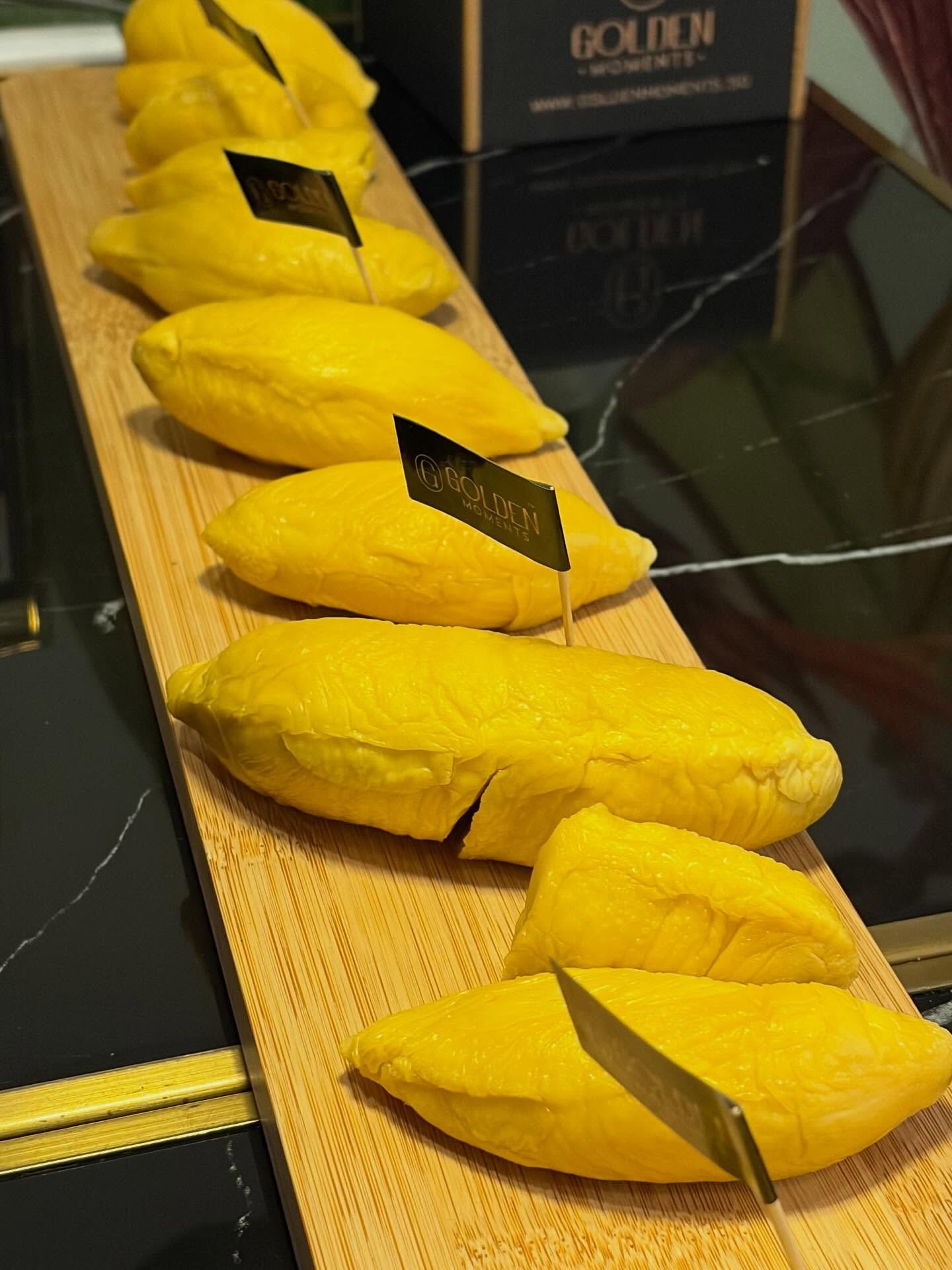
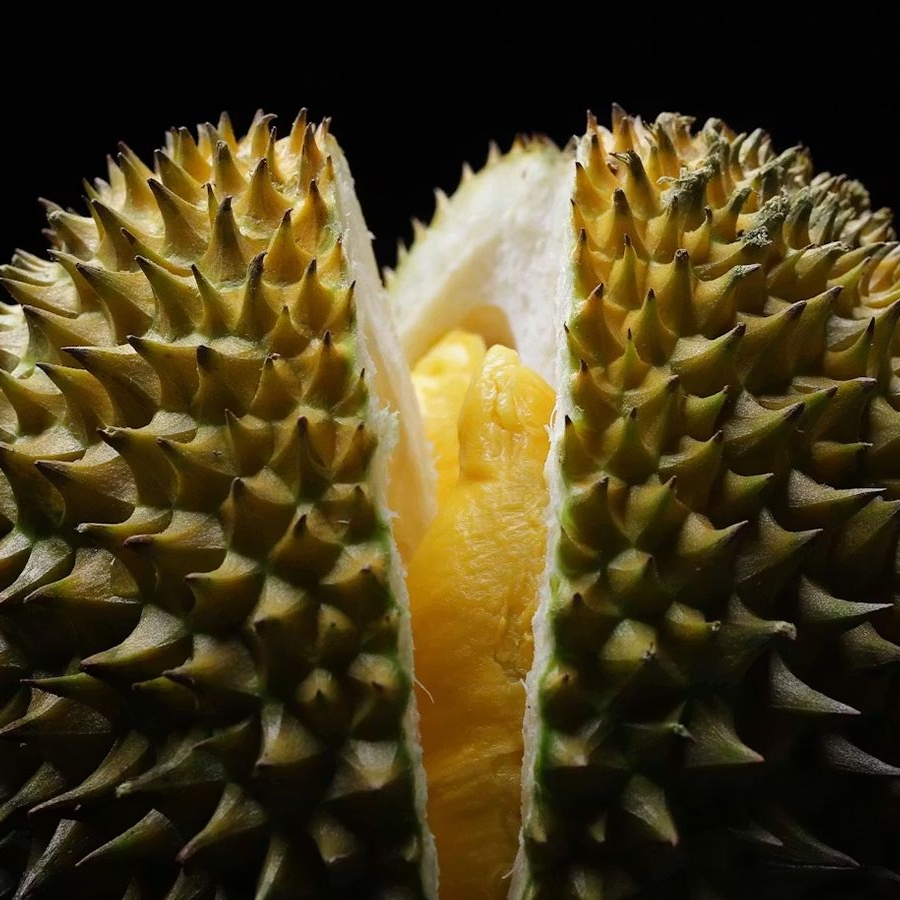
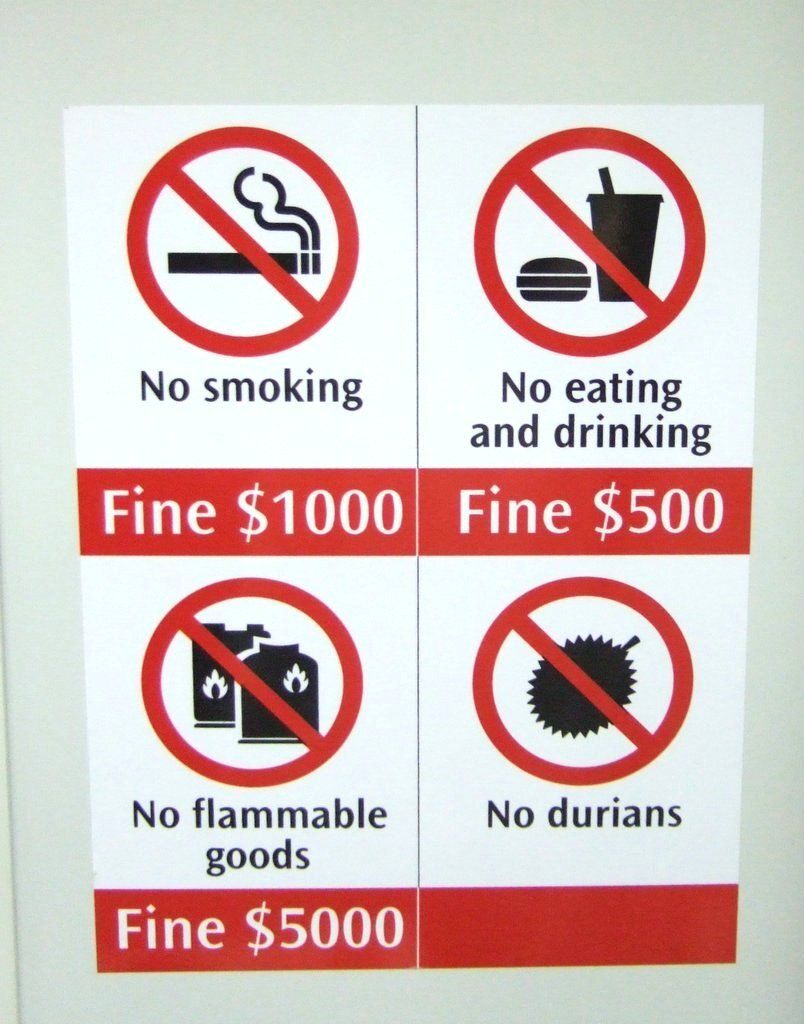
But even before I’d tasted the controversial fruit, I’d photographed the famous “No Durian” sign on the MRT, assuming it was a joke. It was, after all, the same country where I watched queues form outside durian stalls, and curiously peeked into pop-ups at malls (yes, even on Orchard Road) across the city during summer (the fruit’s annual peak season arrives in June). I walked through airport shops heaving with freeze-dried durian, durian chips, durian sweets, durian kaya, and other toned-down versions of the fruit that were allowed to travel while the real thing wasn’t. I hadn’t yet eaten the fresh fruit of legend: the pale yellow custardy lobes prised from a spiky shell. Yet, somehow, like many people who haven’t eaten it yet, I already had a story about it in my head.
I expected to dislike it.
Instead, the initial jolt wasn’t much worse than my first encounter with hing. I took another bite, met its creamy complexity, and went back for more.
As per Year of the Durian, Singaporeans have the highest per capita consumption of durian in the world and import over 22,000 tonnes of durian every year from Malaysia. The real story of durian, it turns out, begins millions of years before Singapore.
Scientists believe durian’s ancestors arrived in southeast Asia from the Indian subcontinent on the same tectonic collision that eventually raised the Himalayas. (And no, it’s not related to jackfruit or breadfruit, despite their similar exteriors.) Long before humans prized its flesh, bats pollinated its flowers, forests kept the species alive, and its name, from Malay, simply meant ‘thorn’. By the time humans entered the picture, the fruit was already famous. Durian appears carved into the walls of Borobudur in 9th-century Java. Chinese and Arab traders wrote about it centuries later. In the 1850s, English anthropologist Alfred Russel Wallace devoted an ecstatic passage to its flavour, comparing it to cream cheese, sherry, and onion sauce before declaring it “worth a voyage to the East”. More than 170 years later, Singaporean livestreamer Raay Lim can generate thousands of dollars in durian sales through his TikTok livestreams. Same fervour, different platform.
Today, the premium Musang King variety from Malaysia’s Pahang highlands commands eye-watering prices in Singapore. The old snobbery about its smell survives mostly as hotel policy. Guests have been billed hundreds of dollars for eating durian in their rooms.
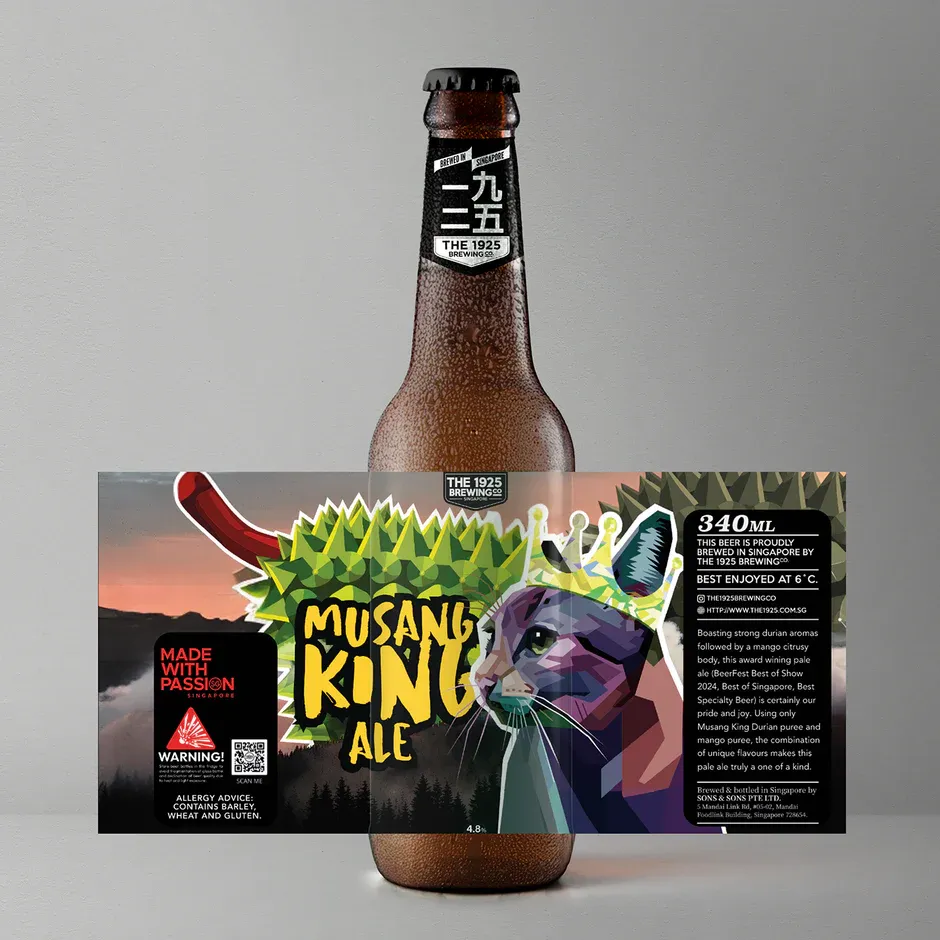
Even the fruit’s names tell stories. The beloved Musang King durian (also locally called Mao Shan Wang, or MSW—literally, Cat Mountain King), for instance, takes its name from the civet cat, an animal with an enduring fondness for fallen ripe durians, with a solid biological side effect. For millions of years, civets, orangutans, elephants, and tapirs dispersed durian seeds across southeast Asia. Humans have only professionalised the distribution network and started charging by the kilo.
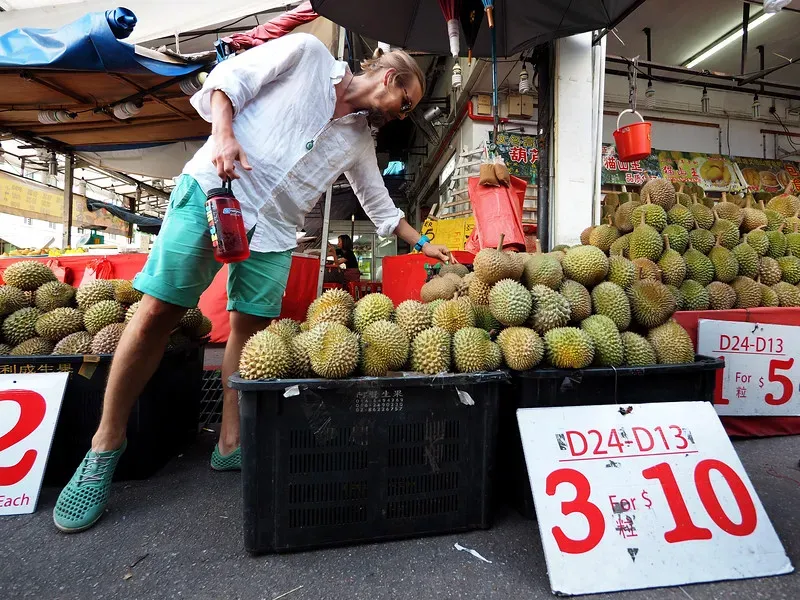
Last July, I found myself on a plastic stool off Geylang, Singapore’s only legally designated red-light district, wearing clear plastic gloves and happily scooping glossy yellow lobes straight from the shell with all the decorum of a ravenous primate. Durian has two seasons: the summer bounty from June to early September, and a smaller one kicking off between November and December. I was there smack in the middle of the fruit frenzy. Around me, shells landed in overflowing bins with satisfying thuds. Vendors wielded machetes with practised efficiency, splitting open mountains of spiky fruit. And customers inspected pale yellow lobes with the seriousness of wine collectors discussing vintages. To call this mere shopping is to minimise this seasonal ritual. Every few feet, another handwritten sign announced a different variety and another price: Musang King. Black Gold. Red Prawn. D24. Butter. S$20. S$25. S$30. S$38.
The funny thing about durian is that your first bite isn’t really the determining one. It’s the third or fourth, when your brain gives up trying to file it under something familiar. It isn’t cheese or chives, custard or caramel, a jackfruit dupe or anything else that might make it fit into a neat slot. Durian becomes its own thing. In Geylang, I wasn’t trying to compare it with anything anymore. I was eating it because I wanted another bite, and another. I was pointing at other crates of spiky fruit and asking what made them different.