R.I.P.17 Mar 20268 MIN

Whatever happened to the big, beautiful, body positivity movement?

Between the shrinking celebrities and our acute surveillance of them, the answer is a bit more nuanced than the discourse in the comment sections

Image

Images: Getty

It’s been a few years since Mindy Kaling unlocked a level of slenderness that Kelly Kapoor could have only dreamt of, but what she can’t seem to shed is the public scrutiny. Last night, she appeared at the Vanity Fair Oscar Party in custom Elie Saab, looking delectable. “Ruined,” someone declared in the comments section, referring to her changed look. She’s hardly the only one. Someone begged Best Actress nominee Emma Stone, looking incandescent and two-dimensional in a celestial Louis Vuitton gown, to eat a burger. They espied Demi Moore shaking in a black-and-emerald Gucci gown and worried that she’d taken “The Substance deal a bit too far”. Elsewhere, there was near-unanimous praise for Melissa McCarthy glittering like a chandelier on the red carpet because her “body was finally bodying”. The judgement, good or bad, follows them all like that pesky last kilo.

The Oscars red carpet unrolled last night with the inevitable parade of Hollywood names, but maybe it’s a sign of the times that the hottest speculation now appears not to be about who they’re wearing, dating or losing an award to but about who’s on Ozempic and who is prescribing it to them. Hawk-eyed fans and trolls are now poring over waist and bust lines, zooming in on their under-chins and biceps, wondering aloud if Pedro Pascal has lost something more than his moustache, or if Margot Robbie’s sunken cheeks at the Chanel show some weeks ago were due to buccal surgery or weight loss drugs. Not in attendance? Body positivity—that great, hard-won project of the last decade. Heroin chic, Ozempic and the return of size-zero models on runways: woefully, it would appear, thin is back. But did thin ever really leave?

For a glorious, briefly hopeful stretch of time, it genuinely seemed like the conversation about women’s bodies was shifting. By 2010, body positivity was roaring on Instagram, with plus-size models like Nadia Aboulhosn, Gabi Fresh, and Tess Holliday reigning supreme. Then came the Kardashians, with Kim’s surgically enhanced curves—alongside Beyoncé—pushing the hourglass back into the cultural mainstream after decades of anaemic waifs. Brands listened, or pretended to. Dove launched Real Beauty. Mattel redesigned Barbie. Kering and LVMH signed charters excluding size-zero models from the catwalk. Lizzo dominated charts and magazine covers. In India, filmmakers cast Vidya Balan and Huma Qureshi in roles that weaponised, rather than apologised for, their bodies. The idea was that big and strong and soft and muscular could all, simultaneously, be beautiful.

So, when I put the question “Is body positivity dead?” to my Instagram brethren, the cynicism that floods my DMs is astounding. “I don’t think body positivity ever existed,” says Mahima Sood flatly. The founder of Alekhya Retreat remembers gaining 30 kg on antidepressants. Then, she watched the world’s attitude toward her shift. Suddenly, she was invisible. When the weight came off, they could see her again. “You can never be the ideal size,” observes Goa-based writer and editor Tarini Sood, who remembers being thin-shamed all her life. “Either you’re too much or too little. You could be strong and they’ll say you look like a man for having some muscle. You just can’t win.”

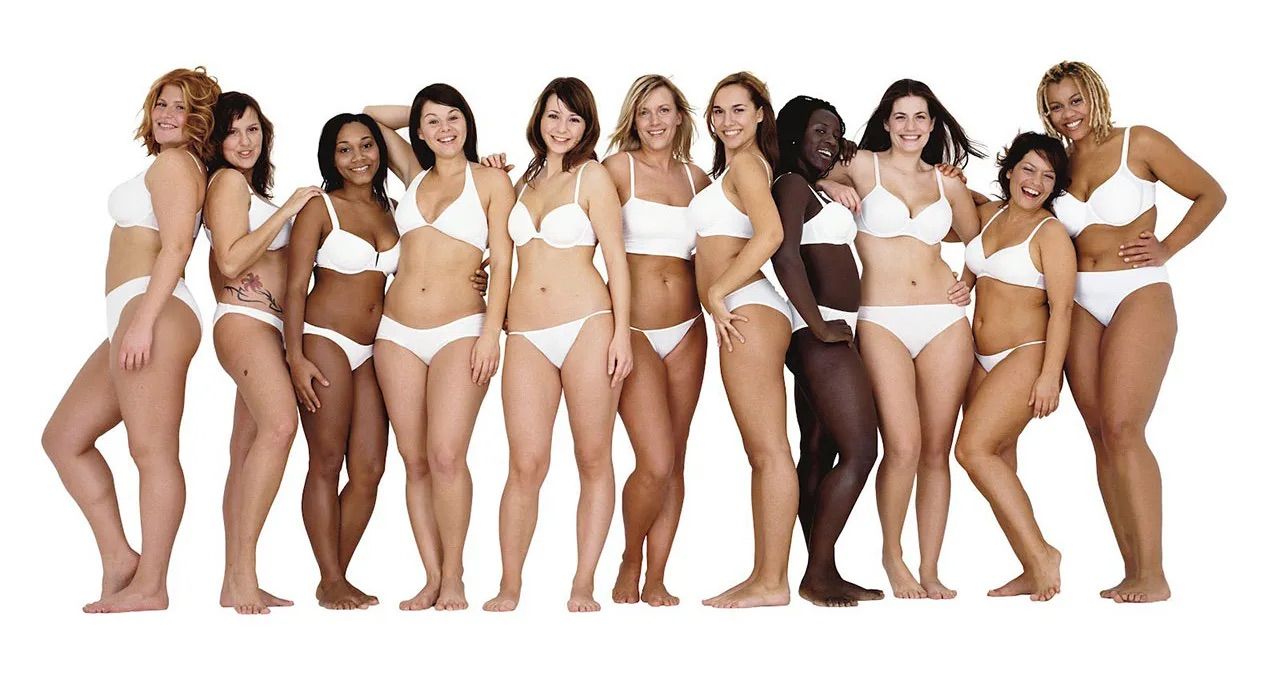
Dove Real Beauty campaign from 2016
Dove’s Real Beauty campaign from 2016

There is a counterpoint. DV Padma Priya, a communications professional based in Brisbane, says, “Body positivity always existed; it just wasn’t taught to us in the right way.” She grew up in Hyderabad in a family of “thick” women and with enough representation on screen—Jayasudha, Radhika Sarathkumar, even Vidya Balan, who all embraced their curves—and yet lived with body dysmorphia. “I wish I’d spoken with my grandmother about it more while she was alive, or that my mother had told me early enough that it was okay to be a certain body type.”

These testimonies point to a universal South Asian experience: “Owning our bodies is looked down upon a lot in Asia, so a proper body positivity campaign is hard,” says international trade lawyer Isha Das. Distant relatives to tailors, everyone feels entitled to comment on your weight gain—even if it’s a matter of a few kilos. “I grapple with conversations with friends and family that range from shaming eating sweets to aggressively promoting generalised intermittent fasting, with no concern for how unique each female body is.”

Delhi-based communications professional M Ashanthi is convinced that it existed in earnest for a hot minute before it was capitalised. She also identifies what may be the movement’s original sin: “Body positivity was always activated from the lens of ‘bravery’ and ‘courage’. It did so because it had to edge out the ‘shame’ of being fat in the first place. What it was really about was acceptance—and that is one of the most complicated relationships we, especially women, have with our bodies.”

That complex relationship is in full view in a New York Times article by cultural critic Amanda Hess. Studying the content of certain body positivity influencers who actually have ultra-thin frames or opt for breast augmentation after years of making flat-chestedness their brand, she considers the “competing performances of superiority and disadvantage, of self-love and self-optimization” in service of engagement, but also a certain earnestness: “Position herself just-so, and she can achieve self-acceptance and social approval at once.”

Meanwhile, Vogue Business reports that the share of plus-size models on runways has plummeted from 2.8 per cent in 2020 to 0.8 per cent in 2025. The hashtag #SkinnyTok has surpassed 2.4 billion views, driving algorithmic thinspiration reminiscent of Tumblr’s pro-ana communities. Dazed Beauty traces the return of extreme thinness to the rise of the manosphere, the “tradwife” cultural moment, and conservative politics globally—a vibe shift toward a femininity that is thin, controlled, and non-threatening. Market forces have finished the job. The Kardashians popularised the curvy body. Now that they’re losing weight and going for a more streamlined look, it’s like the whole world has to follow suit.

Into this moment arrives the GLP-1 drug. India arrived late to this trend but with a characteristically enormous appetite—the anti-obesity drug market has surged from $16 million in 2021 to nearly $100 million in 2025. It is led by Rybelsus (Novo Nordisk), which accounts for two-thirds of the market since its 2022 launch, and Mounjaro (Eli Lilly), which launched in March 2025 and became India’s second-bestselling branded drug by September, according to a BBC report. Ozempic has been cleared as a drug to treat diabetes only, while Lilly’s anti-obesity ads now flood Indian TV screens (the latter has prompted a slap on the wrist from the Centre, warning brands to not promote quick-fix solutions in favour of healthy behavioural and lifestyle changes). Each monthly injectable pen—four weekly doses—of these drugs costs between ₹14,000 and ₹27,000.

So when Karan Johar appears at the airport visibly slimmer, then spends months insisting it was salads over butter naan; Ram Kapoor sheds decades in what seemed like months; and Kusha Kapila, Badshah, and Bhumi Pednekar become subjects of furious online speculation, some might perhaps begin to see thinness as a marker of status.

M Ashanthi surveys the celebrity landscape with precision: “What GLP-1 is doing for all of us is showing us that very few people who live in the public eye are honest with themselves and, therefore, are unlikely to be honest with us.” Every weight loss fad or injection, she argues, delivers the same verdict: “Thinness is the eternal, universal, ultimate prize.”

But there are celebrities in the West who have been open about their reasons for the use of these drugs—Kathy Bates took it to treat diabetes, Winfrey Oprah did to manage her “yo-yoing”, Serena Williams to help with weight loss after the birth of her second child, Chrissy Teigen to cope with the aftermath of a miscarriage, Vanessa Williams to deal with the repercussions of menopause.

Mumbai-based gynaecologist Saloni Suchak does not prescribe GLP-1 drugs herself, even though she considers them to be “very sophisticated medical tools that can significantly assist with patients having metabolic challenges,” which she often sees in patients having PCOS or going through menopause. “Instead,” she says, “I send patients to a metabolic specialist when I feel that a particular patient would be the correct candidate or where I feel that weight-related comorbidities will pose a higher risk than the potential side effects of the medication.” She adds, “Ultimately, while these are game changers, they must supplement and not replace a holistic approach to health that respects diverse body types.”

If body positivity is ultimately about acceptance, it is a deeply personal journey and the reasons take precedence. “Tomorrow, if my doctor tells me that I need to go on these drugs to solve a health problem, do you think I will not do it?” asks content creator and influencer Sakshi Sindwani, who is among India’s most prolific and vociferous body advocates. “I’m going to do this for the right reasons, not because I want to change myself. Even as a body neutrality advocate, I work on myself every single day. I work on being the healthiest, fittest version of myself. I lift weights, I do HIIT, I box, I dance. I have always been athletic even as a big girl and I am very proud of that.”

The term ‘body positivity’ irks Sindwani. To her, it smacks of tokenism and bandwagoning without any actual understanding of beauty (“brands, we see you,” she says). She is also bothered by this trend of surveilling celebrities’ bodies without any real understanding of their reasons for taking these drugs. “Don’t compare your reality with somebody else’s that you don’t know. That is actually one of the core fundamentals of what I stand for. Self-love is an internal journey.”

To Sindwani, the work has only just begun and, whatever we might see on the fashion ramps and red carpets, there is some evidence that real change has been wrought. On social media and in the metropolitan circles she moves, she has seen people become more conscious of how they talk about women’s bodies.

“Body positivity is at its peak in India like never before,” argues Amrita Sampathkumar, a multimedia strategist and sports broadcast specialist. She locates this boom in expanding bra cup sizes and XXXXL sanitary pads on e-commerce platforms. “I’d base my conclusion on how accessible and inclusive middle-class consumer products are rather than celebrities’ behavioural patterns.”

If one must turn to celebrities, there are plenty of names to find inspiration in: Alicia Silverstone, Nicola Coughlan, Nelly London. Sindwani adds, “Right now, what I can see on the red carpet is people doing what they want to do. People are embracing their own authenticity, their own opinions, their own mindsets.” Her own job, she’s certain, is to ensure that younger generations can understand that beauty “is as big as the sea, and wide as the big blue sky”.

Padma Priya, now entering her “fuck-it forties”, living with insulin resistance, chronic fatigue, PCOS, and a neurodiverse tween daughter, says the last of these has become her most powerful reason to keep reaching for acceptance. “I need to model that for her. I need to embrace my body so she can embrace hers.” Together, they read books—Charlotte Markey’s The Body Image Book for Girls, the YA novel Starfish about a child bullied about her weight—and have conversations, however imperfect, about her changing body. “My body dysmorphia won’t be cured by that one drug,” she says. “It will be cured when I embrace my body for all that it did for me and continues to do for me.”

The Nod Newsletter

We're making your inbox interesting. Enter your email to get our best reads and exclusive insights from our editors delivered directly to you.