



Roe the distance28 Mar 20265 MIN

Are you even a food connoisseur if you haven’t done a caviar bump?

Crawling over menus and racking up catering demands, caviar has casually emerged as the new guard of fine eating

Image

I have eaten caviar off a stranger’s wrist. I am not particularly proud of this, nor really ashamed. In the current climate, such an act is less a transgression and more a requirement of the contemporary culinary curriculum. The wrist in question belonged to a mixologist at a bar in Hong Kong, and the roe was presented as a ‘bump’, a term borrowed from the vocabulary of illicit powders. 

Among the new guard of food connoisseurs, the caviar bump is defended as the liturgy of purity. A small spoonful is placed on the back of the hand, near the thumb, and eaten in one upward motion. The logic is ostensibly scientific. The slight warmth of the skin brings the caviar gently to temperature, allowing the fat to loosen and the flavour to open up in a way it does not when served ice-cold.

But as I licked the small mound of Ossetra from the soft skin below the mixologist’s thumb, I found myself thinking of an elderly Iranian fisherman who had spent 40 years coaxing life from the water with the patience of a saint. I suspect he did not imagine his life’s work ending as a party trick in a dimly lit speakeasy.

But this is caviar in 2026. It turns up on fried chicken at Paradox, atop cream-filled beignets at Sobo 20, and even inside a cheese dosa of sorts at Aditi Dugar’s Masque. At Delhi’s newest south Indian eatery, Nadoo, beluga caviar is sprinkled atop mini podi idli as tadka. Bengaluru-based chef Manu Chandra admits to moving close to a kilo a month. At this rate, it seems we are roughly three weeks away from seeing a caviar pani-puri at Swati Snacks.

The question is no longer whether any of this is appropriate. The question is how we got here.

The short answer is China. The longer answer is a story of how a Soviet racket became a global commodity. For much of the 20th century, caviar was effectively a state-sponsored monopoly, a gift from the Politburo to the world’s elite. The Soviets managed the Caspian supply chain from fish to tin with the cold, bureaucratic efficiency of a nuclear programme, drawing from sturgeon-rich waters shared with Iran.

When the Soviet Union dissolved, the system collapsed with it. A frantic, lawless overfishing followed, pushing the wild sturgeon to the brink of extinction. Prices shot up and the UN stepped in, effectively banning the trade of wild caviar and leaving a vacuum that the market was only too happy to fill.

By the early 2000s, while European producers were experimenting with aquaculture, the Chinese were building vast state-of-the-art sturgeon farms. Today, China produces roughly 65 per cent of the world’s caviar supply, housing over half a million sturgeon in conditions of such clinical consistency that the old Caspian fishermen would find it unrecognisable.

I saw this modern machinery up close earlier this year at the production facilities of Kaviari in Paris. One of the most respected names in the business, its supply chain now runs substantially through China. Farming, they remind me, is not a synonym for ease. It still takes three years to sex a sturgeon and another decade, at the very least, for it to mature. Extraction and salting still require expertise and judgement, but the process is no longer governed by the whims of the sea.

More caviar is produced today than at any point in history. And for the consumer, the effect is simple. The product is better, more consistent, and significantly cheaper. Not cheap, of course: a 30-gram tin of Kaviari’s Sevruga will still set you back around ₹8,000 in Mumbai. But it is cheaper relative to its own mythology. It has moved from being unattainable to merely indulgent. And that is an important distinction.

This shift in price has turned caviar into a kind of cultural shorthand. On the modern table, the arrival of a tin elicits little more than a casual shrug and an instinctive search for better lighting. In India, the transformation is especially stark: caviar has entered the arsenal of every restaurateur signalling ambition and every high-end wedding caterer whose clients now view a caviar station as the natural successor to the live chaat counter. “The demand for caviar is definitely on the rise,” agrees Varun Totlani, chef at Paradox and Masque. “Some guests who travel and already enjoy it are excited to see it on menus, others are simply curious to try it for the first time. The fact that our caviar brunch has been the most successful of the four we have hosted at Paradox says a lot.”

Not everyone is convinced that this is progress. Gaggan Anand once told me, with weary irritation, that “any fool can open a can”. He is not wrong. Caviar requires no heat, no knife skills, and no particular finesse. It is, in many ways, the most efficient shortcut to luxury available to a chef. Chef Himanshu Saini has gone further, banning what he calls the ‘lazy luxury’ of caviar and truffles from his menus altogether.

And yet, the market has made its choice. Caviar is ubiquitous on modern menus the world over. In the past six months alone, I have been served beluga caviar on a tandoori kulcha in London, watched it disappear into a Peking duck roll in Singapore, and seen it spooned over wood-fired Neapolitan pizza in Dubai. On some menus it even appears as an optional add-on, listed as casually as an extra condiment (which, increasingly, it is).

This is the inevitable trajectory of the luxury ingredient. Champagne became something sprayed, not savoured. Truffles became fries and then everything else. Each transformation keeps the taste intact but quietly empties it of meaning. What was once rare becomes replicable, until eventually what you are consuming is not the ingredient but the idea of the ingredient.

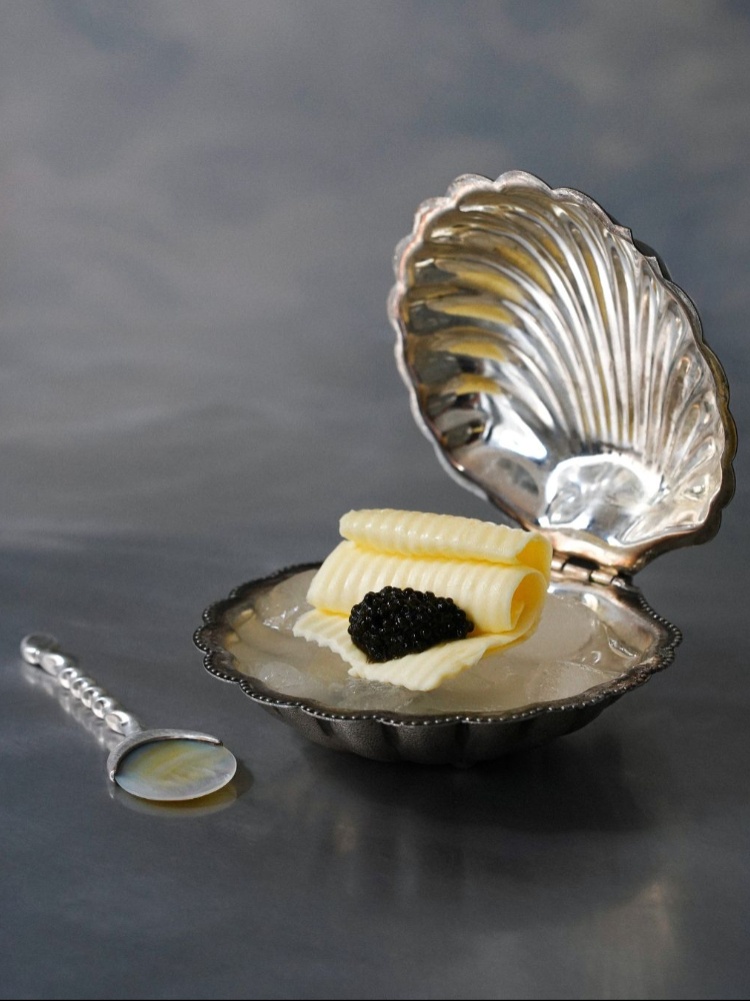
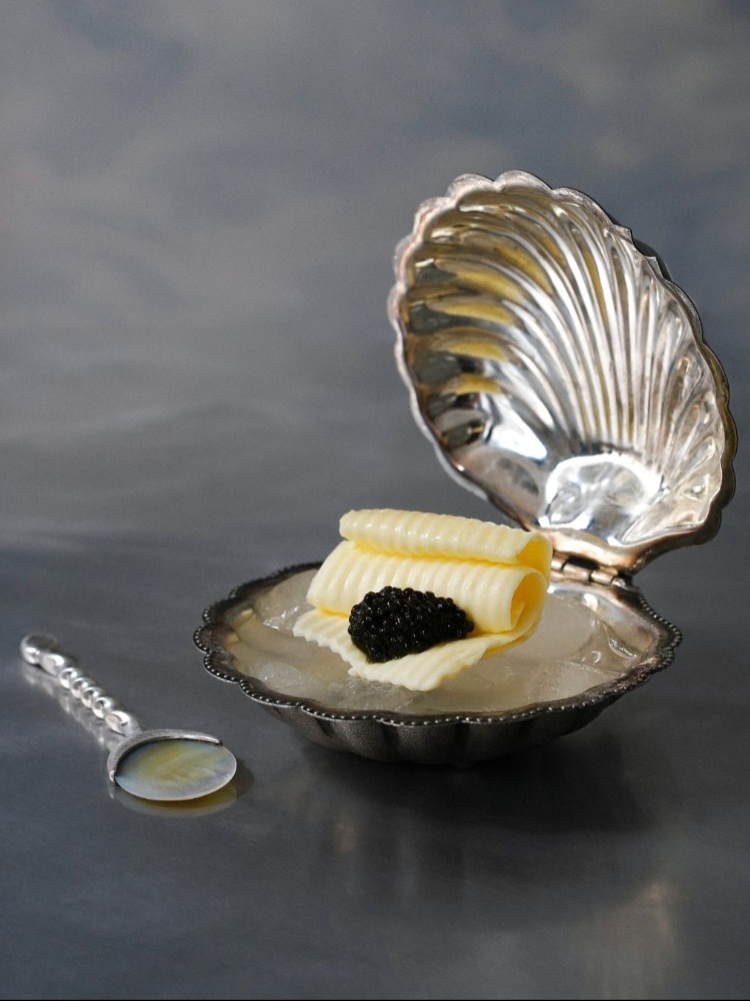
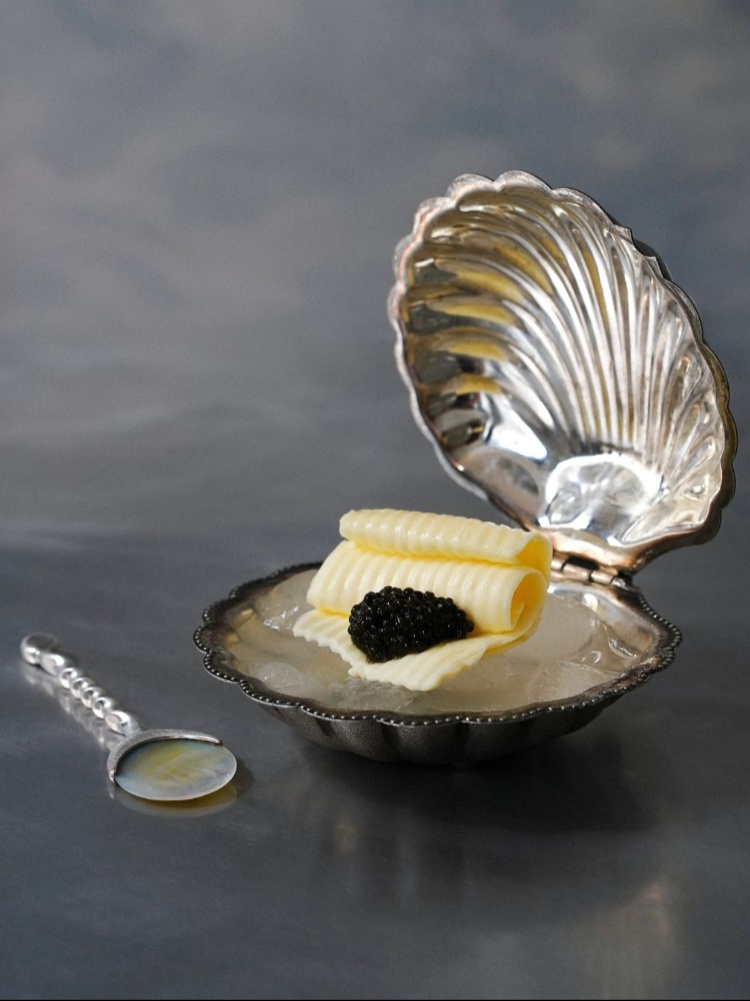
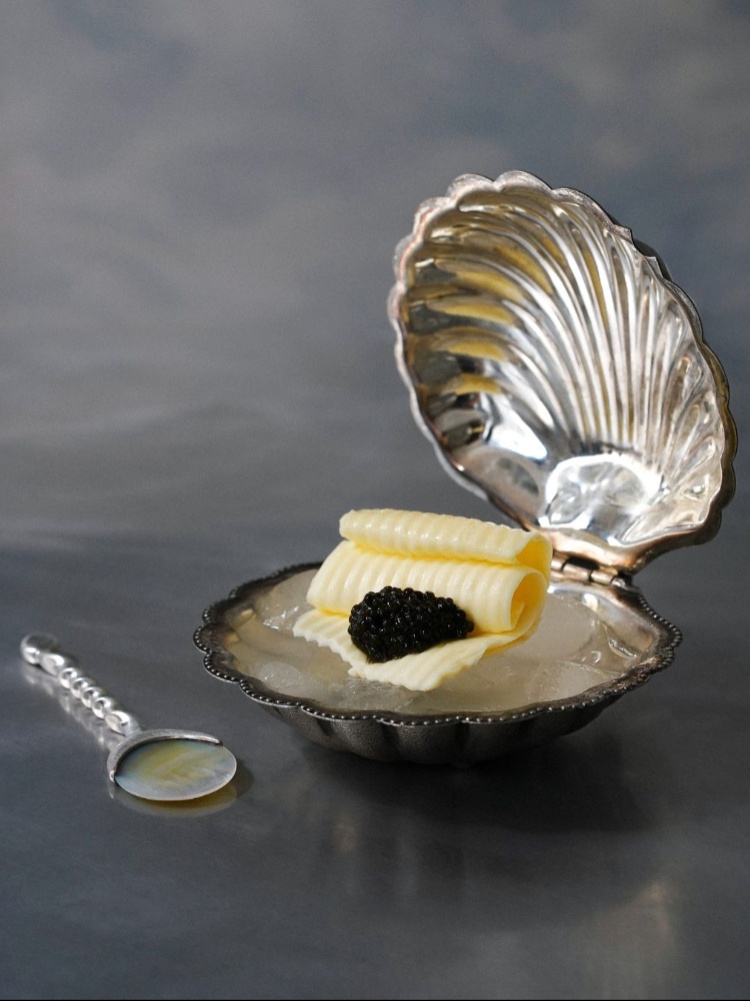
There was a time when the tin arrived on ice, when the spoon was mother of pearl because metal would corrupt the flavour, and when spreading a measured layer of kaluga on buttered melba was an act that told you something about the caviar. Today, the same tin tells you something about the room. Rooms matter, and so does the pleasure of being in the right one. But it is a different thing from what caviar used to be.

And occasionally when someone offers me a bump from their wrist and asks me to lick it, I find myself wondering whether the Iranian fisherman ever had this in mind.

He almost certainly did not.

But I lick it anyway. One must keep up.

The Nod Newsletter

We're making your inbox interesting. Enter your email to get our best reads and exclusive insights from our editors delivered directly to you.