Meet Doyel Joshi, the artist headlining Bvlgari’s Diwali campaign
Her art sits at that perfectly viral spot between concept, craft, and clutter-breaking spectacle. Not surprisingly, she’s the artist every major label wants to work with
Profession: Artist and co-founder of How Are You Feeling Studio
Location: Mumbai
Why you should know her: In an era of international luxury brands appropriating age-old Indian crafts, traditions, and artistry (yes, Prada, we are still not over this), it’s time to celebrate the ones who appreciate, champion, and co-create with artists, craftspeople, and crafts from India. Mumbai-based artist Doyel Joshi headlines Bvlgari’s first international Diwali campaign with an installation titled ‘Passing the Light’. The modular installation, currently on view at The Jaipur Centre for Art and soon moving to DLF Emporio in Delhi, is co-created by Joshi with the Kumhar community, who are the core of India’s artisanal pottery heritage. What from a distance might look like a terraced pile of bricks transforms into 4,500 hand-sculpted terracotta elements inspired by traditional diyas as you get nearer. It’s a clever way to use light and shadow and subtly mimic the scales of the legacy jeweller’s iconic Serpenti.
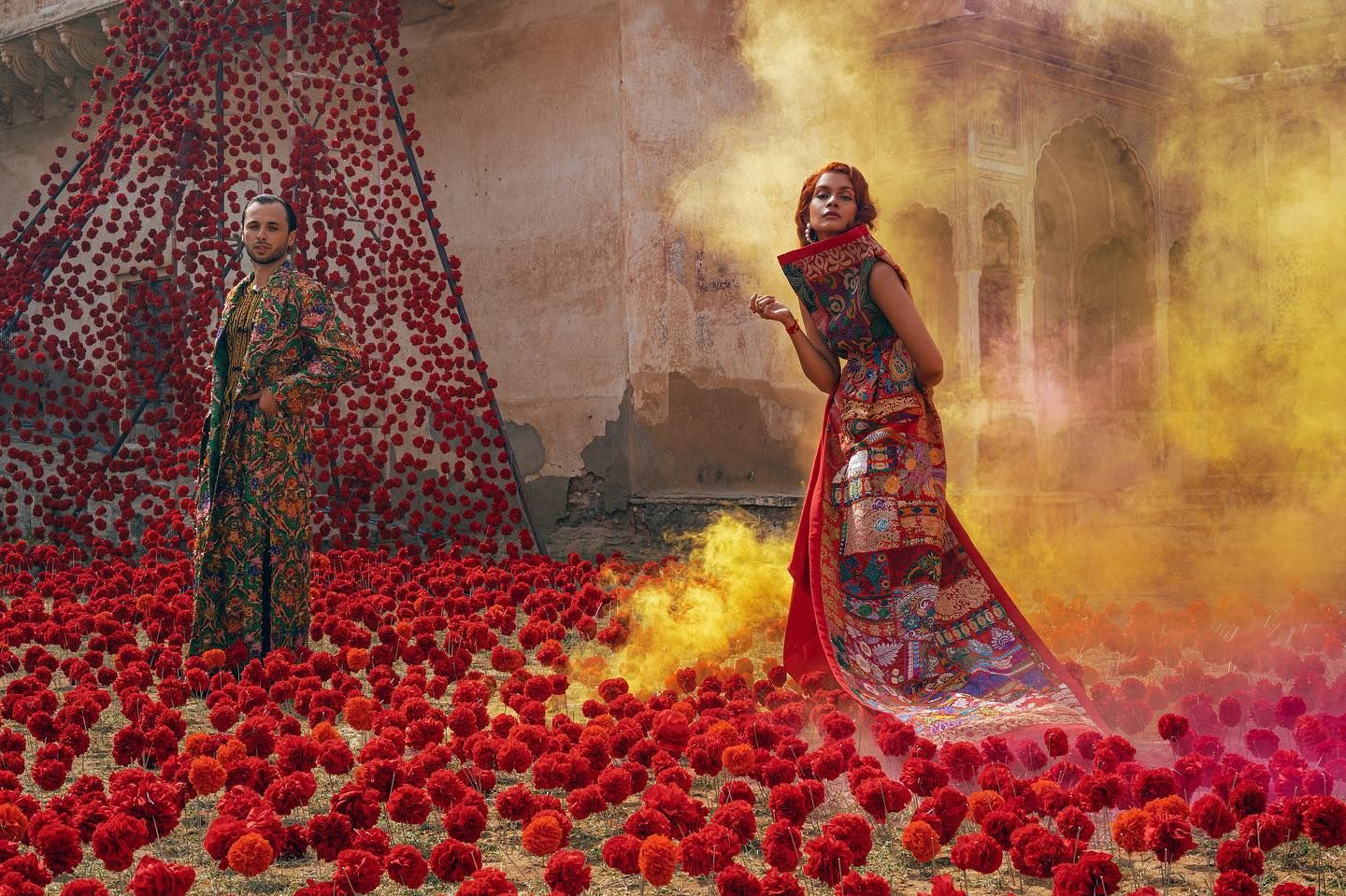
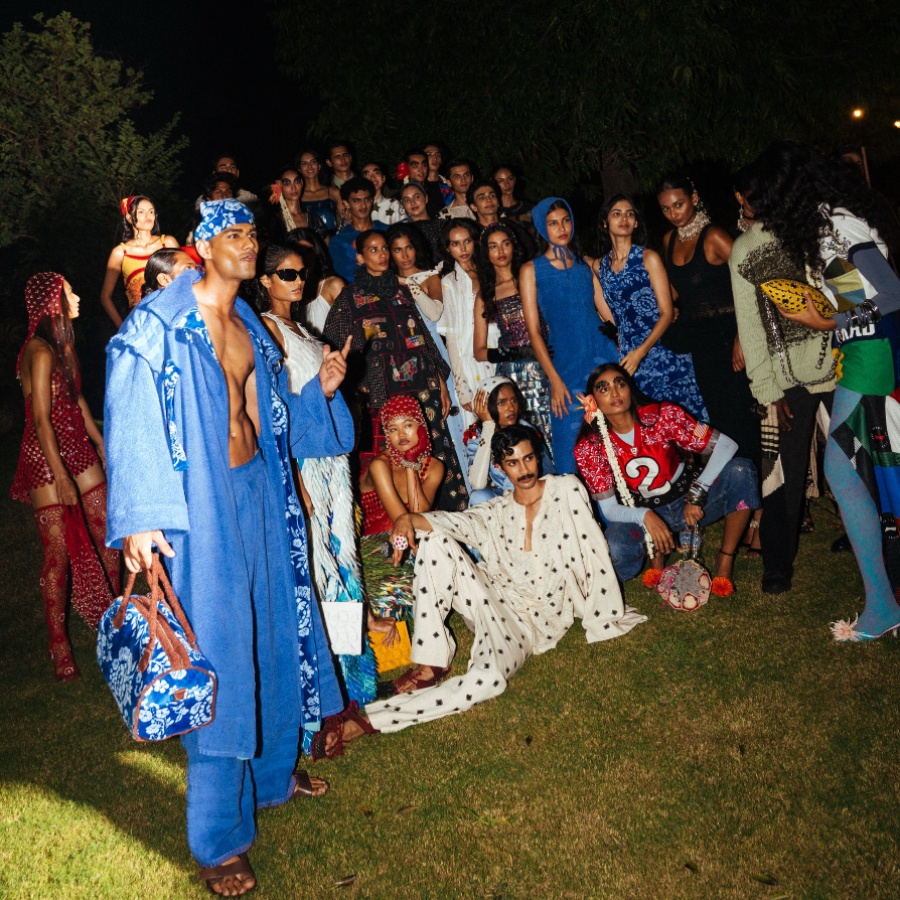
How she got here: Joshi is no stranger to creating a beautifully crafted spectacle. One half of How Are You Feeling Studio (the other is her husband and artist Neil Balser), the duo, both Parsons School of Design alumni, have previously worked with labels like Gucci, Hermès, and Lovebirds, and exhibited at India Art Fair and Jaipur Centre for Art. Their calendar makes it evident that the two are fast becoming darlings of the world that brings together luxury and glamour with art and craft. Their stunning works that necessitate a like or a share include Apple’s viral Diwali Reel from last year, in which they created a human rangoli with “dancers, lantern cyclewalas and phoolwalas”; ‘New Dawn’, an installation of 108 red monobloc chairs that has travelled from Brighton to Amsterdam; and their installation ‘Into The Pinke’, an almost ritualistic performance of musical chairs co-created with 50 Ladakhi students dressed in bright fuchsia against the stark landscape at the sā Biennale in Ladakh, to name a few.
ADVERTISEMENT
'Into the Pinke', a performance installation at sā Biennale in Ladakh
‘Passing the Light’, Joshi's modular installation, is currently on view at Jaipur’s City Palace
Last year, 108 red monoblock chairs were used to foreshadow the studio's exhibit at The Old Courtroom
The ‘Passing the Light’ installation for Bvlgari is made up of 4,500 hand-sculpted terracotta elements that are inspired by traditional diyas
Couple goals: Their own wedding became an expression of their philosophy, bringing together their lives, cultural backgrounds, rituals, and relationships that mould their studio and practice. They redefined the palace wedding on their own terms, swapping traditional decor for playful art installations and even making their own clothes, their inspiration ranging from Elsa Schiaparelli to the Ramayana. “Our wedding belongs to that same way of thinking. For us, there is a close relationship between how we make work and how we give form to moments in our lives,” she says.
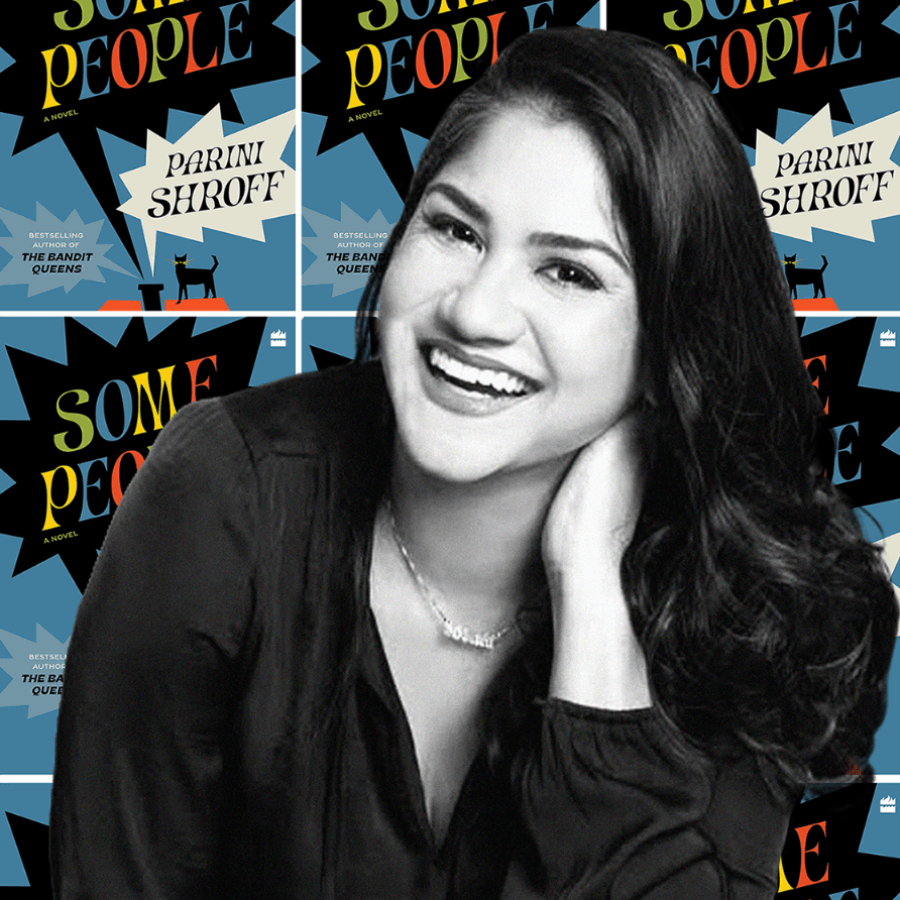
Joshi and her husband, and artist Neil Balser, are the founders of How Are You Feeling Studio
Joshi finds her creativity expressed more through the visual mediums of sculpture, installation, and fashion. Balser, on the other hand, brings in performance and audio-visual art. “We are led by the idea, but the medium matters enormously once we begin working with it. Film has a particular relationship with time; an installation involves the body and space; a performance depends on presence. Each allows us to ask and express differently. Neil and I work across these forms. We often begin with the feeling or question we want to explore and then consider how someone might encounter it,” she explains.
Core collaborations: As their Bvlgari debut gains momentum, Joshi shares that for her collaborations are less about the names attached and more about the creative possibilities they open. “A collaboration begins with understanding what matters to the person or organisation we are working with and finding where that meets our own enquiry,” she says. With Bvlgari, it was about craftsmanship, inheritance, and the symbolism behind the iconic Serpenti. Joshi explored these ideas through “earth, light, and collective making”. And the excitement and innovation of collaboration comes from this cross-cultural exchange for the artist. “That exchange can change the questions we ask and introduce possibilities we would not have arrived at alone,” she adds.
On bringing Bvlgari’s first international Diwali campaign to life: Joshi is quick to highlight that she was technically bringing a lot more than a Diwali campaign to life. She was eight months pregnant when Bvlgari first approached her; it’s safe to say this has been a monumental year for Joshi in more ways than one. “It has been a deeply meaningful collaboration and one that became closely intertwined with our lives. Neil and I became parents to our son, Baarish, while developing Passing the Light.”
But becoming a parent also found its way into her creative thinking and process for the artwork, questioning more than ever tradition and inheritance, be it what you choose to keep, leave behind, and most importantly pass on. “Bvlgari gave us the creative freedom to explore those questions through material and through relationships with people. That mattered to us. It allowed the work to develop from a personal enquiry into something shared, carrying the knowledge and expression of many people within it.”
It takes a village: At a time when questions of cultural appropriation, artistic ownership, and the erasure of artisanal knowledge systems are increasingly urgent, the Bvlgari installation offers an empathetic collaboration that rests in co-creation. “We developed the work alongside kumhars and kumharis whose understanding of terracotta is grounded in sustained practice and knowledge passed through generations. They brought a relationship with the material, which inspired the shape the work could take,” explains Joshi. “Co-authorship means allowing that knowledge to have a real influence on the outcome. Each artisan brought their own judgement and understanding to the process... The installation holds many hands within it.”
On what makes her creative: Joshi’s practice and process are tied into her everyday. Her references are found closer to home, in inherited rituals, family stories, even mundane objects lying around the house. “I grew up in Mumbai, but my parents came from Rajasthan, and my mother kept that connection present through stories, objects, and everyday practices. That has shaped how I understand culture, something carried through life. I am drawn to forms whose meaning has accumulated through use: a diya, a vessel, a gesture repeated over many years. I am interested in how they continue to speak to us and how that meaning changes,” she explains. Conversations are also an important reference for Joshi. “Someone’s understanding of a material, or their account of why they do something a certain way, can open up an entire direction for a work.”
ADVERTISEMENT
The Nod Newsletter
We're making your inbox interesting. Enter your email to get our best reads and exclusive insights from our editors delivered directly to you.