




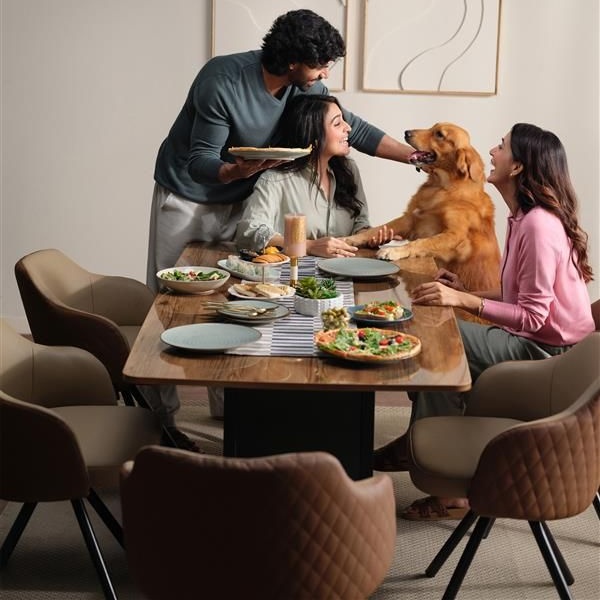

The most honest inventory of a home is one that keeps pace with how people live now. A cabinet that moves between cities without feeling out of place. A desk that shifts easily between work calls and dinner plans. Storage that adapts as routines change and spaces that multitask more than ever before. Good design earns permanence through relevance, not nostalgia. That adaptability is what has kept Godrej present in modern Indian homes, shaped by global influences yet grounded in everyday practicality, evolving alongside the way people live rather than tied to a single idea of what home used to be.
In 2026, sustainability has moved beyond labels and easy declarations. The conversation now centres on performance—how a space holds up through daily wear, shifting climates, and the unpredictability of modern living. Today’s Indian homes are shaped by global references and local priorities in equal measure, balancing flexibility with longevity. In this context, sustainability reads as practical thinking. The goal is solutions built to adapt without needing replacement every few years. At Godrej, this longevity is engineered. It’s built on the simple, radical idea that if you make something well enough, people won’t need to replace it.
Buying once and buying right
There is a specific exhaustion in "outgrowing" your own home. We are conditioned to think every new life stage requires a total gut renovation, but the resulting waste can be staggering. At Interio by Godrej, modularity fixes this friction. Wardrobes, kitchens, and storage units are expandable frameworks rather than just another object. Components can be added, shifted, or replaced as life takes you. Low-emission finishes and sustainable materials aren't the selling point but the baseline. The real win is a system that resists the donation pile. It is about furniture that allows for continuity, acknowledging that the grass isn’t always greener on the side of a new purchase.
The intelligence of a breathing home
In housing, sustainability is an architectural decision rather than a cosmetic one. Godrej Vista treats the green home as a matter of spatial intelligence, prioritising the organic elements—cross-ventilation and natural light—that make a home a sanctuary after a day spent under the flat, depleting hum of artificial cubicles. These homes rely on orientation and circulation long before a single gadget is installed. Materials are selected for how they react to the sun and the local climate. The result is a home that breathes; a sense of ease that marks the difference between a house that works for you and one you have to manage constantly.

Godrej Enterprises Group's Godrej Vistas
The objects that shape us
Design also operates at the scale of habit, starting much earlier than we realise. We all remember the flimsy piggy banks of our childhood—objects designed to be broken once they served their purpose. Security Solutions has traded that planned obsolescence for the Dream Locker for kids. It’s a play on developmental psychology, transitioning from the fleeting gratification of a toy to the weight of real responsibility. By providing a secure space that mirrors the sturdiness of the “grownup” version, the object reinforces the value of care. Since old habits die hard, the goal is to build better ones from the jump, teaching the next generation that some things are worth keeping for the long haul.
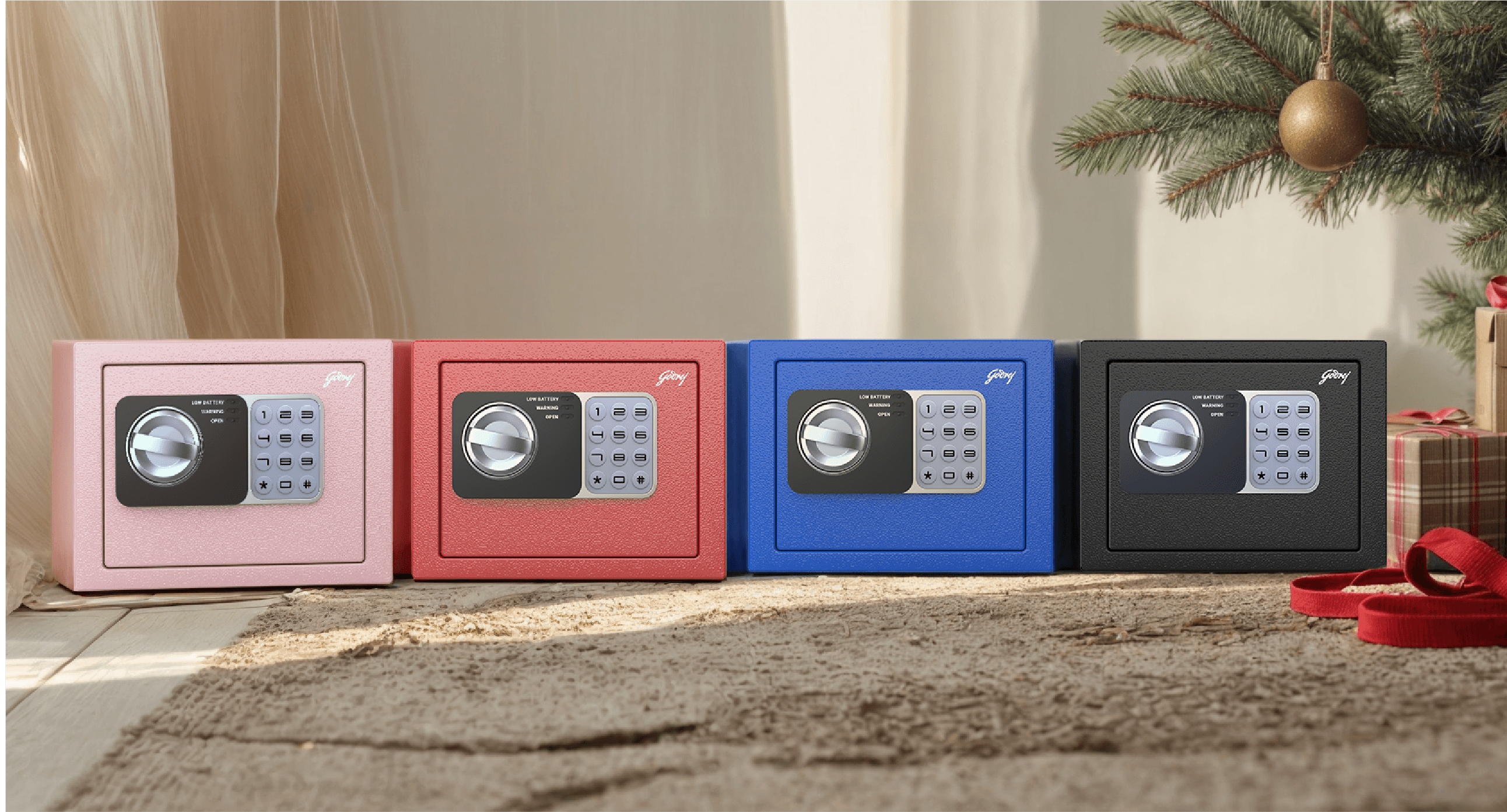
The Dreambox locker by Godrej
Beyond furniture, appliances are among the biggest drivers of energy and water use in a home, which makes them central to a conscious one. Godrej’s Eon series drives efficiency across appliances, reducing water use in washing machines and electricity demand in air conditioners and refrigerators through intelligent inverter technology and eco-friendly refrigerants.
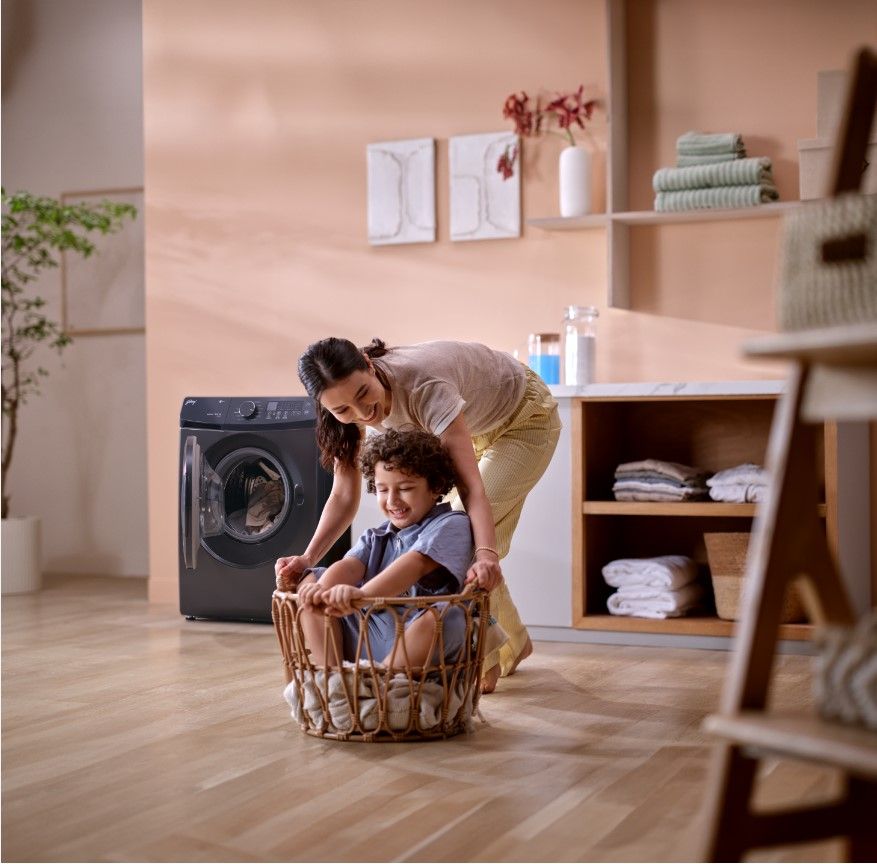
Godrej's Front load Eon Cresta AI powered washing machine
The grit of the prototype
Sustainability is often treated like a finished product you buy off a shelf, but the reality is much more restless. Through Conscious Collective, Godrej Design Lab operates as a real-world testing ground. By sitting at the intersection of design and sustainability, the initiative helps consumers make more informed, conscious choices. This is where designers bridge the gap between a wild concept on a feed and a functional piece for your home. It’s about the grit of the trial: repurposing industrial by-products as tactile materials or adapting traditional craft for modern utility. By bringing these prototypes into the public eye, they move past the talk and focus on the collective effort needed to change how we live.
The logic of the long game
The loudest design is rarely the best. In 2026, the choices that actually matter are the ones that feel settled, the pieces that don’t demand a seasonal rethink. It’s a quiet way of opting out of the buy-and-replace cycle we’ve been sold for decades. The most sustainable object in your home is the one that never becomes a question mark. A desk that survives another role change. The cupboard that your children will eventually lug into their own first apartments, not because they have to, but because it’s modern enough even in the future, and they can’t imagine a room without it.