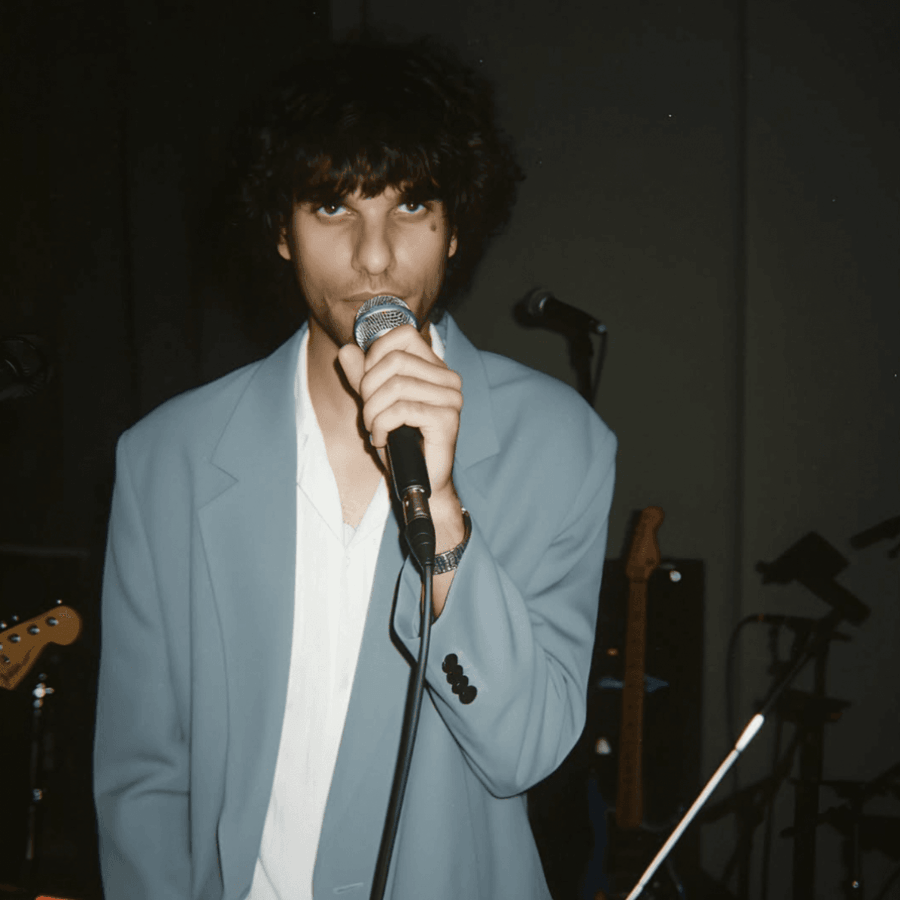
Vedant Lamba, 27, built Mainstreet as one of India’s biggest sneaker resale platforms, clocking ₹5 crore a month at its peak. Then the sneaker market collapsed in 2023-24, and he nearly lost it all. Now, the entrepreneur is launching his own footwear brand.
His trajectory—hype, crash, reinvention—maps almost exactly onto the state of Indian sneaker culture right now. The hype has cooled. What comes next is less certain, though far more interesting.
India’s sneaker market is worth $4 billion, a fraction of the $100 billion global industry but one of its fastest-growing segments. For years it relied on imported desire: Nike, Adidas, and Puma dominated while resale booms briefly turned limited-edition sneakers into assets. Now, homegrown brands are trying to build from within. But nobody agrees on what makes a sneaker Indian. Some point to craft and culture. Others say brands needn’t look Indian. Maybe it doesn’t matter if customers don’t care.
The hangover
Hype culture had its day. Between 2020 and 2023, resale premiums hit five times retail as a new logic drove the market: buy low, flip high. “It was like Rolex—you’ll never find a Rolex at MRP,” says Sangeet Paryani, 37, founder of Superkicks, the multi-brand retailer with ₹68 crore in revenue last financial year. Then seemingly overnight, things changed. “I don’t think you can buy shoes for investment anymore,” adds Paryani.
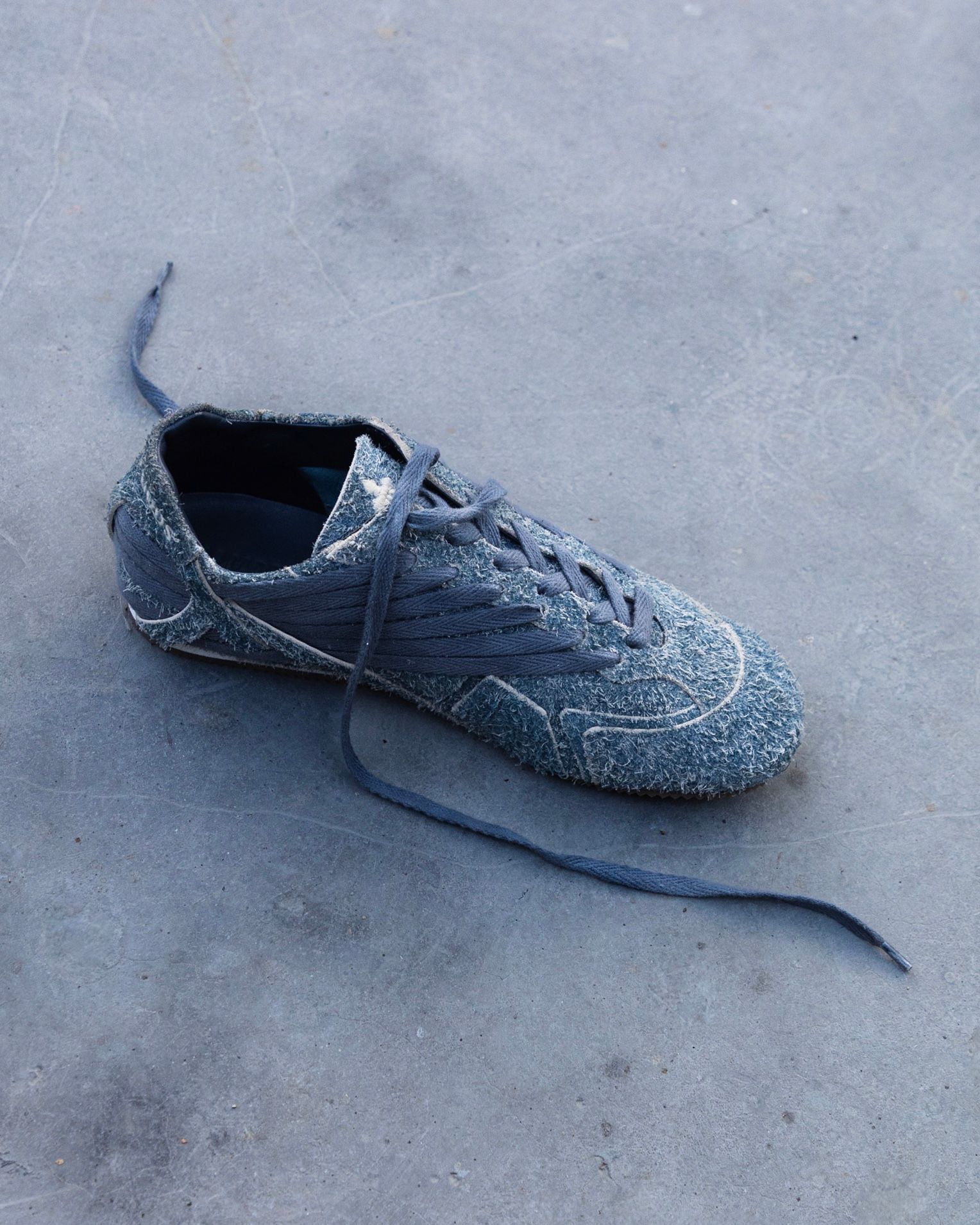
Lamba survived the resale market collapse, during which eight of 10 competitors shut down, by reinventing Mainstreet as “cool commerce”, adding LEGO sets and watches. In July, he and co-founder Vijayant Dhaka launched Built, a natural-movement footwear label where prices started at ₹4,999. Lamba, barefoot much of his life, runs a shoeless office and is an unlikely founder. “Most shoes today are not that good for your feet. We’re trying to take something that’s good and make it desirable.”
Neither thinks hype is gone forever. “There’s no such thing as permanently dead,” says Lamba. Paryani agrees the hype will return but says the consumer has changed. “People are buying how they are supposed to ideally buy: It looks good on me. Therefore, I am buying it.”
What does Indian in sneakers even mean?
“India does not have a sneaker culture at scale,” says Arjun Singh, 34, founder of Gully Labs. “Everything here is a derivative of something that happened in the US.” He’s spent years testing that theory. “We have a lot of haters and a lot of lovers. Supreme was native to New York and skate culture. Our goal is to make gully cricket just as cool.”
Gully Labs draws on a wide variety of cultural touchpoints: Kolhapuri chappals, rangoli patterns, ghungroo motifs, the woven Kullu fabric celebrated in its Buransh red, and India’s 1948 Olympic hockey gold. It has five stores, each also a community space. “Our designs are not subtle. For people to wear them means they have a point of view.” Superkicks stocks the brand. Paryani’s verdict: “It stands out on the shelf. That’s good enough for me.” Although he adds: “A little too Indian. Could maybe cut down a little bit.”
ADVERTISEMENT
The Natural Movement Shoe (NMS) by Built
The limited-edition GL-FC Baaz Elastico sneaker by Gully Labs
Gully Labs’ latest drop, the 500-pair GL-FC Baaz Elastico, goes beyond obvious Indian motifs. “Indian fans always stayed up at weird hours to watch football. We never had a team, but football is a core memory. That is all because of the love of the game.”
Something else entirely
Dhruv Khurana, 30, once slept outside Nike and Supreme stores for hype drops. After eight years building Almost Gods as a streetwear label, he launched sneakers. “My grandfather was in the Army. He always said: set up camp, then move forward. We set up camp with streetwear.”
When the Tether launched in June 2026, all 250 pairs, each price at ₹15,000, sold out in 12 hours. “A concept sneaker is for brand building, not volume,” says Khurana. He drew on a German army trainer silhouette and Brutalist architecture, made in an NCR factory that also produces for COS and Armani. “A kid in a small town is on Instagram consuming what Balenciaga is putting out in Paris. The idea that India needs to look like Fabindia—it’s gone out the window.”
The launch revealed a split. While his community bought the shoes, he knows that they might not hold the same appeal in the mass market. “The Indian customer sees value in chunkier forms—a sneaker that signals what it costs. A flat sole is something most Indian consumers don’t understand yet.”
The Tether sneaker by Almost Gods
Paryani thinks sneaker culture borrowed the wrong references from abroad. Basketball, hip-hop, skateboarding—none were really India’s. But the country’s independent music scene has found its own voice. Through Co-Sign, his platform for emerging Indian musicians, Superkicks hosts listening sessions with artists like Dhanji, Yashraj, and Rebel 7. “It’s not copying the West. It’s ours, and we’re owning it.”
Lamba offers a third position. “We are very proudly Indian, but we are not trying to use it as a handicap.”
Three founders. Three answers.
The consumer reality
On r/SneakersIndia, the country’s largest sneaker community with 85,000 members, the mood is less generous. “Buying a shoe for the story is the wokest shit I’ve ever heard,” reads one of the most-upvoted comments on a homegrown brand thread. “A sneaker is supposed to look good and last long, and homegrown brands are almost always missing one or the other,” reads another.
Abhivansh Baweja, 22, is a brand reputation consultant based between Gurgaon and Panipat. Since 2023, he has moderated r/SneakersIndia, growing it from 1,000 members to 85,000. He sees these conversations daily. Only around 10 per cent of Indians buy shoes priced above ₹3,000, according to a 2022 Motilal Oswal footwear report. The homegrown sneaker conversation is happening inside that sliver.
“There’s a very inexplicable anger that comes to people when Indian products are placed on the same level as international ones,” Baweja says. “Basketball is not, in any sense of the word, Indian. What heritage are you connecting to? If you’re pricing above ₹7 to 8k, you’re hitting Air Force 1s and Adidas Sambas. If you’re directly going against them, you have to offer more.”
His rule for what converts a browser into a buyer is simpler. “Nobody knows the packaging or the Indian artist behind the shoe. As long as it looks good, someone on the street is going to say ‘I love your shoes’ and that person is 100 per cent going to buy another one.” His conclusion: “India is not ready for these homegrown brands. But India is ready to give homegrown brands to the rest of the world.” Gully Labs bears this out: a fifth of its sales already come from the US, UK, and UAE.
The sneakerheads have spoken
Anik Roy, 34, a creative director at TBWA\Lintas in Bengaluru, owns nearly 30 pairs of sneakers. His wife Rashmi Kumari, 34, owns another 15. Between them, the Bengaluru couple have 45 pairs and counting.
Roy talks most about a Gully Labs design inspired by kantha embroidery, the running stitch his Bengali mother and grandmother grew up with—not his Travis Scott Jordan 1 Lows that cost him close to ₹85,000. “What Gully Labs is doing is not connected to people but to our cultural heritage. That’s what sets Indian sneakers apart.” Culture, he argues, need not mean motifs. “Paper Boat gave you Malgudi Days feels. That is part of culture too.”
Kumari, a product manager at London Stock Exchange Group, prefers shoes she can wear every day. Her favourite Indian purchase is a floral Comet collaboration with designer Aditya Bhalla—the pink and white design is easy to style. “When I wear a sneaker, I just don’t want to think about it.” Her most expensive pair however is a pair of ₹30,000 Nike high-tops.
Building for keeps
The market is no longer hypothetical. Gully Labs has ₹30 crore in annualised revenue and is expanding into apparel. Built Athletics has raised $2 million in pre-seed. In June 2026, One8, co-founded by Virat Kohli and Abhishek Ganguly’s Agilitas Sports (Ganguly spent 18 years building Puma India before choosing to build his own), sold out its debut drop within minutes. “There are a lot of sportswear brands globally. From India, there isn’t even one with a real global presence. That’s the gap we’re trying to fix,” Ganguly has said.
The numbers are there. The storytelling gap remains. “It can’t just be: I’m picking a piece of culture and making a sneaker that reflects it,” says Roy. “They need to find ways to make consumers feel like this sneaker is me.” He paid close to ₹85,000 for his Travis Scott Jordans because of the story behind them. He’s not ruling out the same for an Indian pair even as his wife is more direct. “With Indian homegrown brands, we still have to develop that trust. If the brands offer something worth paying for, this generation doesn’t shy away from spending,” says Kumari.
What’s changing now is that there are more options—along with Gully Labs, Almost Gods and Built there’s brands like Comet, Thaely, Echos Above, Chnks, Ludic... the list goes on. “The category should get more crowded before it gets consolidated,” says Paryani of the Indian sneaker market. “Let it cook.”
“This is the decade for the Indian consumer,” adds Lamba. “We will see these brands go from interesting and quirky to being acquired and going public—the next generation of institutions that are the backbone of our country’s economy.” Khurana’s goal is more immediate. “I just want to make a great shoe.”