




Food07 Apr 20264 MIN

Boba, highballs, mahjong, karaoke and a “street” of southeast Asian flavours in Pune

At Izipizi Street, a free-flowing, street-style space in Kalyani Nagar, dining is entirely choose-your-own

Image

One moment, we’re circling Kalyani Nagar, caught in traffic chaos. The next, we’re teleported to a place that feels oddly familiar, though we can’t quite say why. Red lanterns hang overhead. A glass wall has neon signs, including one of Pac-Man. Behind it, someone is belting out a song with a beer can in hand. Steam and sizzle hint at delicious food. The walls are stacked with quirky signs and posters. A T-shirt outside a shop reads ‘Unless you’re Korean, I don’t want your drama’. Around the corner, someone shakes a drink.

Step inside Izipizi Street, and you must pause to take it all in before getting swept along for the ride.

Pune’s new spot, inspired by southeast Asian food streets, isn’t trying to be a typical restaurant. There’s no best table, no set path, no clear cuisine. Even the broad label “pan-Asian” seems inaccurate. Instead, it’s a space for unordered choices. Pick what you want and make your own experience.

In a way, Izipizi Street is emblematic of the direction dining out is moving in right now. Across India’s Tier-2 cities, restaurants are moving away from fixed, occasion-based meals toward a more relaxed, flexible approach. We’ve seen this recently with Kadamba and Naad in Hyderabad, Vaarta in Goa, and Dupion in Jaipur. Pune, in particular, feels like a test market for this trend; several new places encourage visitors to arrive and decide what to do once they’re there. It’s the adda, the khau galli, the gymkhana club in its 2026 version—a third space with more considered food. Some of us might remember Flea Bazaar Cafe from 2018, a similar hawker-centre-inspired spot by Riyaaz Amlani in Mumbai’s Kamala Mills. In a similar vein, Izipizi Street has taken inspiration from the street cultures of southeast Asia, and is, in Pune, replicating the way those places are enjoyed: casual, layered, open-ended.

“We travel often—not just for food but for the street vibe,” says co-founder Karan Khilnani. “We wanted a high-quality, street-style Asian experience you don’t need an occasion for.”

Indians have long loved east Asian flavours, and travel has given them a sense of what everyday eating is like in those places. Like a yokocho in Tokyo or a hawker centre in Singapore, at Izipizi Street you might start with sushi or dim sum, wander for a matcha or boba, return for japchae or noodles, then finish with a highball at the bar.

“We wanted people to feel like they have been here before,” says Vijeta Singh, founder of branding firm Rare Ideas and partner at Izipizi Street’s holding company, Together Hospitality. “Not literally, but emotionally. Most Indians who’ve travelled carry a very specific memory of walking through streets in places like Thailand or Vietnam. There’s a certain ease to it. You’re just moving, eating, chilling. What we wanted people to forget was that they were in a structured restaurant environment.”


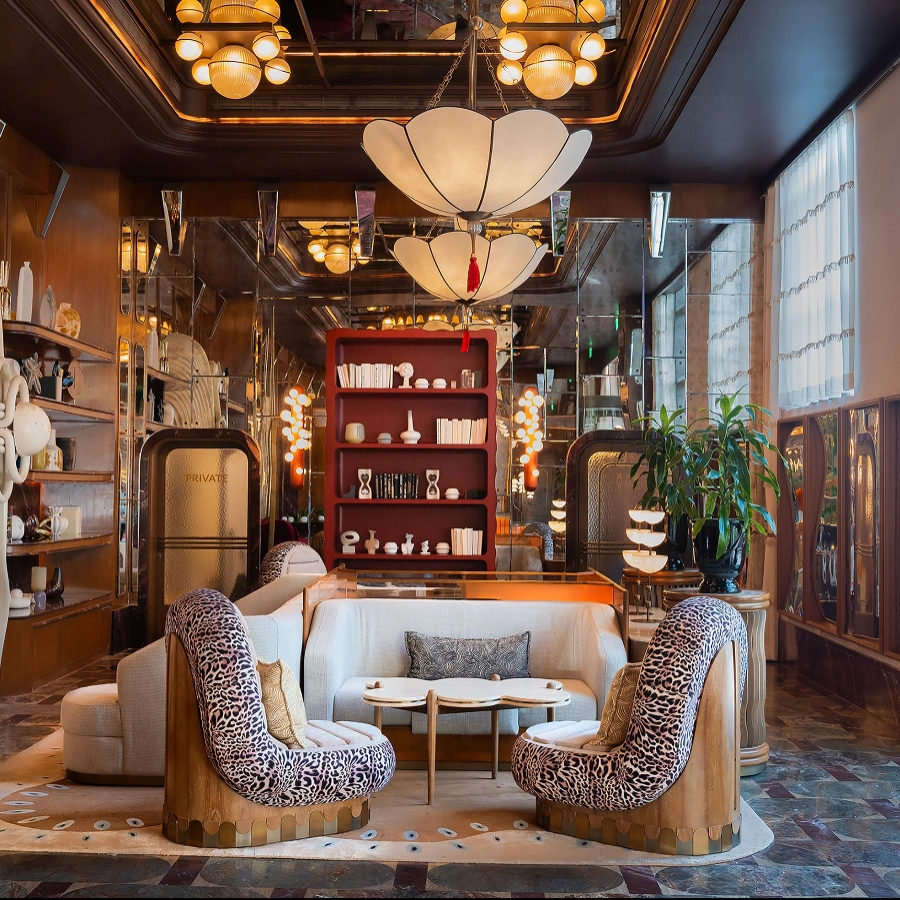
Izipizi Street’s hawker stalls—Moto Moto Sushi (Japan), The Serious Robata Guy (Japan), Izi Dimsum Station (China), Pizi Noodle Bar (Vietnam/Thailand), Kuri Kaw Kaw (Korea), Black Bear Boba (Taiwan), and Tama Goro Café (with all manner of coffee, tea, matcha, and fruit drinks)—make this easy. The central kitchen’s main menu features everything else: soups, salads, meat, seafood, noodles, rice, curries, and dessert. There are pockets and clusters in the space, mahjong-table seating, couches, and even chabudai best suited for hotpot dining. This shift in atmosphere may seem complex at first, but the core idea is simple: it’s built for wandering and discovery. Izipizi Street’s architecture allows for this looseness, with spaces that flow into each other like a ‘living thoroughfare’. Keith Menon, founder of Spiro Spero, says the space was designed for memory, to feel instantly familiar, like the streets of southeast Asia but “never one-note, always moving at different speeds”.

In an environment packed with multiple experiences, food could easily take a back seat. At Izipizi Street, it makes its case with a series of well-crafted dishes. “If a dish is deeply tied to a specific southeast Asian cooking method, format or specialist skill, it belongs to a stall,” says chef and co-founder Hanoze Shroff. “The shared kitchen holds the dishes that support the larger street experience.”

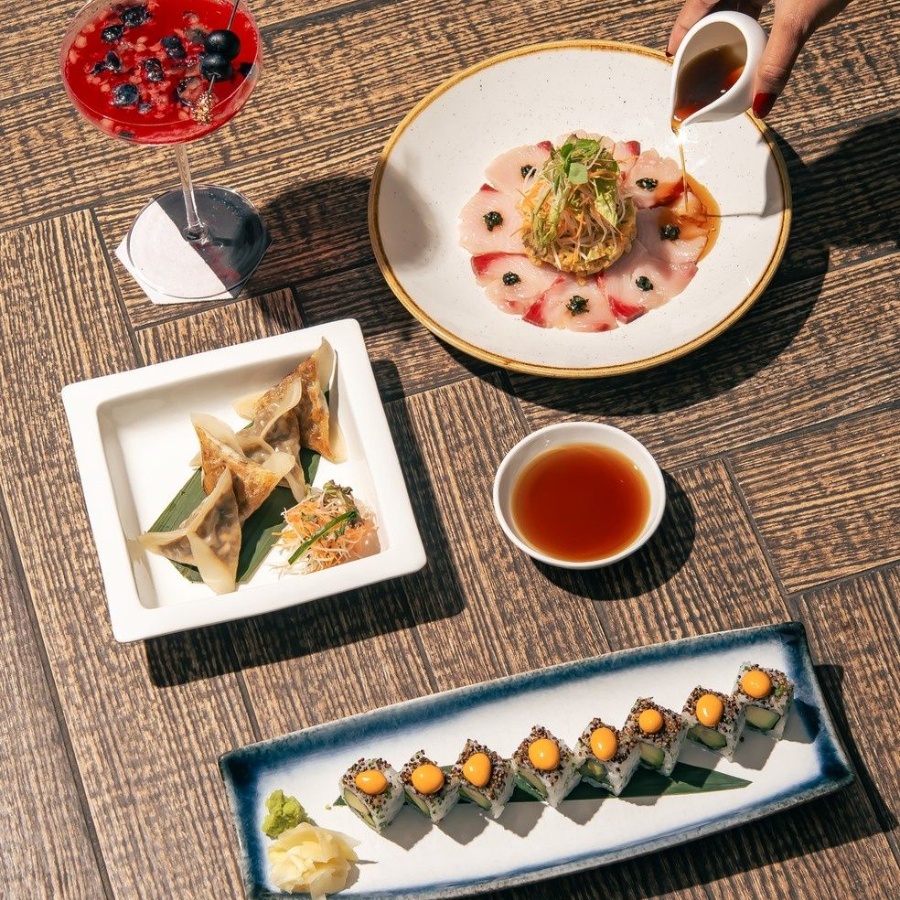
We start with crispy radish cakes, all serious crunch and flavour, enough to make us do a double take on a dish we take for granted. Not only were the cakes crisp outside and custardy inside, somewhere between pudding and pancake, they were also made even more generous with their topping of crunchy fried garlic and red chilli, scallions adding a green allium note and mushroom XO bringing it all together. Prawn hargow, with their delicately wrapped pleats and precise, even folds holding sweet, plump crustaceans inside, had a smidge of grated wasabi over the wrapping. Izipizi doesn’t try to make street foods fancy, but it does add some signature flavour flourishes.

The cold silken tofu carpaccio is possibly the best tofu dish we've had in recent times. It’s layered and textural, with its sweet coconut tigre de leche, buttery avocado, bright dashi cherry tomatoes, plump young pea, and puffed rice for crunch. Even on its own, the tofu is outstanding. When we rave about it later, Khilnani says it’s not supermarket stuff but has been specially sourced for Izipizi and is homemade.

If hunger is the best sauce, then the converse must always be true. But not always at Izipizi Street, we find out.

The joy of japchae, a silky dish of slickly sauced Korean glass noodles, is in its slip, its slither. Its magic lies in its subtly sweet soy-and-sesame seasoning and the slight snap of its veggies. What most places serve instead is a soggy, sugary, soupy mess. Izipizi’s japchae is memorably good, check, check, check on every count. Here, a main-course-sized portion of seafood tom yum is dialled towards comfort. It doesn’t have the sharp spicy-sour tang of Khao San shacks, but it’s a softer version with the light touch of coconut milk that somehow makes this bright soup more moreish, more...dare we say, drinkable. Chiang Mai chicken rice differs from Singapore’s popular Hainanese version. Neat slices of grilled chicken, armoured with crisp brown skin, have an impeccably cooked, juicy chicken breast beneath, served with chicken-fat rice that is unctuous and aromatic enough to eat on its own, a bowl of deep, rich, and somehow still clean and restorative chicken broth, and house sauces (bird’s-eye chilli sambal, sweet soy ginger scallion sauce, nam jim talay) that have us ping-ponging between them.

The cocktails follow this lead. While the drinks feature distinctly Asian ingredients, they feel playful, immediate, and almost anti-intimidating. It’s a refreshing change from the ‘serious cocktail bar’ ingredient-led, technique-led, storytelling model that’s everywhere these days. The Savoury One mixes reposado tequila with umami cordial and vanilla foam. The Bubbly Picante is fizzy and bright, with matcha salt and Pikachu cordial. Because it’s carbonated, it works even when you’re fed up with Picantes. Ok Lah is a southeast Asian Negroni with coconut Campari and yuzu bitters. Even beer—like our chilled Taiwan Gold Medal—is thoughtfully chosen.

The beverage programme has been made such that it works across the day, across people and moods. “We didn’t want alcohol to define the space,” says Singh. “You can come in for a coffee, come back for a boba, and stay for a drink. Or not drink at all.”

What brings Izipizi Street together isn’t a single dish or drink but the way you move through the space—drifting, tasting, sipping, and shopping. “Some people head straight to a stall,” says Singh. “Some sit and order across menus. Some start with drinks, some just walk around first.”

Trying to bottle the chaos of a street is risky business. Too much design feels staged. Too little, and the magic slips away. For Khilnani, the biggest challenge was service design. Izipizi needed the energy of a real street, along with comfort and ease. “We couldn’t ask people to keep getting up and collecting food from multiple stalls. The balance was in making it feel informal and street-like, without compromising on hospitality,” he says. “At the same time, this space doesn’t behave in one way.”

Which brings us to the vigorous singer.

Inside Izipizi Street, behind glass and neon, we find the Song Room, a karaoke space that also doubles as a private dining room. I step in for a peek, and arm-twisted by the crowd, agree to sing any one song of my choice. In a minute, everyone is singing along with me, a song that you can’t go wrong with at a karaoke session, even if you try: ‘Tequila’ by The Champs.

Maybe that’s what dining means now: losing yourself, for a while, joyfully unstructured.

Address: D-10, Central Avenue, opposite Gaurishankar Kalyani Bungalow, Kalyani Nagar, Pune

Timings: Noon to midnight

Price for two with a drink each: ₹3,000

Contact: +918956459457

The Nod Newsletter

We're making your inbox interesting. Enter your email to get our best reads and exclusive insights from our editors delivered directly to you.