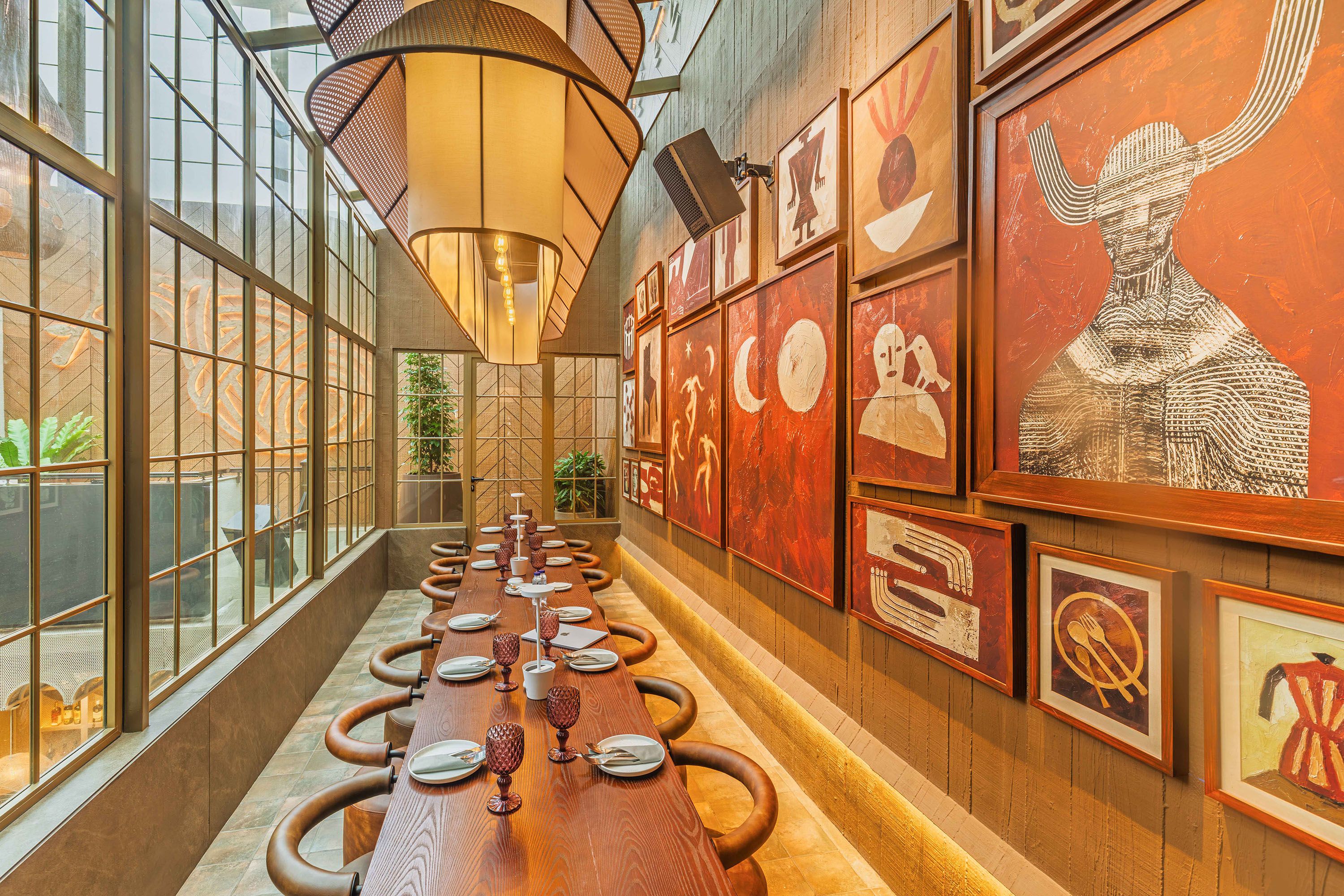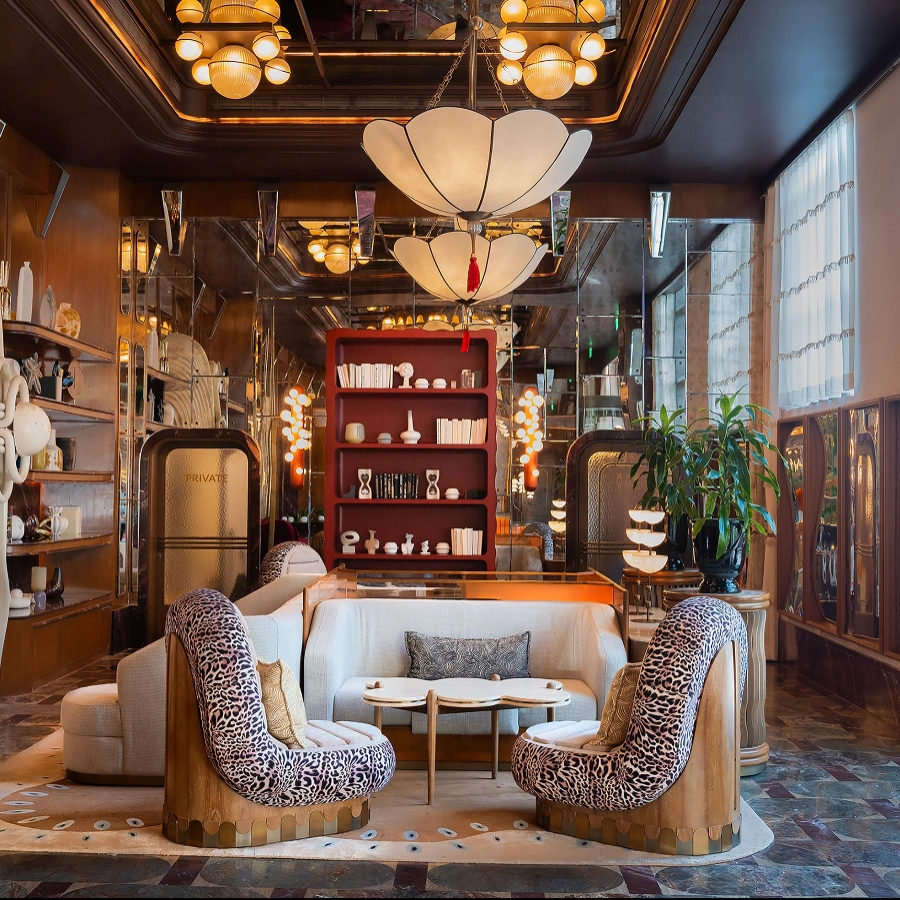






I walk into Lunamo on a Monday, two nights after its doors opened to the public, and find the vast 110-seater already full. Whoever said Kolkata’s “scene” was dead needs to visit the city’s newest offering, opened by friends Keshav Agrawal, Bineet Agarwal, and Anil Somani. It’s on Sarat Bose Road, about five minutes from Nutcase, the little cocktail bar that’s just over a year old and already considered one of the country’s best.
The first thing you see on entering is a wall of 24 heads—faces staring out at you—each balancing an egg on its crest. The egg is, of course, the proverbial idea waiting to be birthed. The heads? All crafted in Kolkata’s Kumartoli, the potters’ district, alongside the Durgas for Pujo. In recent years, sculptors of Kumartoli started using fibreglass (in place of mud) for the thakurs or murtis they ship overseas for diaspora festivities. And these heads at Lunamo have been crafted from the same durable material. They are immediately reminiscent of the goddess. This initial installation you encounter feels somehow symbolic of everything Lunamo is—rooted in the past but very much created for a wider audience and packaged anew.
Fourteen months in the making, Lunamo is, like many recent ventures in Kolkata, housed in a building that is over a century old, minus the somewhat pesky and sometimes restrictive “heritage” tag. Which meant the team was free to reimagine the structure as they wished. One look at the renovated building, and plenty might assume the building was constructed anew, specifically for the project. But look closer and you’ll see the telltale signs of an old Calcutta house—ubiquitous arches, wooden beams, and all that. Like many massive family homes of yore, the rooms here unfold into each other, one often acting as a corridor to the next, creating a sense of both privacy and community at once.
The use of Bengal craft is abundant. I met with interior designer Swarup Dutta, known for projects like The Calcutta Bungalow. “There’s a very significant nod to the grasses of Bengal,” I begin, as he gazes up at the skylights he created above what was the courtyard of the original house. The sun is reflected in his glasses. “The idea was to imitate or reference a nest, and that you might relax here, as you do when you return to your own home.”