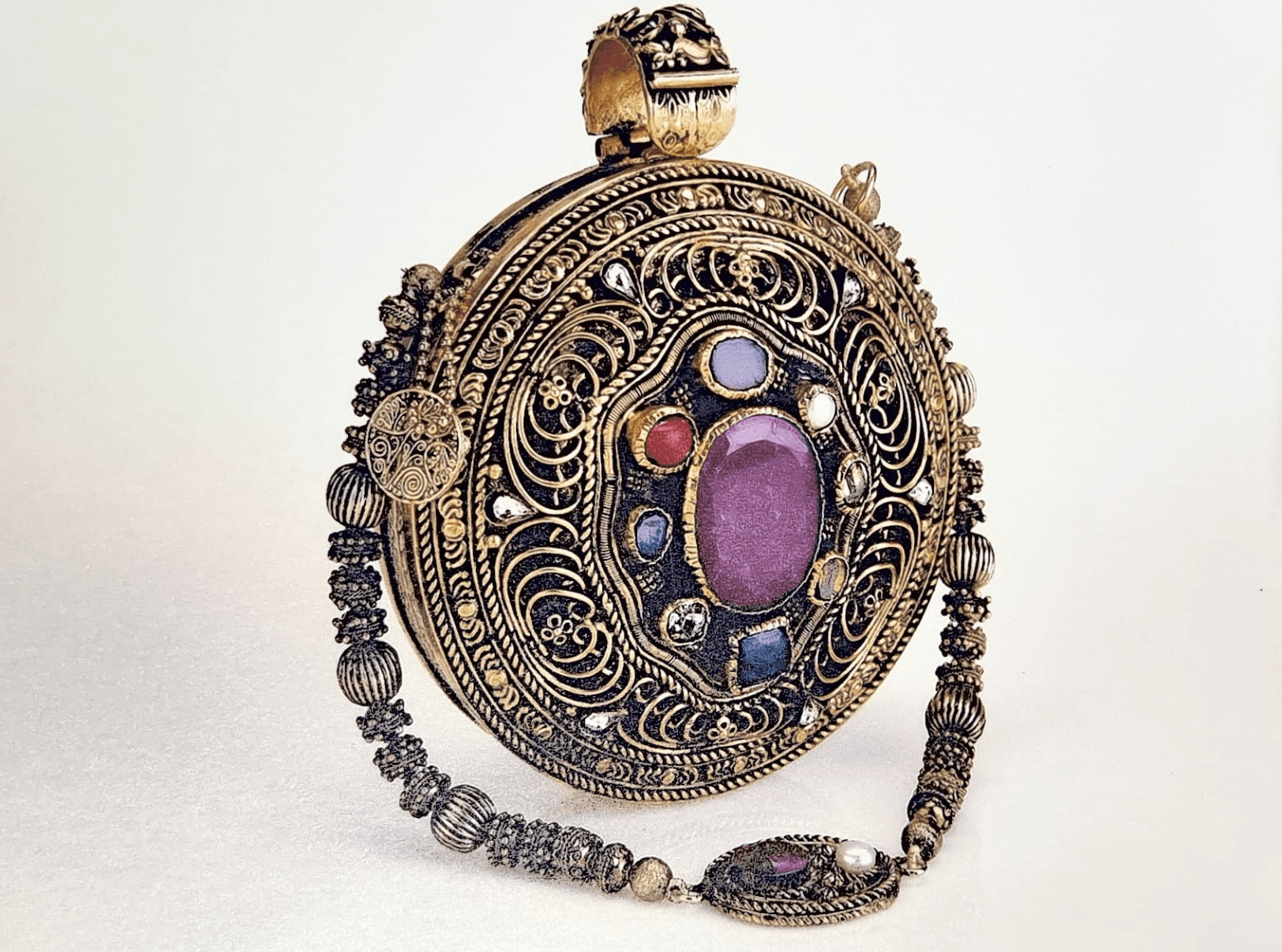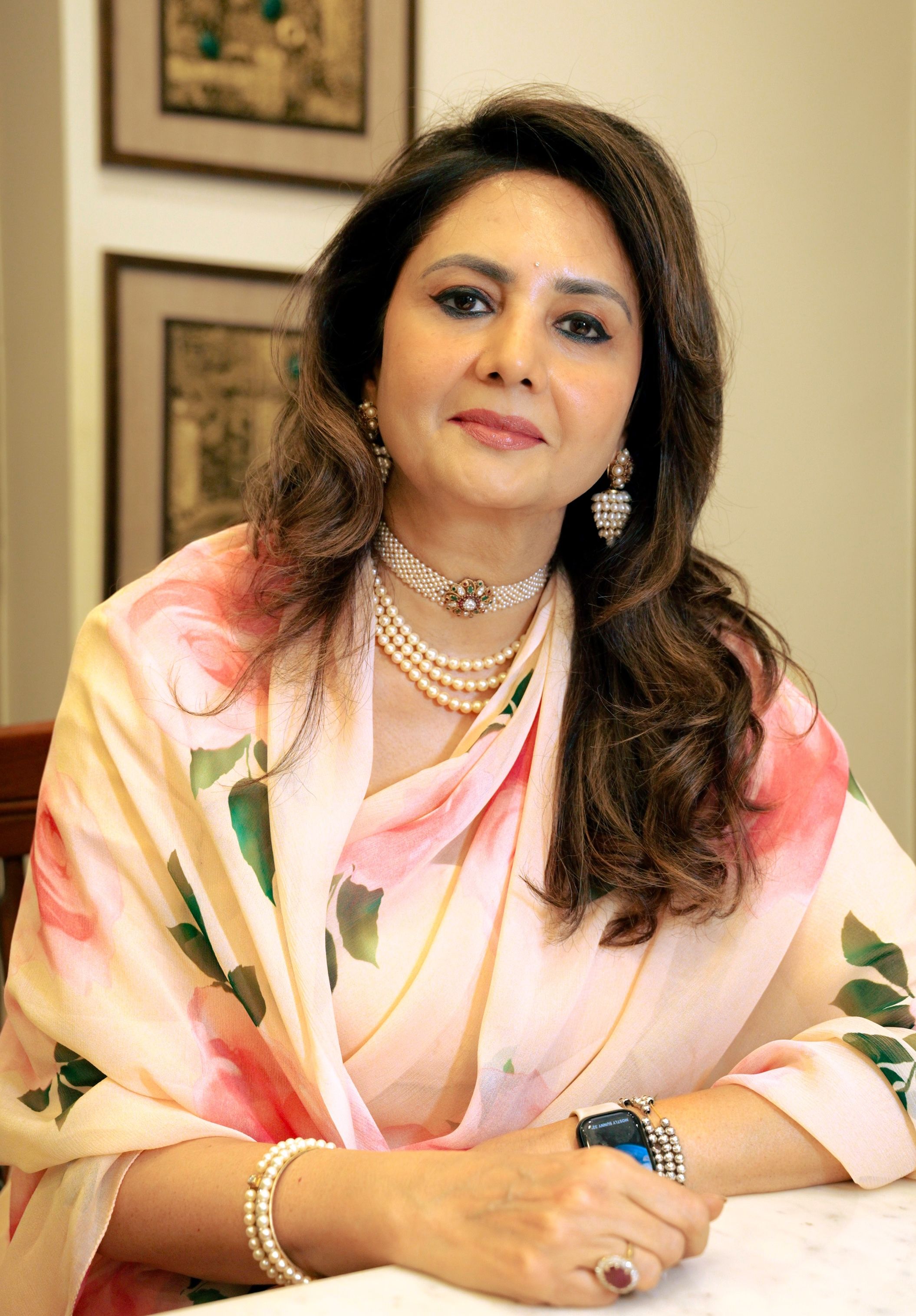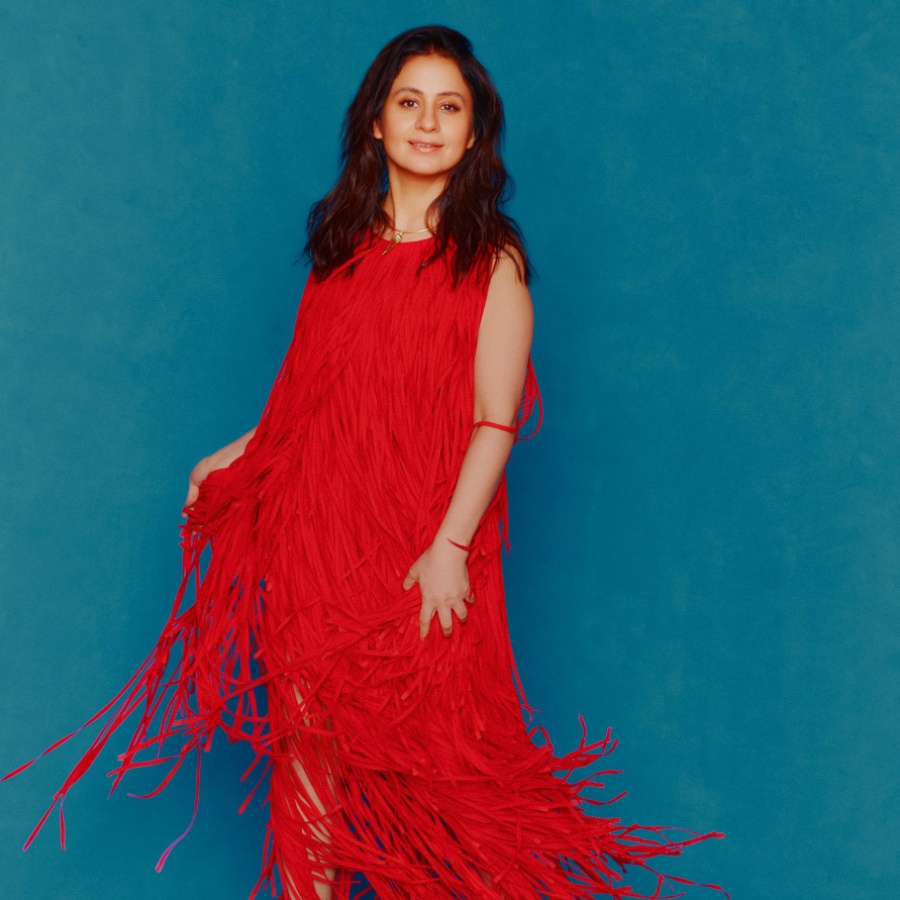





There’s a familiar sight that returns every wedding season: guests dressed in India’s finest couture—zardozi jackets, sculptural metallic saris, lavish brocades—accessorised with a logo-emblazoned bag from a Western luxury house. To me, this pairing has always felt visually dissonant. Why does a handcrafted outfit so often end with an accessory that speaks an entirely different design language? It’s a question Meera Mahadevia has been asking for nearly four decades.
We’re seated in the accessory designer’s home on Peddar Road, Mumbai, and like a caring Gujarati host she has plied me with a generous serving of nashto. I marvel at her living room decorated with hand-picked curios: an ornate temple panel integrated into the ceiling that still carries the faded red imprint of kumkum; a carved hichko (swing) that anchors the room; and Pichwai paintings that line the walls.
Raised in Mumbai, Mahadevia, the daughter of renowned economist, poet, and freedom fighter Vadilal Dagli, recalls a childhood home frequented by writers, artists, and industrialists who came seeking his counsel. Her father introduced her to Japanese haiku, often turning it into a game. “He would speak the first line in haiku, sometimes in Gujarati, and I had to create the second line,” she recalls. Growing up, her routine included weekly visits to Kala Ghoda’s art galleries followed by afternoons browsing the shelves at Strand Book Stall. At home, her mother draped herself in bandhani, patola, and jamawar, quietly nurturing an appreciation for textiles. “I think I absorbed not memories but sensibilities.”
Chasing craft, one at a time
A skilled artist, Mahadevia studied Fine Arts at Sophia Polytechnic, before pursuing her Master’s in Indian Aesthetics. In 1985, the homegrown luxury handbag industry was virtually non-existent. “There weren’t many fancy restaurants or major outings. The only handbags available then were these nondescript structured leather bags; utility outdid style,” she recalls. Spotting a gap in the market, Mahadevia set out to build an artisanal accessories label. She travelled the breadth of the country—from Bhuj to Jaipur—often alone and long before the internet made such journeys easier, and sought out master craftsmen, frequently staying in their homes and breaking bread with their families.