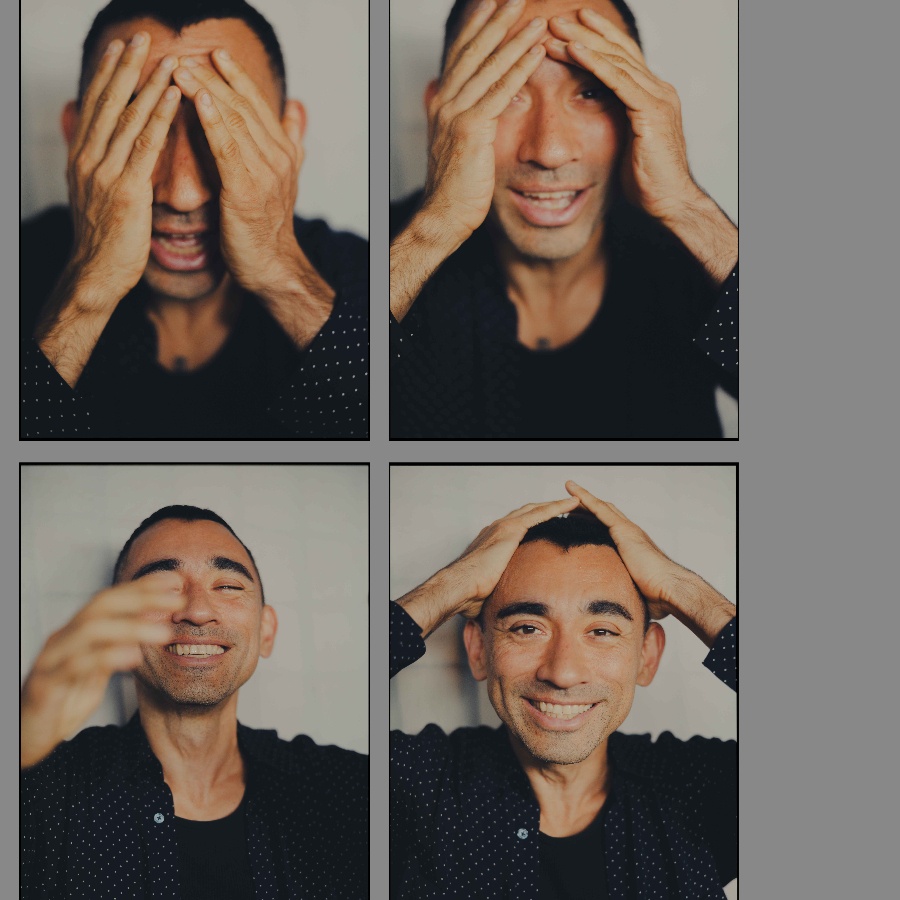
Who isn’t a multi-hyphenate these days? You may have met a stylist who’s also a creative director. A designer who also dabbles in art direction. A magazine editor who consults with pop stars. Anyone in the creative industry now is expected to be several things at once. But Nicola Formichetti has occupied nearly every role modern creative culture has to offer, operating as a “creative multi-hyphenate” way before we even had the terminology for it.
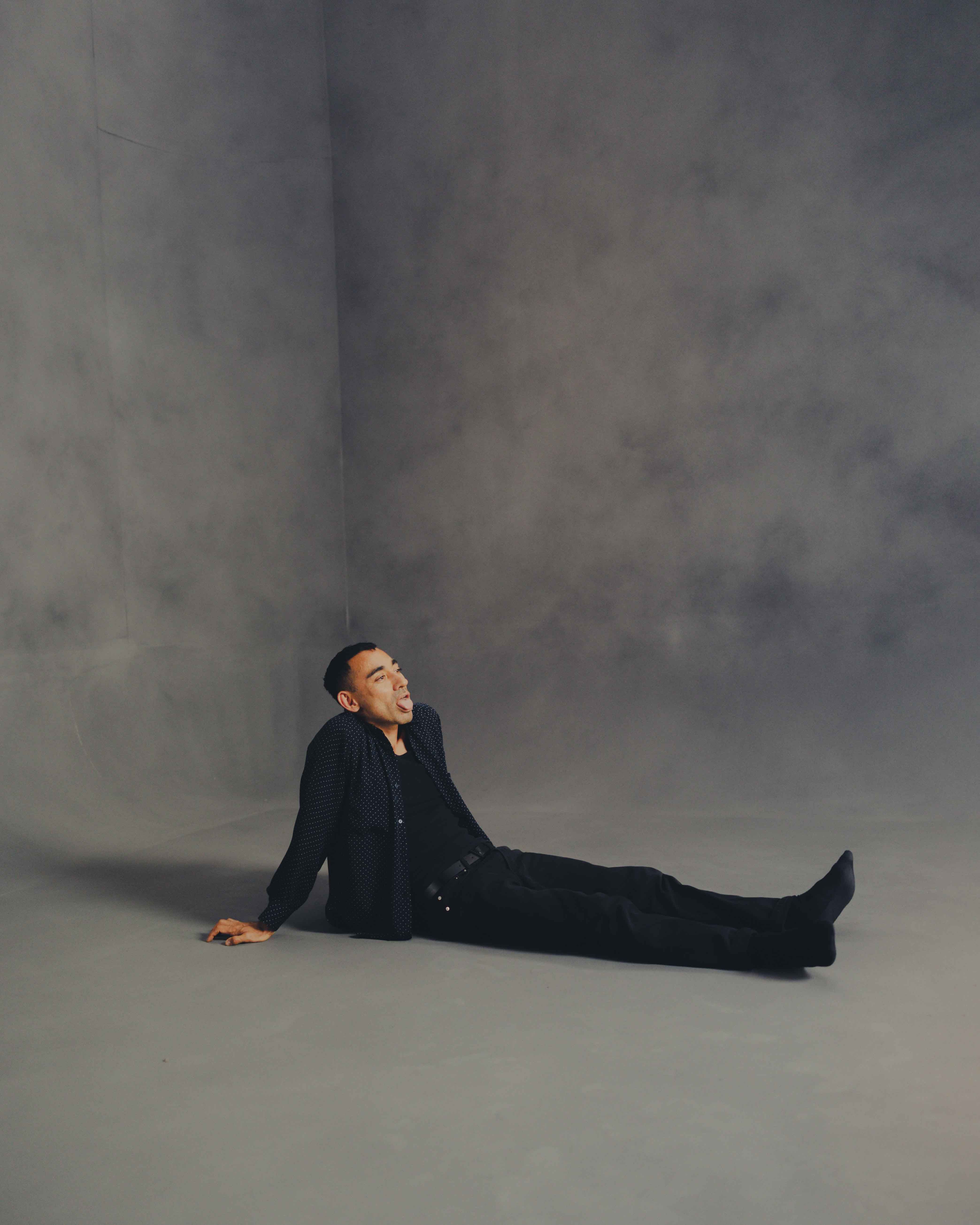
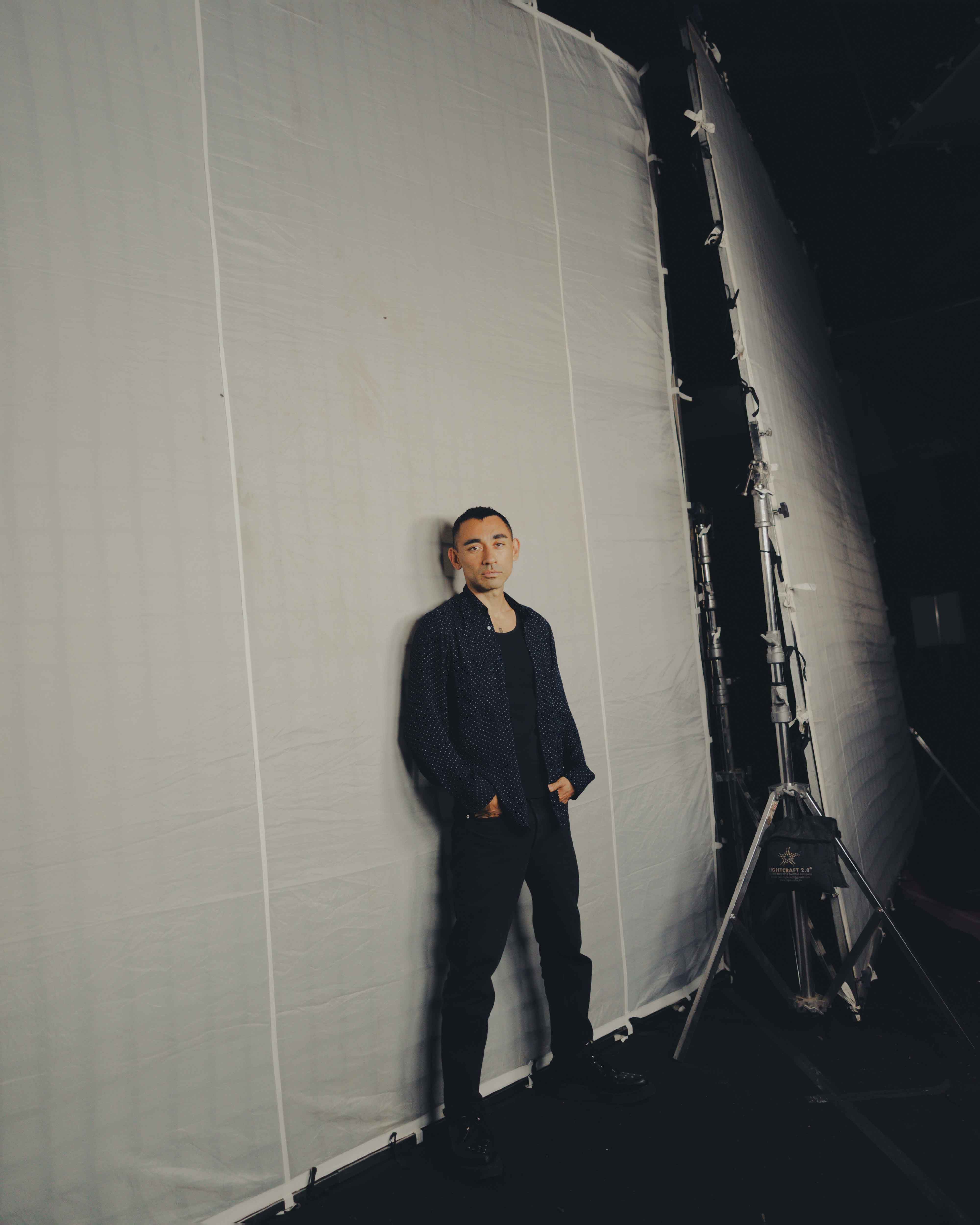
Today, Formichetti is wearing a navy-blue polka-dot shirt over a black tank, black jeans, and studded Robot creepers by George Cox for The British Boot Company. We catch him on set at Mehboob Studios in Bandra, Mumbai, where he’s creative directing two of MAC’s upcoming India campaigns. “On my count: one, two, three,” he instructs his team while directing a still. After the shot, he excuses himself from the scene and joins our photographer, Sarang Gupta, and me.
It’s his first time in India, but the country has long occupied an intimate place in his imagination. Born to a Japanese mother and an Italian father who first met in India as a flight attendant and a pilot, respectively, Formichetti recalls his childhood home was filled with Indian art on the walls—fragments of a country he had never actually visited. “I used to have these elephants covered in glitter in my bedroom, but I completely forgot about it. And when I landed and was walking through immigration, I saw Indian art on the walls and all my memories came back,” he says as we walk across various sets inside sets. “It’s like coming back home, you know?”
ADVERTISEMENT
Nicola Formichetti, global creative director of MAC
After doing fashion for two decades, Formichetti has turned to beauty. “I feel like now I’m about to go on a decade-long journey,” he says
This cultural fluidity—the sense of belonging everywhere and nowhere simultaneously—has come to shape Formichetti’s creative philosophy. “You can put me in any kind of situation, and I can adapt very easily,” he says. Though, as a teenager, he rebelled against his Japanese and Italian upbringing, throwing himself into London’s underground club scene and the fashion world. “I went a bit punk. I was a bad kid,” he laughs.
Formichetti’s fashion origin story is one that’s been told many times over. In the late ’90s, he moved to London under the guise of architecture school and was a shop boy at The Pineal Eye, a tiny multi-designer boutique in London frequented by industry insiders. “It was super cool and all the magazine people used to come there,” he says. It was there that Katy England gave him his first magazine job: one page per month in Dazed & Confused (now just Dazed) called Eye Spy. “I was doing whatever I wanted,” he says, explaining that the page was like a visual diary: collages of Polaroids of people and objects pulled from his daily life. Soon, one page became two, and two six. For one of his first shoots, he enlisted a friend who was a skater and mixed skate clothing with haute couture garments. “We didn’t have the internet at that time,” he laughs, “but it kind of went viral.”
That phrase coming from someone who has spent much of his career doing things intuitively and shaping culture is not surprising. Long before brands became obsessed with engagement metrics and creating “moments”, Formichetti knew image-making could function like pop music: it could be fresh, emotionally resonant, and instantly shareable.
A slew of consulting gigs with brands like Prada, Dolce & Gabbana, and Gucci, and projects and roles at V, V Man, Another, Another Man, Arena Homme, and Vogue Hommes Japan followed. He became Lady Gaga’s personal design director after meeting her on a V set, and their collaboration went on to define the era of the internet-age celebrity. There was the infamous meat dress in 2010, followed by her arrival in a Hussein Chalayan “egg” at the 2011 Grammys. Then came his two creative director stints, first at Mugler, then at Diesel, which he juggled alongside designing for Uniqlo and his own label, Nicopanda.
It’s a career trajectory that seems to have been planned on a vision board. He must have had a plan, I ask. “Nothing. Zero plans. I just loved fashion and beauty and creativity,” he says, modestly admitting he didn’t really have a particular skill or specialised knowledge about anything. “The only thing I would say I had was passion, and I was surrounded by really fun friends. I never do anything alone,” he says, likening his role to that of the conductor of an orchestra—finding talented people, understanding their strengths, and building a world around them. Formichetti may not have come from a beauty background before joining MAC Cosmetics last year as global creative director, but that is completely beside the point. What he understands is the power of image-making and its place in culture.
“I’m a little bit of a stunt boy,” Formichetti says
His first few months at MAC made that immediately clear. Shortly after starting at the brand, he made Doja Cat eat a MAC lipstick made of chocolate and caramel on the VMAs red carpet. “We were going to announce her as the brand ambassador, so we thought let’s do something fun. The meat dress is still one of the most ‘shocking’ moments at the VMAs. I wanted to do something even crazier. I’m a little bit of a stunt boy,” he admits, grinning mischievously. “Later, I saw an article: ‘The two most iconic VMA moments, Doja eating lipstick and the meat dress’. So, I was like check, check.”
The ‘I Only Wear MAC’ Studio Fix campaign that followed—all black-and-white images shot by Inez & Vinoodh featuring a cast that included Doja Cat, Kris Jenner, Kristen McMenamy, and Gabriette—kind of went in the opposite direction. “People were expecting me to do something crazy,” he says. Instead, it was minimal, stripped back (quite literally, since everyone was nude), and inspired by MAC’s core ’90s DNA. “When I had to present the campaign to the board, everyone on the team and I were like, oh my God, I’m gonna get fired on day one, because who shoots a foundation campaign in black and white?” he chuckles. “For me, it was about elevating the brand. To cut through the noise, you have to do something a little different. It felt like the right thing to do.”
As anyone and their grandmom could have predicted, the internet had opinions about the foundation campaign being rendered in black and white. However, Formichetti has learned to detach himself from armchair critics a long time ago. In 2011, when his first show as creative director of Mugler landed him on the front page of The New York Times, he recalls feeling ecstatic at first. “And then I went to Twitter, I read all the comments, and I became so depressed. It was horrible because they were just talking about random stuff, like the way I looked. And so, I learned the hard way.” Now, Formichetti protects his taste and his peace from online chatter. “At least they’re talking about it,” he smiles.
For someone who’s overseeing product development, global campaigns, and international shoots simultaneously while staying hyper connected with everything that’s going on in the world, Formichetti exudes an almost eerie calmness. “I don’t consider any of this work. Even today, I’m on set, and I get to do this fun stuff, so it doesn’t feel like work at all,” he shrugs. “I think I’ll retire when I start thinking that this is work.”
Formichetti's creative rituals include meditation, playing the piano, and listening to classical music
Though, in order to continue being creative, he does admit he attempts to switch off. Every morning, he tries to “quiet the mind” with rituals that include meditation, walking, playing the piano, and listening to classical music. “I try to have a moment where I don’t think about anything, and that’s when I get, like, downloads of creativity,” he says.
Our conversation inevitably turns to AI, a much talked about subject in creative professions, often approached with anxiety. Unsurprisingly, Formichetti embraced it early. During the Covid-19 pandemic, he immersed himself in all things Web3, gaming, metaverse, and AI, so much so that he even took up the role of artistic director at the Web3 fashion start-up Syky. “I remember when ChatGPT first came out, my new best friend and boyfriend was ChatGPT. It was kind of funny, very like that movie Her,” he jests.
While he might be an AI adopter, he also understands how AI threatens to flatten culture and creative work. “When you get too much into AI, you can also lose yourself, because it’s so easy to do. You prompt it, and then you do such mediocre work,” he says. “Like, my mom can just prompt and create a MAC campaign, you know? Now, the exciting challenge is that we need to do something even better,” he adds. “All the creative people around the world are trying to create things that don’t feel like AI. So, that’s our task at the moment.”
Which perhaps explains why, even as he embraces digital culture, Formichetti keeps returning to physical objects: books, sketches, and print magazines. He recently revived MACzine, what used to be the brand’s internal publication for its makeup artists, partly because he missed the materiality of magazines. “I think it’s nice to create something physical.”
At the end of our conversation, I ask him what he’d put on Eye Spy now if he were making a page today. He pauses for the first time all afternoon. “Maybe I’ll do a sketch from memory. No phone, no Pinterest, nothing.” A fitting answer for someone who’s played a pivotal role in defining the language of the internet age.