In a Pankaj Heritage garment, the shiny green bit is probably a real emerald
Working with craft clusters across the country and using the rarest of materials, revivalist Pankaj S Chadha is quietly creating some of the most valuable couture in the country
The first thing you notice when you meet Pankaj S Chadha of Pankaj Heritage is the ultimate old-luxury flex—a massive vintage Golconda diamond sitting on his ring finger. “This isn’t an engagement ring. I’m single,” he laughs, “This old diamond was once part of a royal treasury.” But provenance quickly gives way to the personal. “My numerology and astrology make me Venus dominant, which means I’m drawn to the finest luxuries in life, like couture, diamonds, music, dance, and the arts. They also say Venus-dominated artists produce work that is magnetic and visually alluring.”
The Venus connection comes up often, less Gen Z zodiac-tok and more a peek into his vision as textile revivalist and designer. Chadha’s references are inherently philosophical; when he talks about his work and his craft, he speaks in concepts like navarasa, shringar, tapasya, and, of course, Vedic astrology. Occasionally, a Schiaparelli or Rajesh Pratap Singh will pop up. Even he isn’t immune to Daniel Roseberry’s genius or Pratap Singh’s white shirts.
But this 38-year-old’s single-minded mission is to revive the oldest of ways of making and patronising Indian couture. “I’m a purist. My diamonds have to be Golcondas, my pearls Basra. Be it zari or gota patti or any form of heritage craft, it will be revived and embroidered in its purest form by master artisans.”
ADVERTISEMENT
Silverware, miniature sculptures, and embroidered pieces in a display cabinet at the atelier in Lado Sarai
The entire studio space is filled with intriguing gems—garments and artefacts
The Delhi-based designer began as a painter of miniatures (“It’s why I’m still a perfectionist; it’s all in the details for me”) and then, as a young fashion graduate, he started restoring vintage textiles. Over time, he realised it was “reviving textile and craft so it can be worn today” that was his true calling. “I realised that to do what I do, I had to become a patron first. If I don’t patronise the craft in the right way, I cannot create what I do.”
So, instead of fashion shows and marketing campaigns, he invested in craft clusters across the country. Navratani zardozi in Rampur, Uttar Pradesh; zari kota in Kathun, Rajasthan; Patan patola in Patan, Gujarat; jamdani in Murshidabad, West Bengal; Kanjivaram weaving in Aarni and Kanchipuram, Tamil Nadu; and Lucknowi chikandozi in Barabani, Uttar Pradesh, are some of the region-specific crafts that Chadha works with, each revived from “fourth- and even sixth-generation artisans” to produce the most undiluted form of the technique.
And then kicked in his responsibility to ensure those clusters have enough work to not just sustain but also make them thrive. His business strategy comes from Devdutt Pattanaik’s Business Sutra, which he read while locked down during Covid. “He said there are two ways of doing business. One, you make it a battleground—you fight with your employees, your competitors, everyone. But there’s another way, the Rang Sutra, where, like Saraswati, you hone and master your knowledge. Once she’s established, Lakshmi will come—that’s money and economic sustainability. And after that Durga, who brings fame and power. Imagine, my bathroom read was my business school,” he quips before adding, “This, and I watched an interview with Anita Lal. Her story and how she made Good Earth just inspired me.”
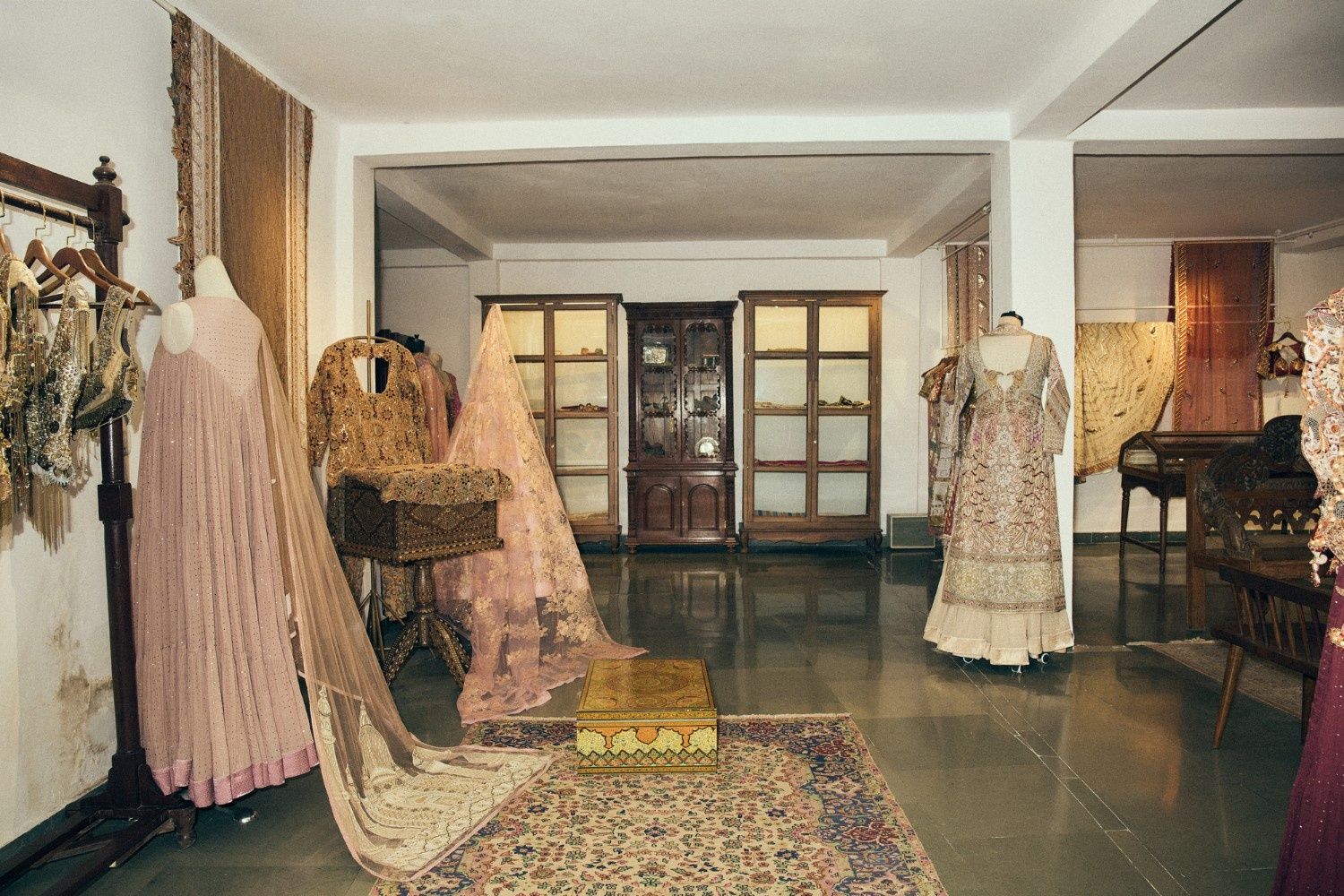
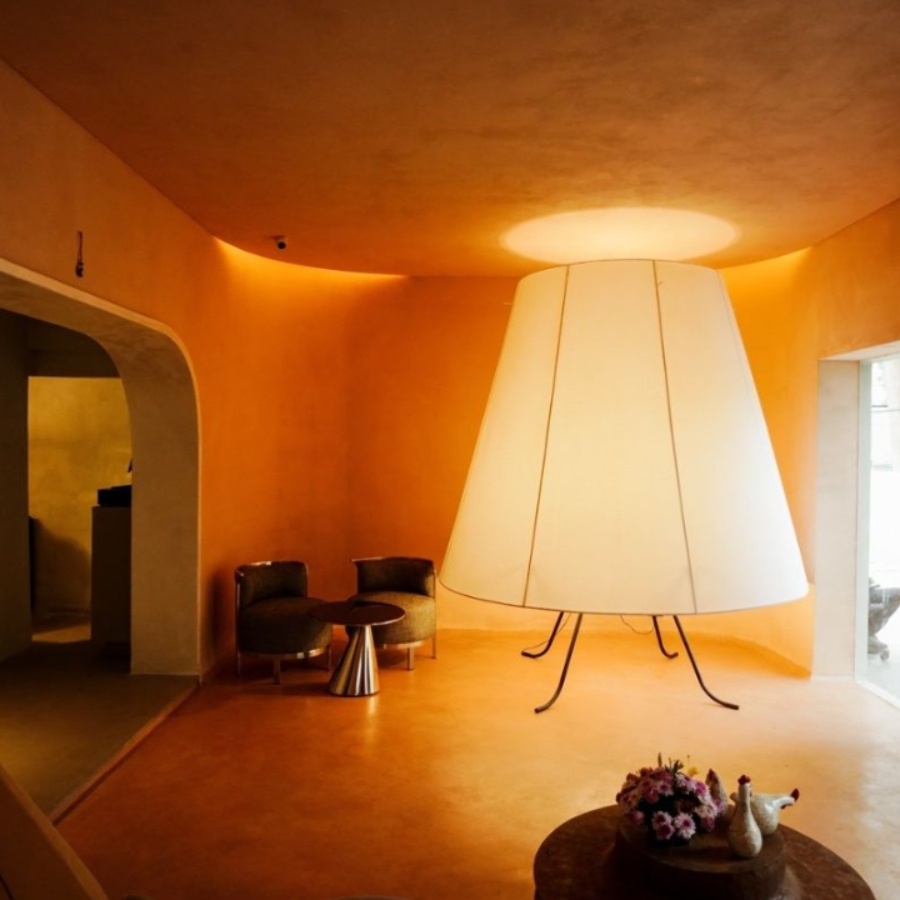
Inside the studio in Lado Sarai
Through his brand, Chadha carries the purist dialogue forward. Pankaj Heritage isn’t one you’ll find at a designer mall or at a headline-making flagship. And even though he’s on Instagram, he barely shares the breadth of his collections. If you want to see his collections or commission a garment from him, you have to do it the old-school way. Oh and before you go you should know this: he’s not cheap (you’re investing in handmade craft-led couture) and he doesn’t work on rush orders (the couture here takes months, sometimes years, to make, no matter your last name or how large your social media following is). Work the phone, book an appointment, and head to his studio in Lado Sarai in Delhi. A local gym stickered with greased-up muscled men greets you on the ground floor, but head up and you’re at his salon-style speakeasy boutique. Here you’ll often spot everyone from pharma tycoons and young heiresses to billionaire techies and some of the country’s biggest art patrons—people with surnames like Ambani, Jhunjhunwala, and Poonawalla are frequent clients. “I’ve been lucky, but my clients today understand my craft. They don’t want to wear what’s already out there photographed and flooding feeds. They find me and it works,” he says.
ADVERTISEMENT
Artisans at work at the atelier
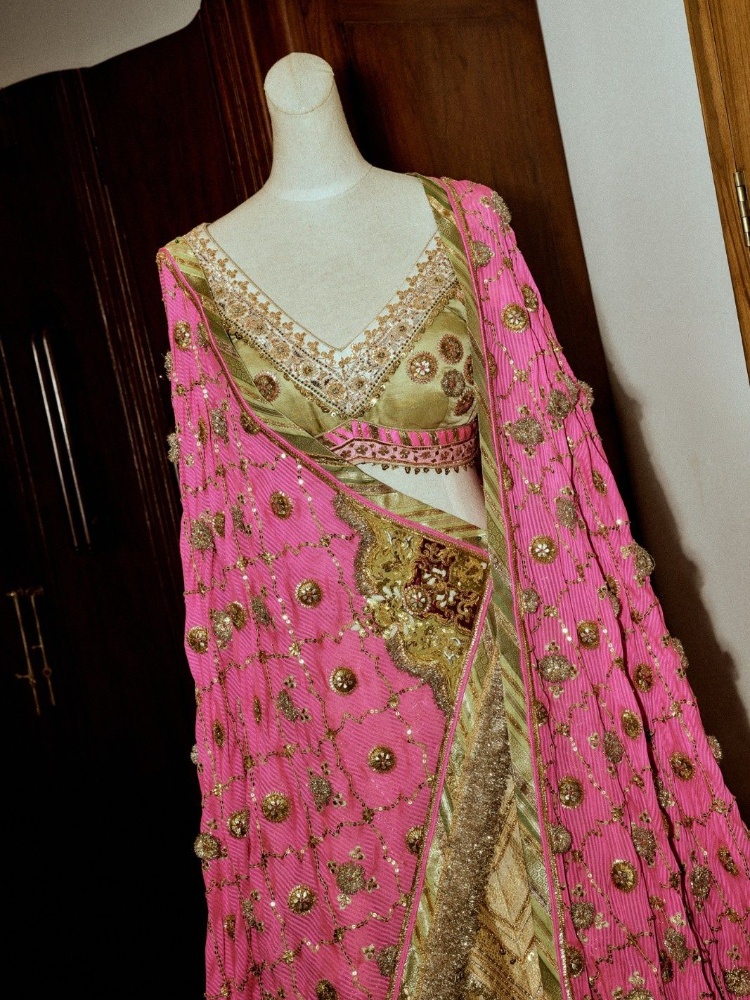
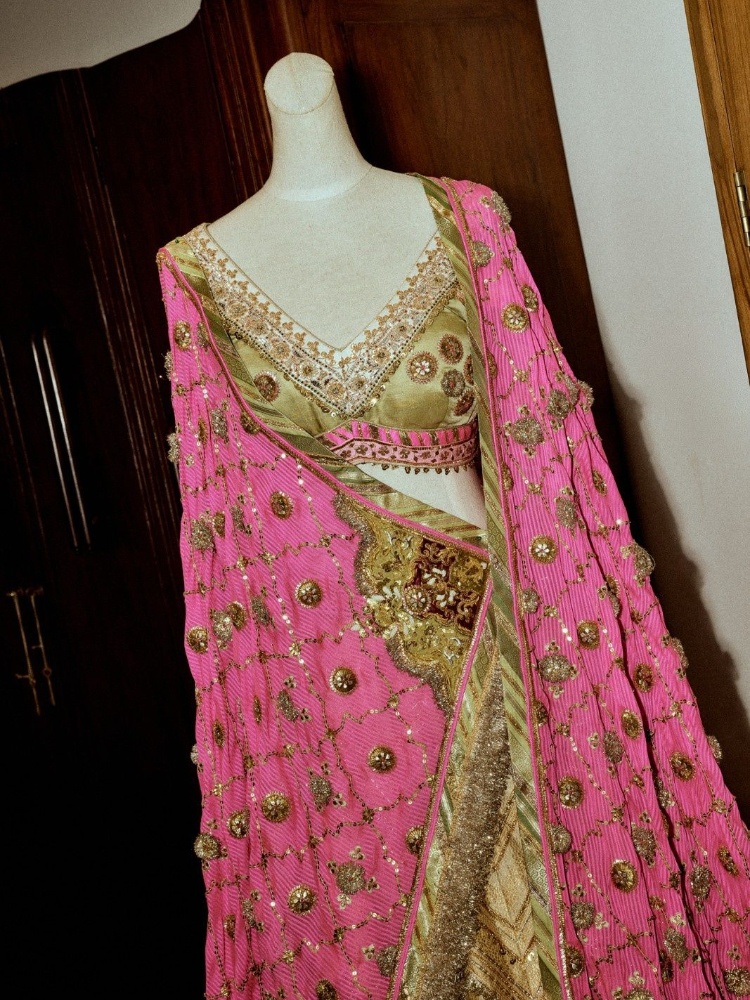
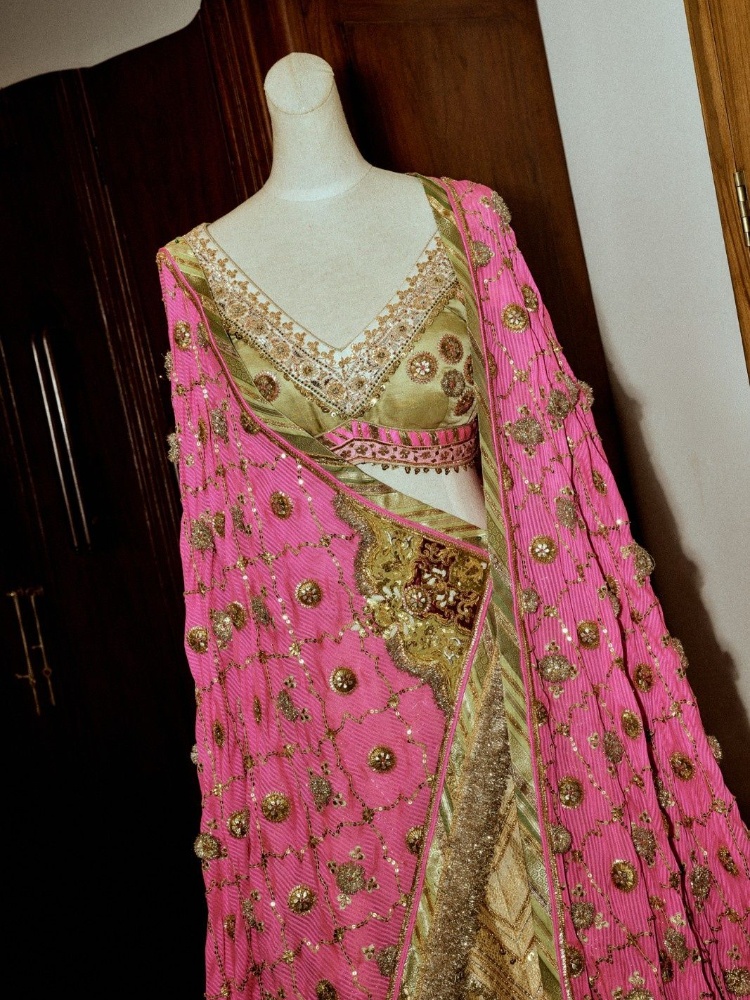
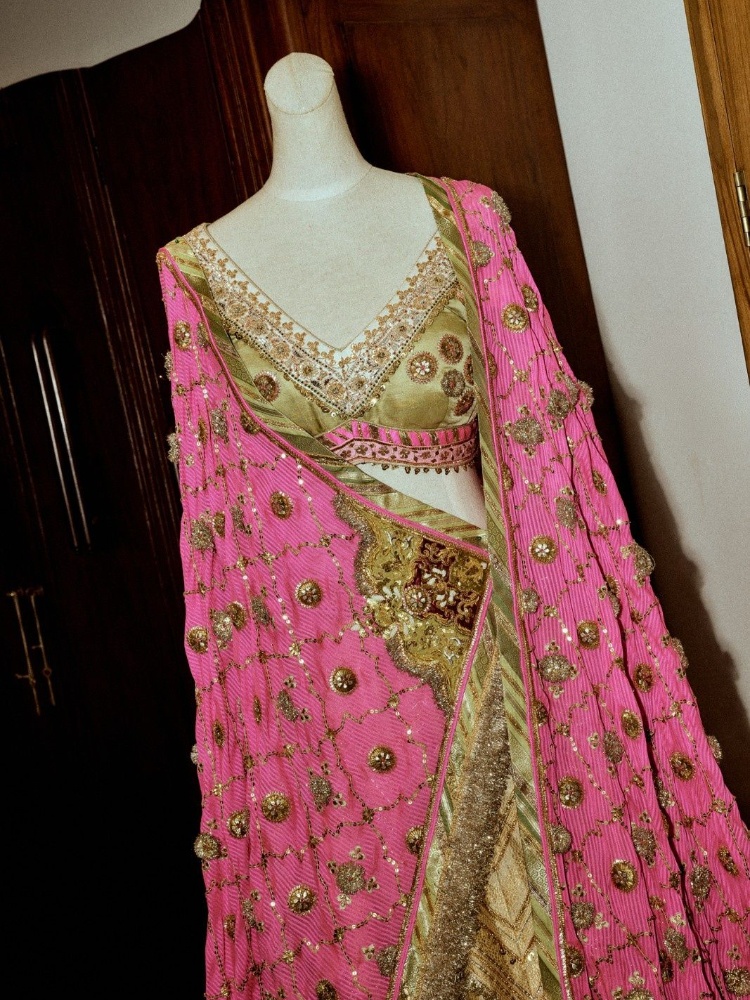
An ornate Pankaj Heritage blouse featuring miniature paintings
A maximalist in the true sense—Chadha often employs various crafts from across India to create a single garment
Vintage furniture at the couture salon
Once inside you’re in a white-cube gallery of sorts, surrounded by commissioned pichwai paintings, embroidered guides to understanding Indian craft, and cabinets stacked with vintage silverware, textiles, books, and craft swatches. On the racks are a handful of his pieces; think lehengas and saris but also gilets, kurtas, and bolero jackets. A single lehenga could have travelled across a dozen craft clusters; his signature lies in pairing various crafts, so expect chikan, kota, jamdani, and pichwai across a single garment. They’re unapologetically maximalist, but the depth of craft adds a unique sophistication to each piece. If you spot something sparkling, it’s real rubies, emeralds, and Basra pearls. If there’s textile, it’s handwoven. If you think it’s a tulle base, it isn’t—it’s “completely hand-embroidered, or hava mein kaam”, as it’s known. From peacock-feather quilting to beetle-wing embroidery and cutwork embroidery made by burning incense sticks, expect to find both the finest and rarest of Indian crafts come alive at his atelier. His best pieces, though, come out of the vault hidden in his studio, for clients he knows are serious collectors. And often, he’ll pull out his magnifying glass to show you the detailing of the craft. Each piece is woven with stories, heritage and history, and Chadha will ensure you know what you’re wearing and who made it.
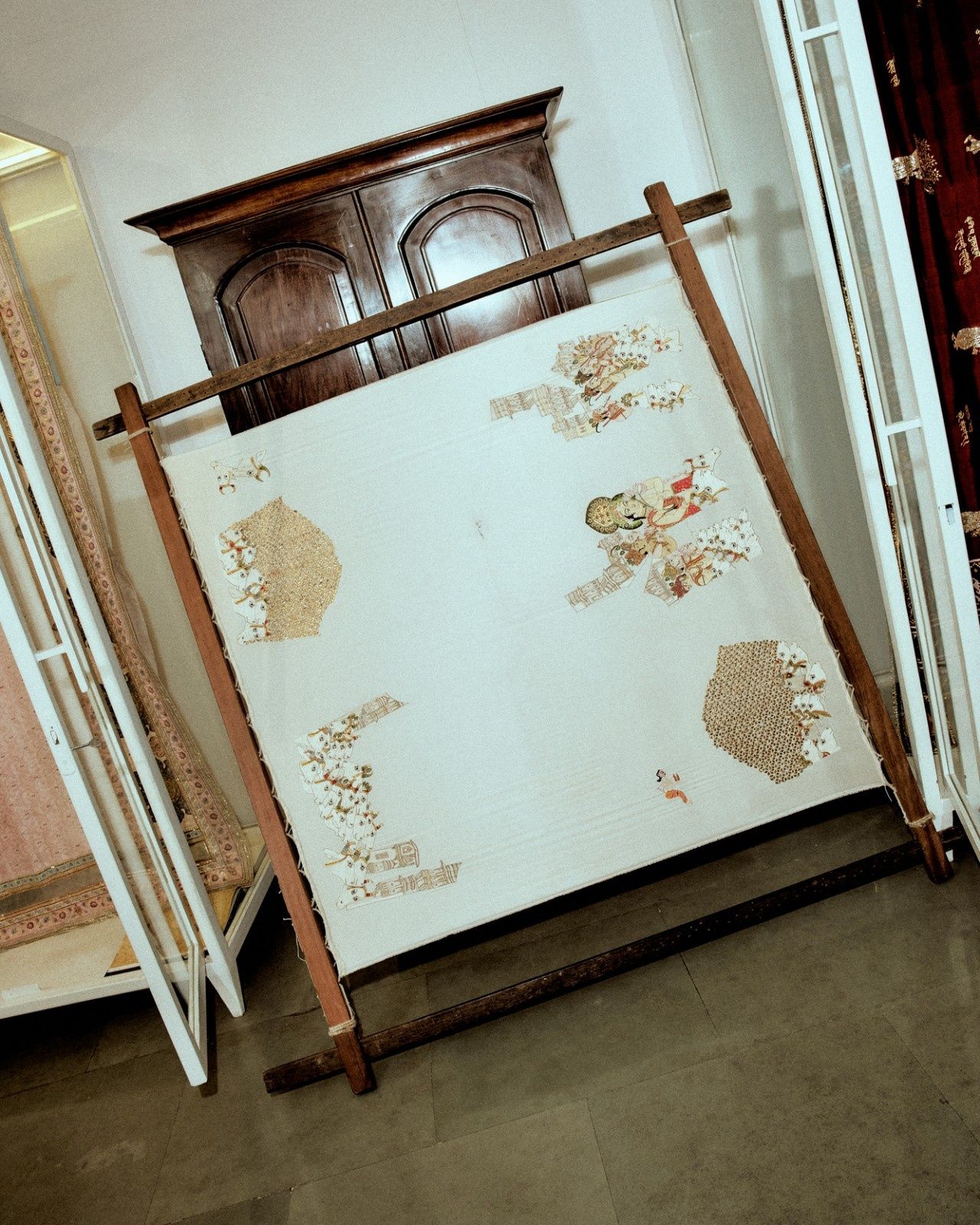
A hand-embroidered textile mounted on a wooden frame
Even as his atelier works on pieces that are anywhere between three to eight months from completion for some of India’s grandest weddings, trousseaus, and wardrobes, this designer is most excited about his upcoming role as a revivalist consultant with the Shrinath Ji Temple in Nathdwara, Rajasthan, where he will be restoring and reviving their historic collection of antique pichwai paintings for their upcoming museum. “Imagine, for a person like me it's beyond a gold mine. I’m getting to see, study, and work with historic pieces straight from the archives.” In an industry built on what’s new and trending, Chadha is betting on memory and artisanal heritage. And with that he’s quietly rewriting what luxury in India looks like.