Fashion04 Nov 20266 MIN

How to dress a goddess? The costume designers of ‘Ramayana’ have some thoughts

From Sita’s much-debated blouse to an archive of 8,000 textiles, Rimple and Harpreet Narula talk about the extraordinary task of dressing characters everyone already has an image of

Image

Courtesy Rimple & Harpreet and IMDb

In the minds of Delhi-based designers Rimple and Harpreet Narula, costuming characters for a period drama on the big screen isn’t entirely different from dressing models on the runway. For starters, their moodboard seldom reflects the trend du jour. For the duo, inspiration is more often buried deep in museum archives, be it the Calico Museum of Textiles in Ahmedabad or the Met in New York. You may not find the trendiest fishcut lehenga at their flagship store in Delhi, but spotting a framed ancient textile peppered with mukaish ka kaam on the walls, sourced from Turkey, is probable. Their strength lies in interpreting archival pieces anew and reviving traditional attire for a contemporary audience. “A similar creative process is required for clothes in elaborate costume drama films, which is why filmmakers come to us,” explains Harpreet, whose affinity for cinema is personal and stems from a family business centred on film distribution and production.
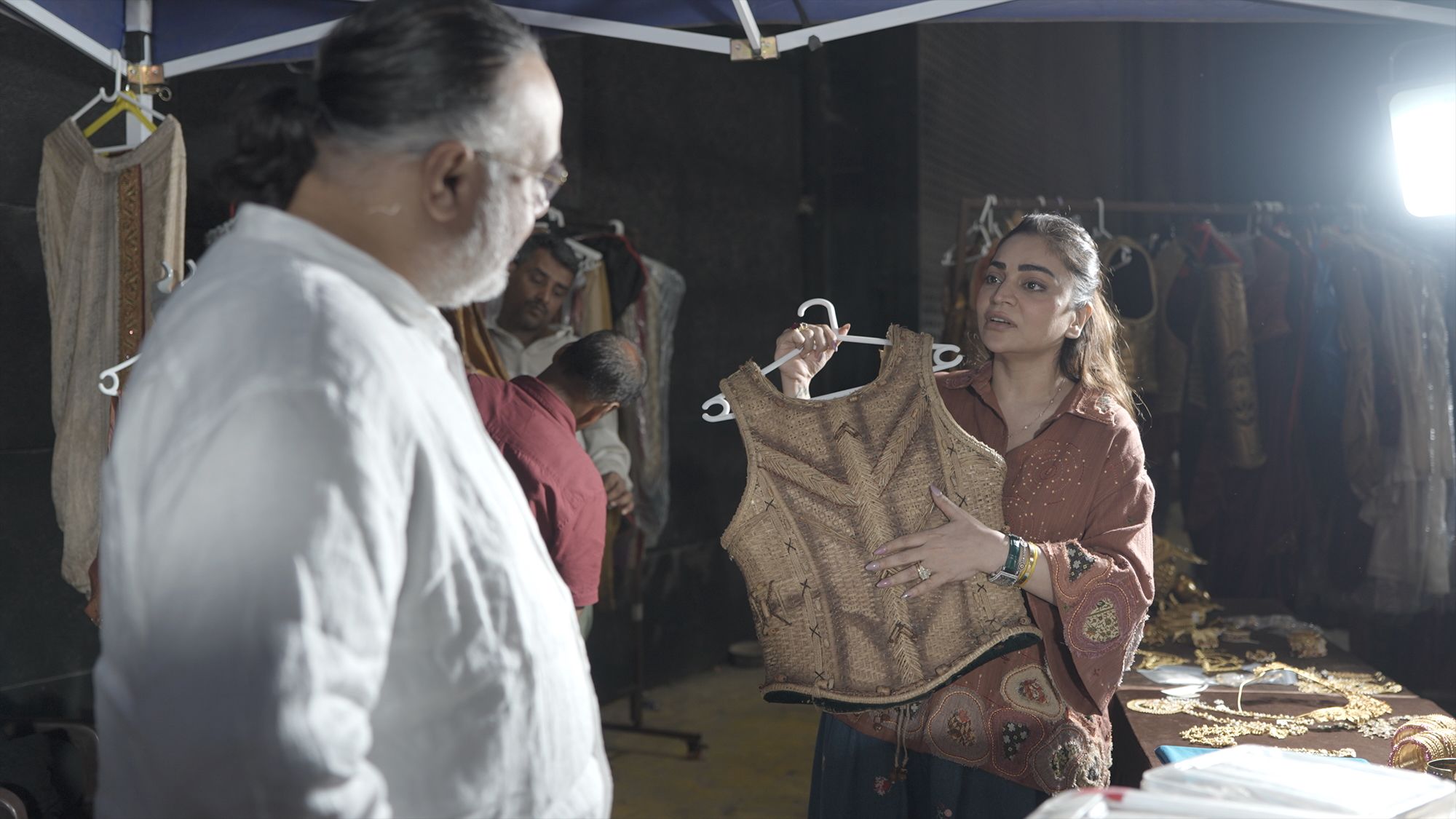
Ramayana Costume Designers Rimple and Harpreet Narula
Costume designers Harpreet and Rimple Narula on set

Having worked on period dramas before, including Sanjay Leela Bhansali’s Padmaavat (2018) and Heeramandi (2024), may have given them an edge in costuming history and delivering on time, but the stakes for director Nitesh Tiwari’s Ramayana: Part 1 were higher. Close to three years in the making, the film starring Ranbir Kapoor, Sai Pallavi, and Yash is based on the mythological epic of the same name and has already raked in controversy for its costumes online. Rimple and Harpreet may not remember the exact number of costumes they created for the film, but they let us in on their use of archival and handloom textiles, their collaborations with Amrapali in Rajasthan and artisans in Nagaland, and why they chose to stitch rather than drape this sartorial universe.


You’ve designed costumes for historical dramas before, but the Ramayana is a mythological epic. How was your approach different?

Harpreet Narula: I would still put this in the category of a period costume drama. Having said that, it is a film that has historical, cultural, and religious significance. We thought about how devotees dress idols in temples and what a beautiful poshak (clothing for deities) for Lord Ram and Lord Sita might look like. This was our starting point. Then, we sat down with the filmmaker [Nitesh Tiwari] to understand his vision and the nuances that were vital for him. Every filmmaker interprets the same story differently, and we had to factor that in.

Rimple Narula: Primarily with historical cinema, you’re recreating something that has been recorded, so you have references. For a mythological film, we had to be extra cautious because the characters live in our collective consciousness. Everybody has grown up with their own version of this epic, and our task was recreating a version of that onscreen.

How does one then visualise such a universe? What was on your moodboard?

HN: We were driven by faith as much as by our research. We wanted the characters to resemble how people see them when they pray at different temples or in paintings or calendar art. This became our starting point rather than trying to trace what garments looked like 10,000 years ago, which wouldn’t have worked considering there are no surviving textile references.

We always turn to our archive of almost 7,000 to 8,000 old textiles in such cases. We are constantly researching historical textiles and adding to it, not just from India but around the world too. Whenever we start working on a film project, we start sorting out references from what we already have rather than opening Google or Pinterest for references people have already seen.

RN: Seminal works by artists like MV Dhurandhar and Raja Ravi Varma, alongside those belonging to the old Bengal School of Art, were on our moodboard. We turned to calendar art, historical murals, and previous TV and film adaptations of the Ramayana. We worked with Amrapali for jewellery references.

But our interpretation had to feel current and speak to the next generation. There was a sharp focus on making the pre-vanvaas (exile) sequences as rich as possible. We also saw this film as an opportunity to showcase the rich heritage of Indian textiles and costumes to an international audience, so we went all out.

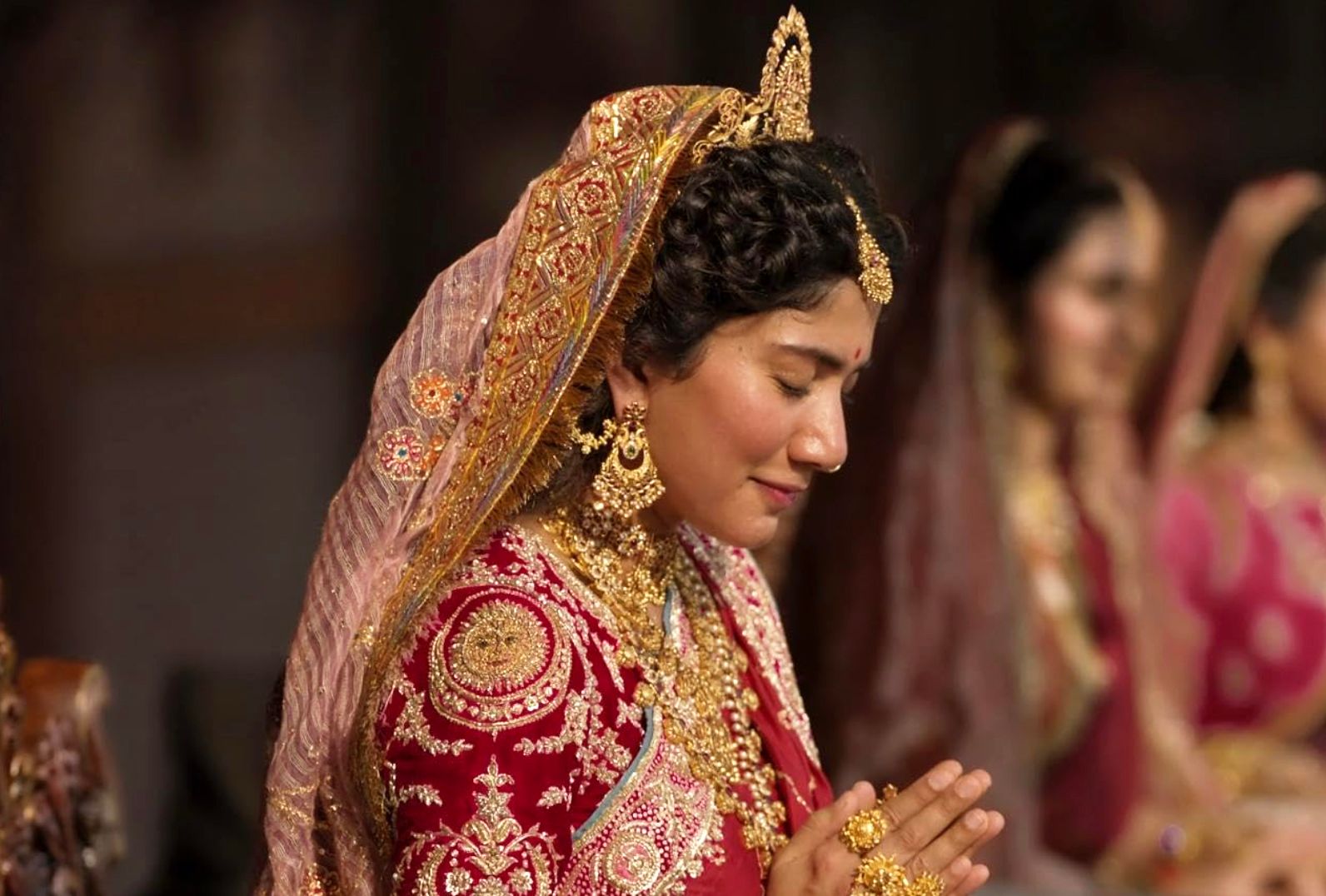
Ramayana Sita Sai Pallavi_Costumes_the Nod.jpg
Sita’s wedding sari featured sucha gold embroidery and a combination of new and old embroidery patches from RAH’s archive

There’s an extraordinary amount of textile and embroidery work in the costumes. What went into creating them?

HN: A lot of the textiles you see onscreen are made using historic weaving techniques that are rarely practised today. We collaborated with two weaving clusters in Banaras for brocades and a sun motif we developed for Lord Ram in the Ayodhya sequence. We sourced rare, 100-year-old textiles from dealers in Ahmedabad, and some of the dushalas (traditional shawls) were sourced from Uttar Pradesh.

There are so many different visual interpretations of the epic across Asia, including variations between north and south India. We also visited Cambodia and explored southeast Asian styling traditions and picked up pieces from these regions to incorporate those elements in the costumes. For Goddess Sita, we studied the colour palette, motifs, and embroidery on antique Nepalese textiles considering she was believed to have been born in Janakpur.

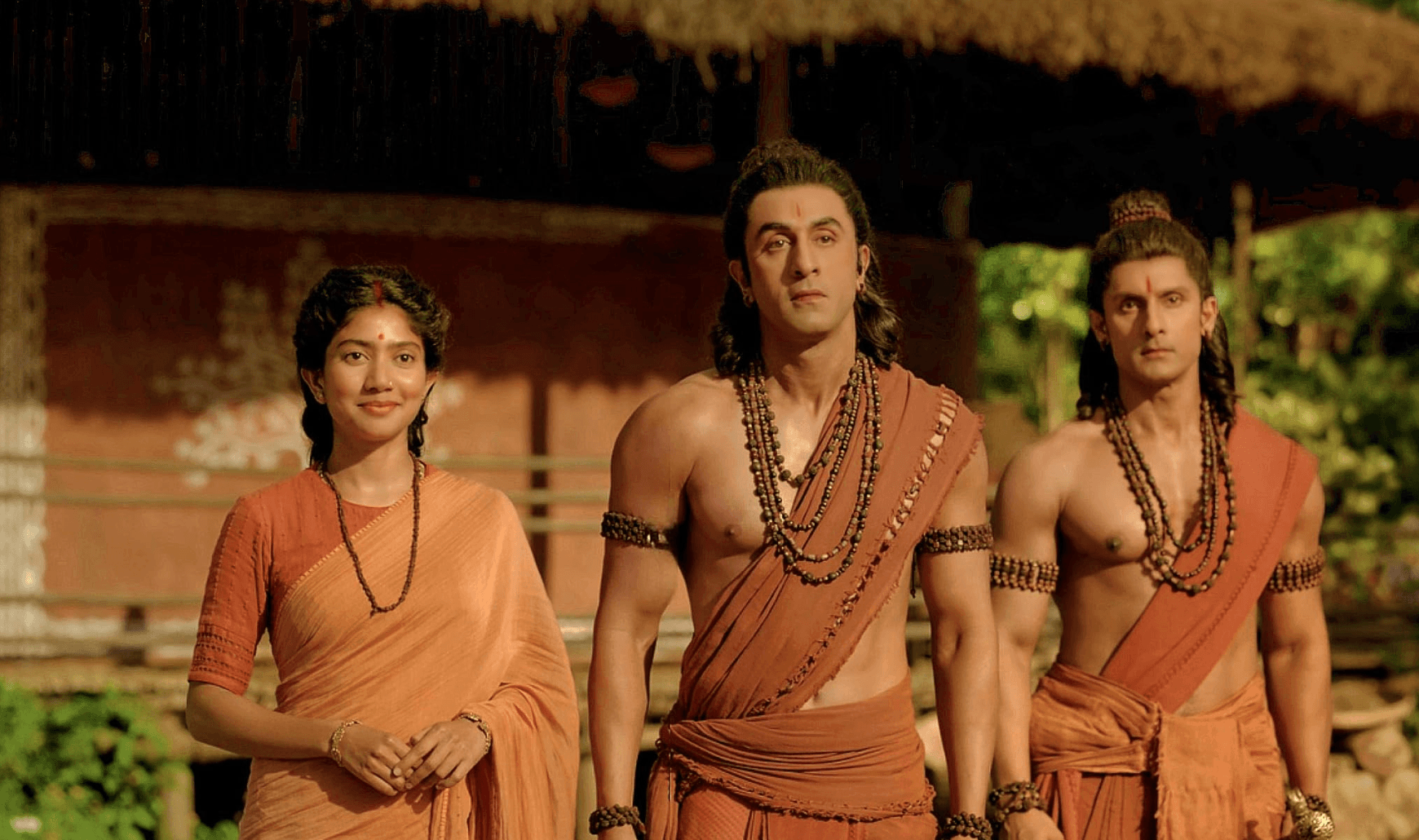
Even the simpler cotton, khadi or Chanderi garments in the vanvaas sequences were handwoven and dyed using organic colours. The fall of a fabric woven by hand is very different from that of a powerloom textile. It was important for us to retain the irregularities and slubs in the fabric. The vanvaas possibly had only two pieces of attire, but our challenge was to make sure that the fabrics looked lived-in and textured.

RN: The rich embroideries were all done in-house or in collaboration with artisan clusters. A lot of it is the painstaking zardozi and marodi work. For Goddess Sita’s wedding sequence, we created a fine silk sari with sucha gold embroidery. We also incorporated rare embroidery patches from our archives, and those were juxtaposed with the modern iterations from dealers to achieve the authenticity we were after.

The jewellery and armoury are as ornate as the clothes. How were they conceptualised and executed?

RN: We were in charge of conceptualising the entire look for each of these characters and we decided to co-create the jewellery with Amrapali. They have an extensive archive and a deep understanding of historical techniques and period dramas, which made them a natural partner. While we used artificial gems sourced from Jaipur, they’re extremely close to what the real ones would look like.

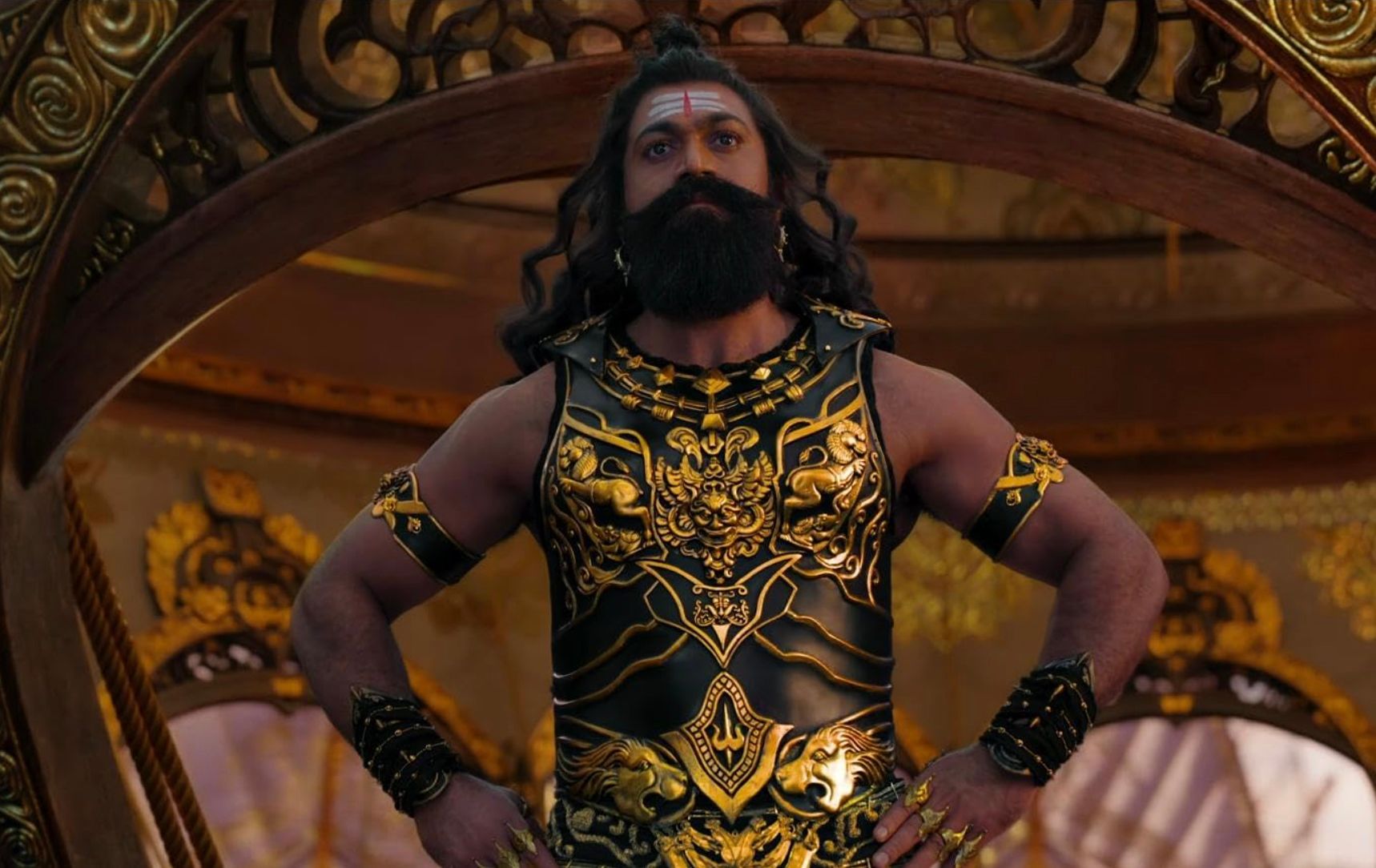
Yash as Ravana in Ramayana 2026
Yash as Ravana

HN: The armour was hand-cast in bronze and brass, then electroplated with fine metals to give it a patinated finish. For the vanvaas sequences, we used organic materials like hemp, cane, bamboo, mother-of-pearl, seashells, and wooden beads. We wanted to create interesting textures, because when the whole thing gets blown up on a big screen the texture is front and centre. A lot of workmanship has gone into creating each of these. The armour was entirely handmade, with the cane work done by artisans in Nagaland before being brought back to our workshops for the final finishes.

Much has been said about the characters’ sari blouses. The stitch-versus-drape debate continues, but was it also a conscious decision to build a visual universe that hasn’t been seen before?

RN: Well, for starters, yes. It was a conscious decision made collectively with the filmmakers. We wanted to keep the clothes closer to what gods and goddesses are seen wearing in Indian temples and made the clothes as though we’re making our offerings to them.

Considering the film is made for a global audience, the intent was to draw a parallel directly to India and its milieu. The Ramayana exists in Cambodia, Nepal and Thailand, each with its own interpretations. We wanted to distinguish ours from those versions.

HN: For us, being culturally appropriate was more important than being on the quest for “accuracy”. We wanted to showcase the richness of our textiles and ostentatious embroideries on screen. We took some creative liberties, but we also had to consider the actors’ comfort and freedom of movement.

Sita, Ram, and Lakshman (Ravi Dubey) in the vanvaas sequence of the film Ramayana
Sita, Ram, and Lakshman (Ravi Dubey) in the vanvaas sequence of the film

What was the most challenging aspect for you in terms of design, and why?

HN: We are maximalists at heart. Even the clothes we sell are costumey, so adding layers, weight or drama comes naturally to us. The challenge in costuming this film was perfecting restraint. The vanvaas makes up nearly 60 to 70 per cent of the film, and the characters essentially remain in the same look throughout. We had to tell the story through texture rather than embroidery. As the characters move through different phases of their lives, their emotions change, and so does the language of their costumes. We wanted to keep it very subtle, so we played with texture to support the narrative. Then, there was also the challenge of ageing the clothes. We experimented with different washes to give the fabric that worn-in, aged look.

The Nod Newsletter

We're making your inbox interesting. Enter your email to get our best reads and exclusive insights from our editors delivered directly to you.