





Leh has always worn its remoteness like a badge—the bike run up from Manali, the long climb out of Srinagar... It’s all about adventure and roughing it out. Or so it may seem, going by my own visits here for fairly different reasons over the years. This year, the journey between August 1 and 10, will be especially rewarding.
Leh and its neighbouring areas—the villages of Basgo, Likir, Nurla, Lamayuru, Henasku, and Mulbekh and the city of Kargil—strung along roughly 230 kilometres of the old Leh-Kargil corridor, a stretch of the Silk Route, are being transformed into open-air exhibition spaces for the third edition of the sā Ladakh Biennale. Set 3,000 metres above sea level, it has positioned itself as the world’s highest regenerative art biennale.
The biennale’s central theme, ‘Signals from Another Star’, shaped by Vishal K Dar and Tsering Motup Siddho, is rooted in Ladakh itself, drawing attention to the urgency of a region warming ever so quickly. With Tsering Motup Siddho as associate curator, it brings together 12 artists and artist duos, Ladakhi and international, working with land and its history.
Like the landscapes of the region, none of this needs to look (or cost) the same. Leh can be anything you want it to be—a luxurious escape with expansive views or a peek into the lives of the ever-so-warm, inviting locals who open up their homes and kitchens. Most of the stays ahead are set up with staff who help you with tips for acclimatisation, intake, and any oxygen cylinders in case of any drop in blood oxygen. Scroll below for our recommendations.
Where to stay (and eat)
For the luxury seeker
Inside Leh town, which is also the Biennale’s first site, base yourself anywhere on this list and you’re pretty much in the centre of Leh. These stays are also, geographically, within a kilometre or two of the main bazaar and each other.
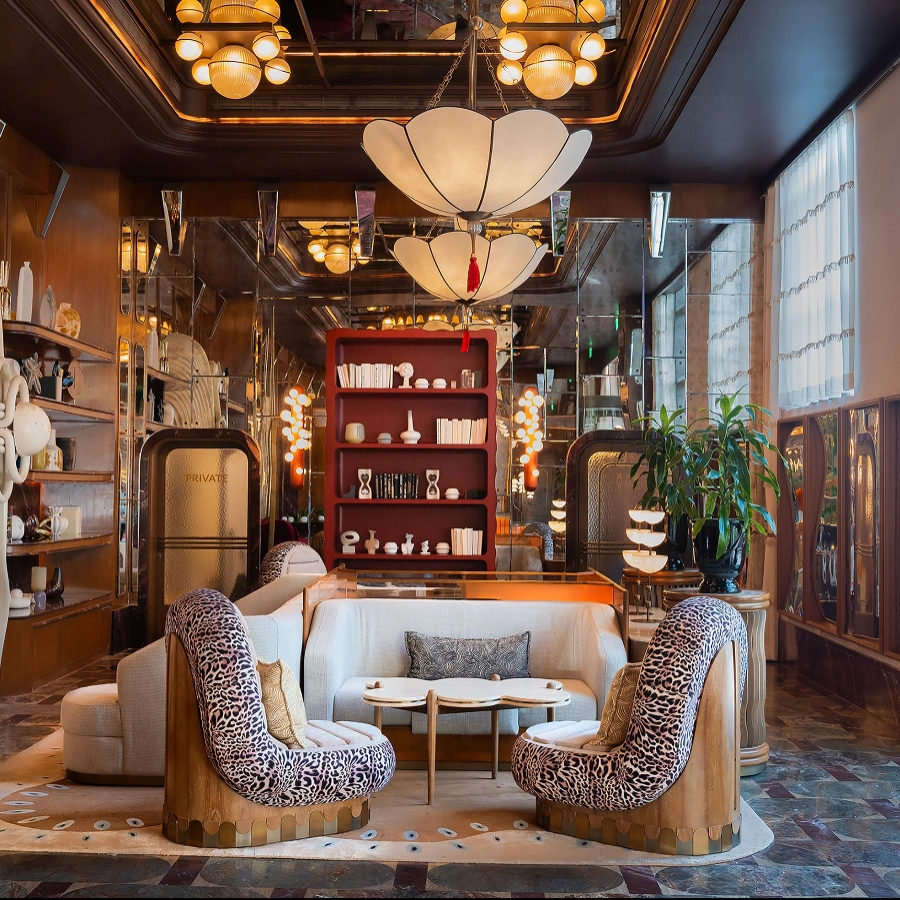
Leh has one proper five-star: The Grand Dragon Ladakh, ten minutes’ walk from the market, starting at roughly ₹18,000 upward a night. Seventy-five rooms (including 36 Luxury Rooms, 29 Premier Heritage, and 11 Suites), a spa, round-the-clock room service—and RYU OKA, its newly-opened Silk Route-themed restaurant, tracing Japanese, Korean, Thai, Chinese and Balinese cooking under one pan-Asian menu for an exclusive stay in luxury. The rooms come with traditional teakwood flooring, and ceilings with teak wood cornices. The walls of the room are done up with Handwoven Khabdan rugs and Ladakhi jewellery.