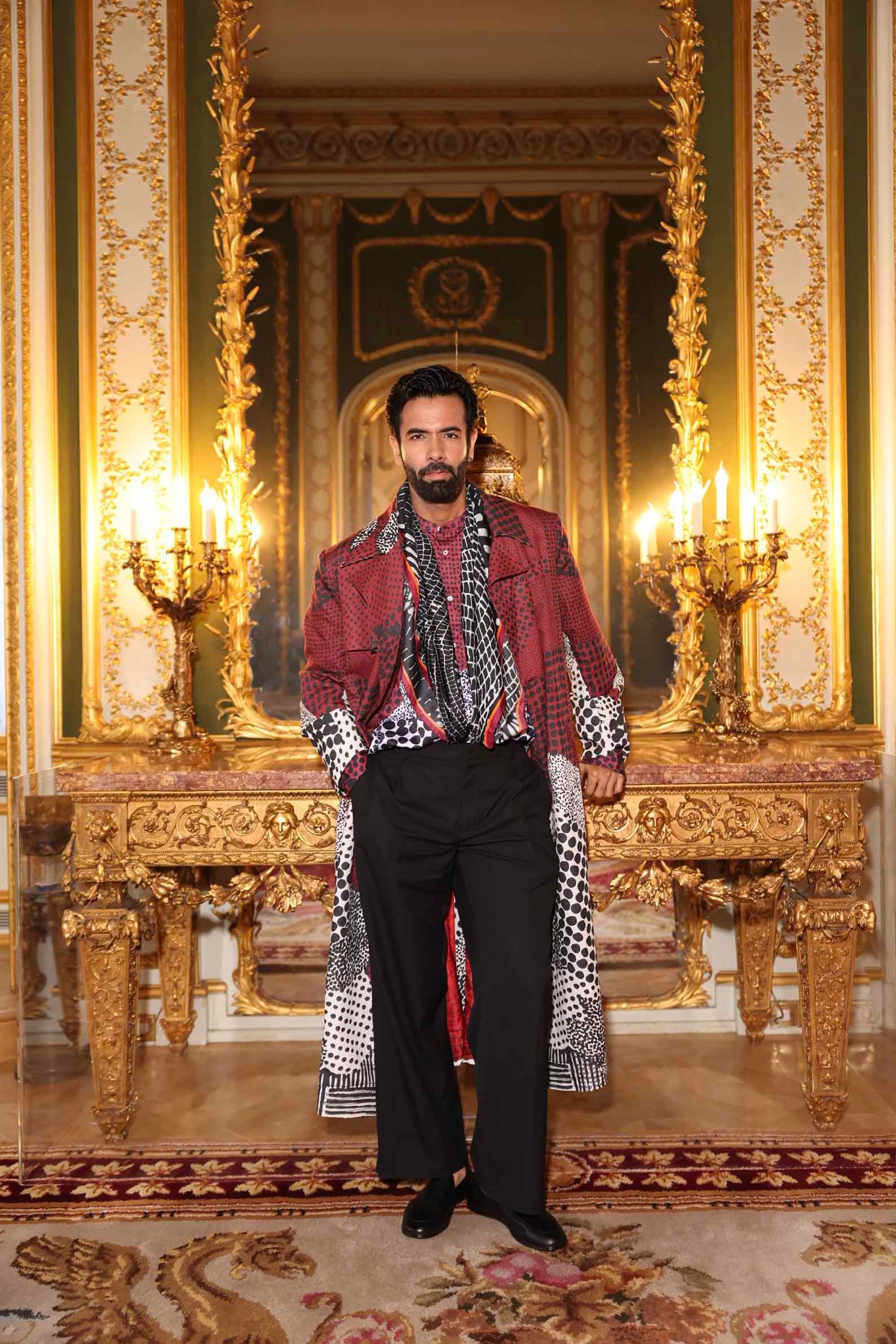




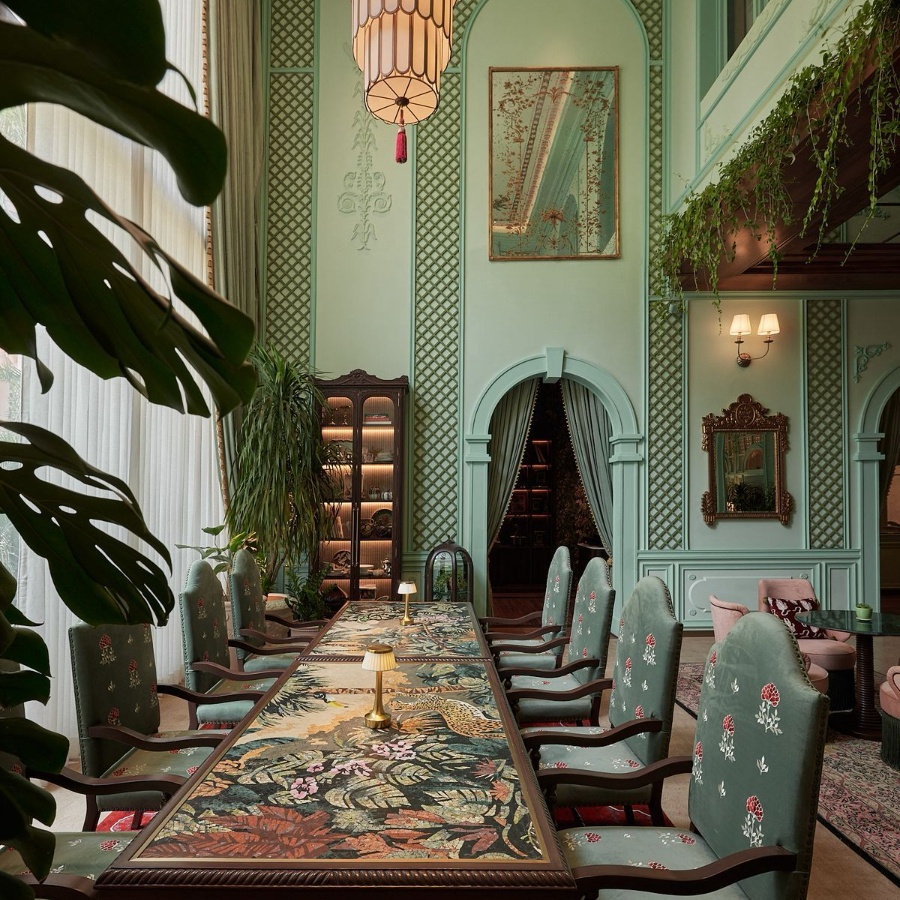

When I log on to chat with the designer Aseem Kapoor, he’s standing in front of a church in the middle of a park in London. “We’re having fittings here,” he says, the delight visible on his face even over a pixelated video call. This is just the first scenic location that Kapoor will be visiting during his time in the city. On Tuesday he presented his first collection as the hot new creative director of Satya Paul at Lancaster House, a former aristocratic townhouse built in the early 1800s, that’s the venue for his show. It’s part of the schedule for SXSW London, the annual Austin-based technology and creativity festival that’s decamped across the pond for the second year in a row.
It’s the kind of jumble of influences that Kapoor has always thrived on. With his own eponymous label that he founded in 2020, the designer’s signature is his ability to combine hand-pleating techniques inspired by a journey to Vietnam with kantha stitching, batik prints, and tribal embroidery—all perhaps in one elegantly draped look. It’s this love for “excess”, he says, that links him and Satya Paul, the over 40-year-old label whose founder pioneered digital printing in India and used the sari as his canvas. Ever since his passing in 2021, the label has been guided by a series of creative directors, most recently the duo of David Abraham and Rakesh Thakore.
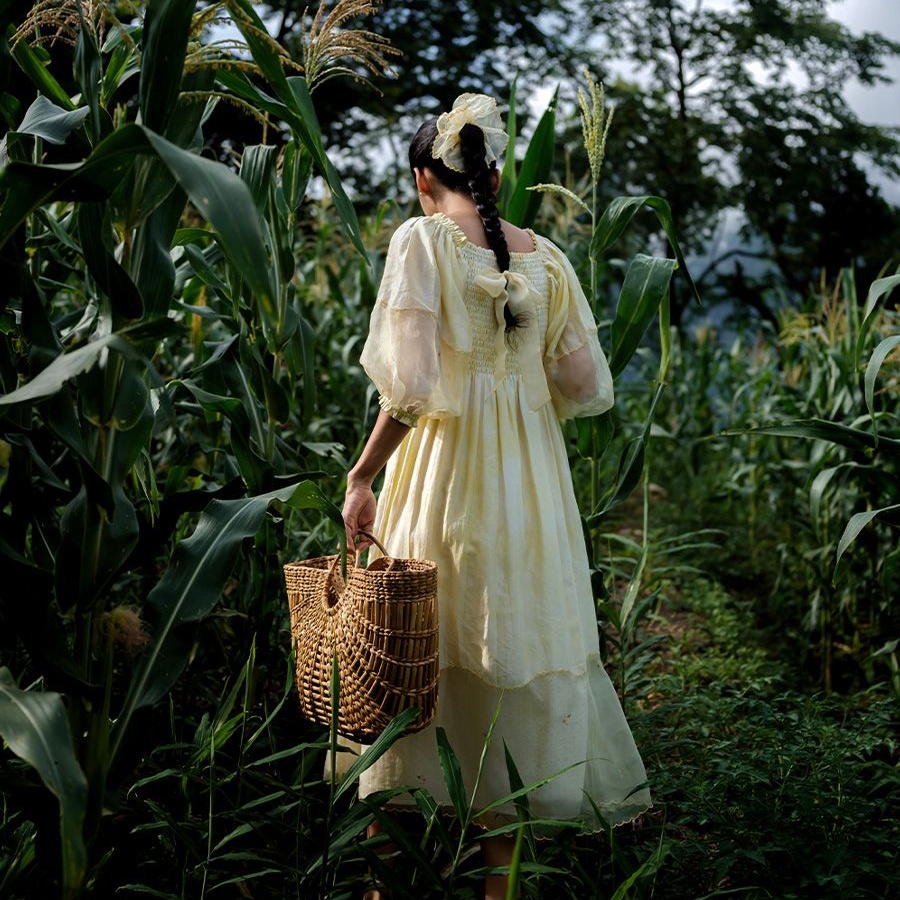
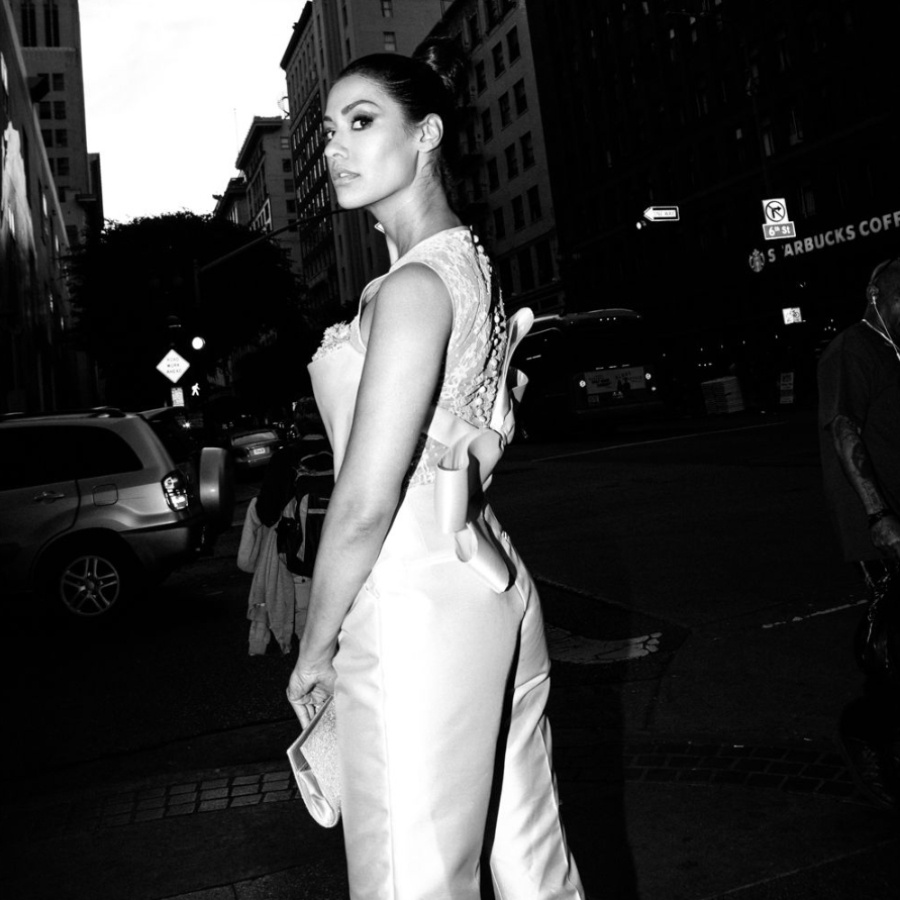
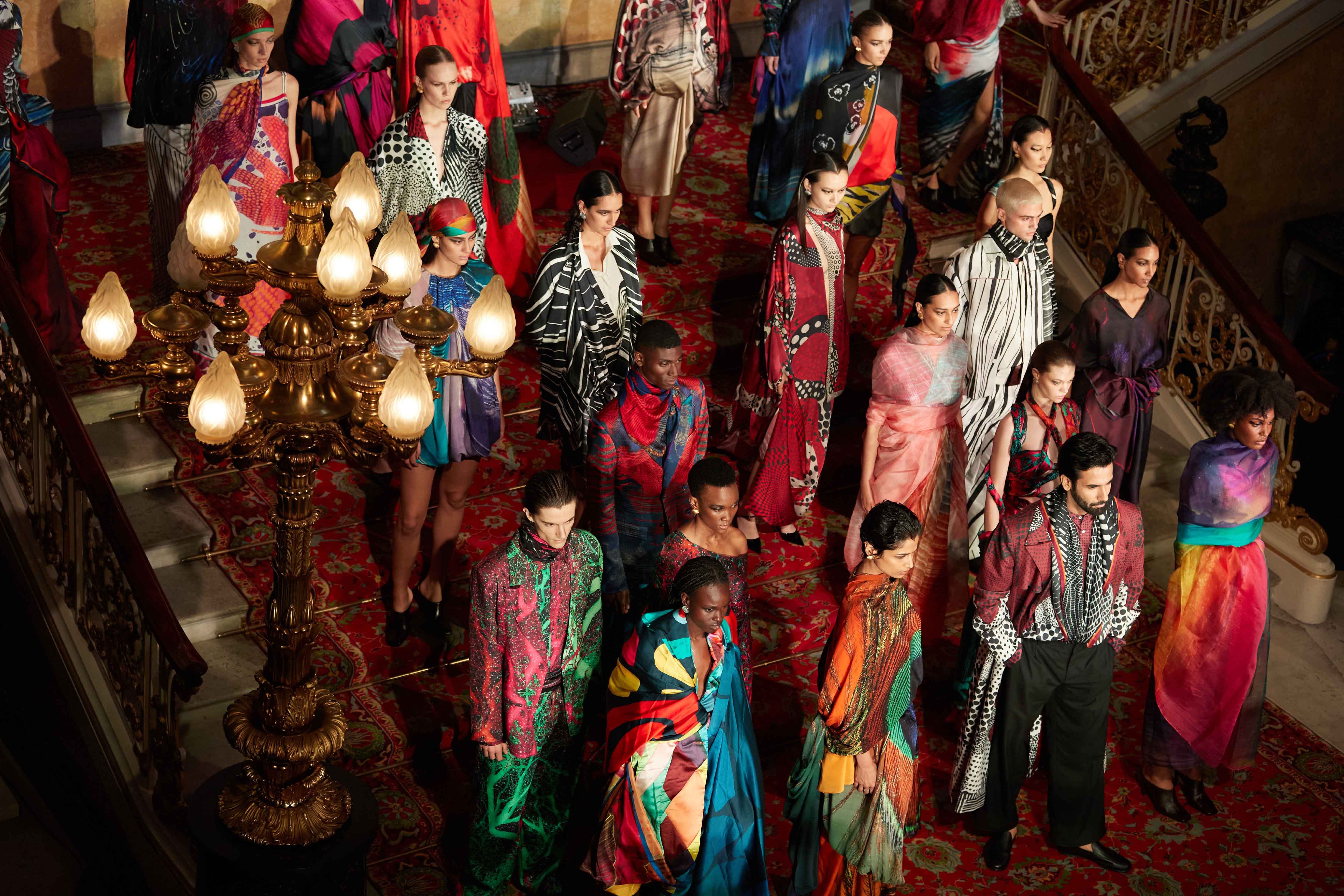
With his first show for the brand, Kapoor is keeping the iconic Satya Paul sari at the centre of it all and diving into the brand’s archives to create his own unique mashup of prints. All of it is layered with Kapoor’s signature, peripatetic styling—slouchy kaftans, billowing capes, saris twisted and knotted into tops or wrapped as dhoti pants. Ahead, we catch up with the designer before his London debut to chat about the OG Satya Paul and the lessons he holds for the designers of the present.
What was your morning before the show like?
This morning started early and I woke up with an upset stomach, so all I ate really was a banana. We were at fittings from 9 am and we’ve been working on a lot of forms, draping things. Each piece takes at least 20 minutes to drape, so it’s a long and tedious process. I’m enjoying the London weather, though. It’s summer and I just want to spend all my time outdoors.
What’s your favourite spot for coffee in between prep?
Everything is so beautiful here. I love finding a quaint cafe in a back alley or a park. Right now I’m at fittings in an old church, which is crazy. There are trees, no dust. I also love going to Camden, where there are craftspeople selling things and just wandering around all the shops.
What is your energy like during fittings?
I’m hectic, but I’m very calm. Things are only chaotic in my mind. But I also feel like if a leader starts giving out a panic or hysteric energy, then it kind of trickles down to the entire team, which doesn’t serve any purpose. Everyone is working so hard to do what they are doing. I am also an inherently calm person, which is unusual given that I’m a Leo and a Punjabi.
Tell us about this show. How does the sari fit into your language?
When we got this amazing opportunity to showcase in London, at Lancaster House, I didn’t want to showcase the sari as a sari. I wanted to push the idea of our prints as art, so we’ve reworked what the sari can look like, combined two together or changed the drape to achieve that. Obviously, the menswear is a little more conventional with jackets and layering, but there are scarves too and, really, we are having fun.
Did you get the chance to dig through the Satya Paul archives?
Yes, almost 50 per cent of the show is archival prints. I went through everything that was there. Luckily, most prints are documented in ERP software, which is what’s using in manufacturing and production, and pulled out what was relevant to today’s time and age. Then we added the new prints into the mix. What was very surprising was that most of the prints that were done in the late ’90s or early 2000s, when Mr Satya Paul and [his son] Puneet [Nanda] were designing, are still so relevant. You can pick them up now—just change the fabric, add one new detail, and it feels fresh.