



Currently reading17 Jul 20265 MIN

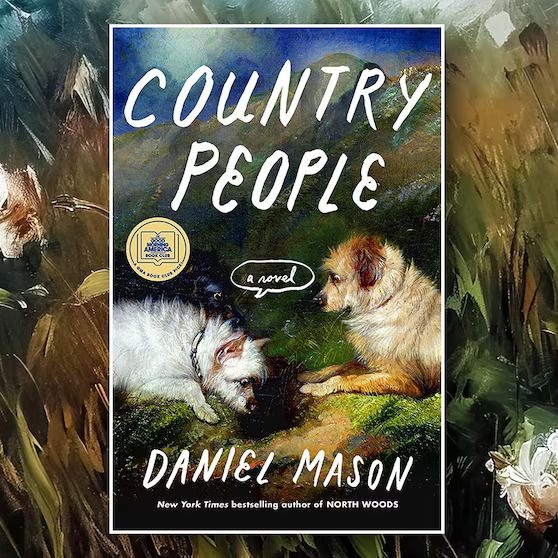
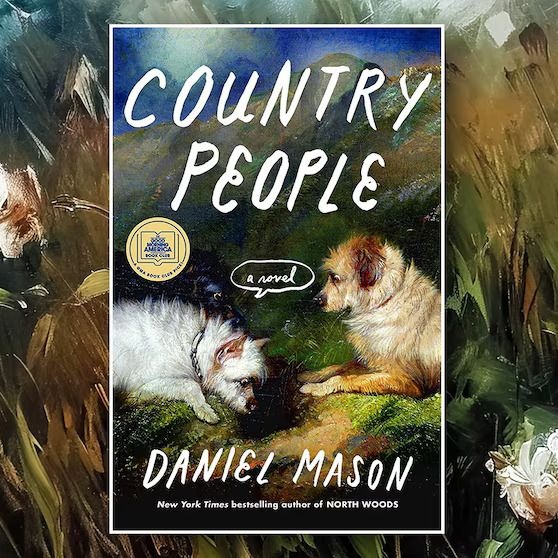
All you city people with rural-life pretensions, ‘Country People’ is for you

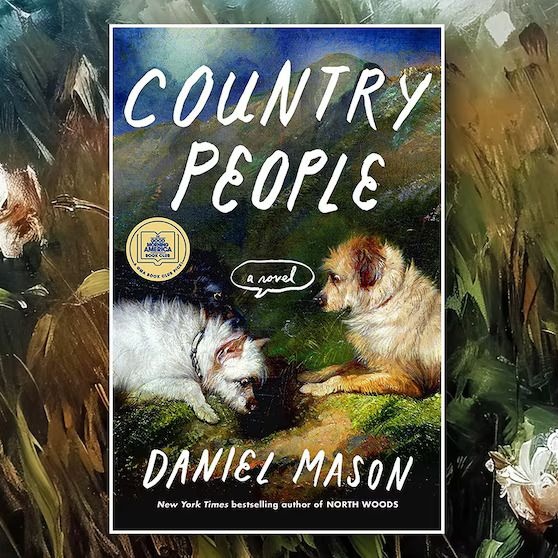
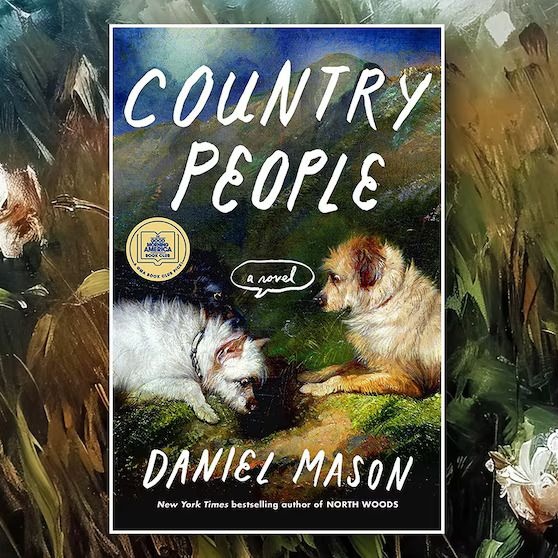
Daniel Mason’s novel about two academics flirting with lawn mowing, skiing and farming in the countryside is funny, tender, philosophical—and the best thing you’ll read this year

Image

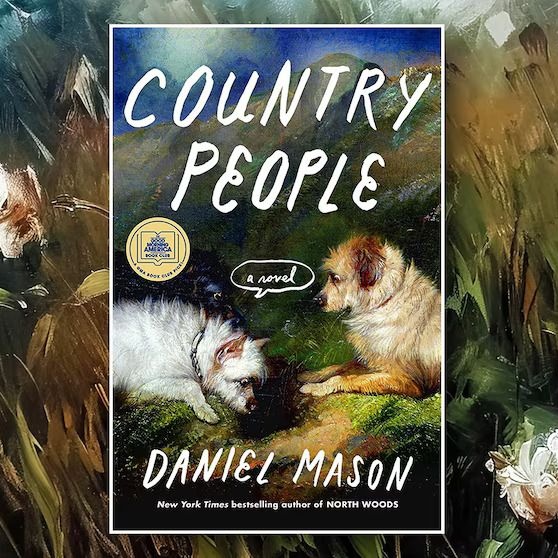
In Country People, Miles, Kate, their two children (Olive and Wesley), and their dog (Giuseppe) move to Vermont because Kate has been offered a one-year professorship. A friend warns them that under no circumstances should they stay at the Visiting Faculty Residence. A Finnish scholar who made that mistake suffered frostbite in her bedroom (“…as in the Arctic country Finland,” she adds). Luckily, an Economics professor away on sabbatical is looking for a house sitter, and Kate and family opt to move in. “…to keep the animals away” is one of the tasks the Economics professor lists for his prospective house sitters. Does that scare off Miles and Kate? There wouldn’t be a novel if it did.

Thus, the house in Vermont awaits them as the family makes their way from California via 27 states, national parks, and zucchini sellers. While the professor’s vague to-do list assigns the home an ominous quality, there is nothing sinister here, though inconveniences abound.

We’re all familiar with—or are ourselves—city people flirting with some aspect of country life. Us with our hydroponic microgreens and farmers market totes. For the Krzelewski-Petrosian family, the move to Vermont—and its social and physical possibilities—leads them down their own subterranean paths, sometimes quite literally.

Kate is a Milton scholar whose brilliance overcomes the general disinterest in her field (“probably not usful [sic] for the job, but still mind-blowing”). Miles, unemployed, has been working on his dissertation for the past 14 years, the topic veering from Rabelais to French folktales to Chekhov to trains, resting on Russian folktales by the time they arrive in Vermont. Nine-year-old Olive comes armed with her Crayola 64 box and general precociousness, while 12-year-old Welsey is in that stage of life where he views adults as a brainwashing industry and tends to (gently) correct their mistakes in public settings.

We’ve read several books on sweetly eccentric families, from Madeline Cash’s Lost Lambs to Veronica Raimo’s Lost on Me and Paul Murray’s The Bee Sting (all excellent). There is of course the all-time classic—Gerald Durrell’s My Family and Other Animals. But while the latter featured the comic capers of all manner of unpredictable pets (although there’s that here too), Country People digs deeper into the lives of a larger class of people—the urban emigrants trying to find bliss and glory in the countryside. Daniel Mason's novel caps off a half year of excellent books from the likes of Ann Patchett, Tayari Jones, Maggie O’Farrell, and Douglas Stuart. The “country people” here aren’t just Miles and his family but many of their friends and neighbours too.
There’s Andrei (another “marooned academic”), husband of Kate’s friend Paloma, with a suspiciously thriving apple orchard. When Miles starts texting Andrei, he’s thrilled to be in touch with a “real country person with real apple trees”. Of course, the rootstock for Andrei’s trees is from Ukraine, his supplies ordered online from Lowe’s, his clippers come from Japan, and clay from Georgia. And there’s Miranda, Kate’s friend and colleague, who likes framing and formalising the habits and behaviours of her townsfolk within academic papers with titles like “Can-Throwing Behaviours of Rural American Males’, and Bjorn, a former Olympian who teaches kids how to ski while their parents come there to gawk at him.

These city people co-exist alongside a group of hollow-earthers—to whom, of course, Miles is drawn—and Wilson ‘Snowflake’ Bentley, who drives around in a converted ambulance and considers it his responsibility to gather physical documentation on all the stupid things people say and do. (You can imagine it’s a rather burgeoning archive.)

But County People isn’t just a hilarious romp through the eccentric deeds of the eccentrics. While Kate, Olive and Wesley seem to thrive, Miles, afraid of remaining a Slight Disappointment to his over-achieving wife, remains adrift while he tries to find hobbies and people to ground him in his new surroundings. He takes up scything one day, brandishing the farming tool with the enthusiasm of a child wielding a light saber and role-playing Luke Skywalker, helps with the school play on another, and one day makes a plan to go caving with one of his newfound friends. For all his meanderings and bungles, though, Miles possesses a self-awareness that takes you by surprise when it appears. “Because who wouldn’t have grown tired of a forty-five-year-old man still stuck in his coming-of-age story?” he ponders when he suspects Kate of infidelity.

Through it all, lines by Milton crop up in the text, eerily pertinent. The non-Milton lines, though, are so well-crafted that my e-book is filled with annotations: as a child, Miles learns Basque in a “classically Milesian fit of erudite oppositionality”, at the gas station energy drinks come with “fascist fonts”. It’s a book you want to re-read just to sit with the language.

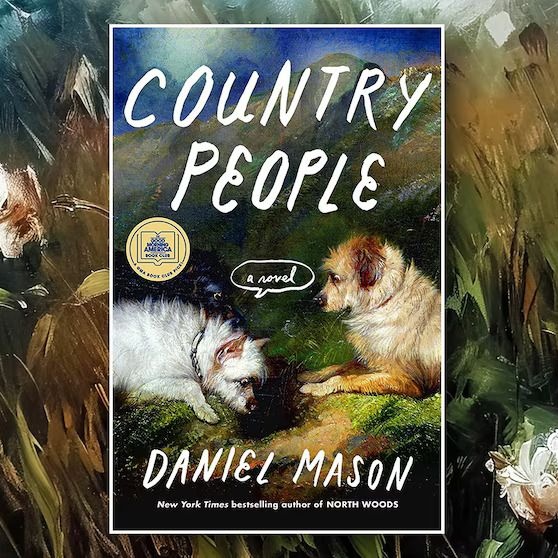
Country People is published by Penguin Random House; ₹2,034

The Nod Newsletter

We're making your inbox interesting. Enter your email to get our best reads and exclusive insights from our editors delivered directly to you.