




What are the stakes involved in writing about that which is considered taboo and cannot—or should not—be said? In today’s world, where images are manipulated and distorted to gross effect, and AI impacts creativity and authenticity, what does it mean to prioritise the truth through fiction? What are the failures of feminist solidarity, and how much of this is toxic masculinity and patriarchy in action? Can storytelling play a role in liberation?
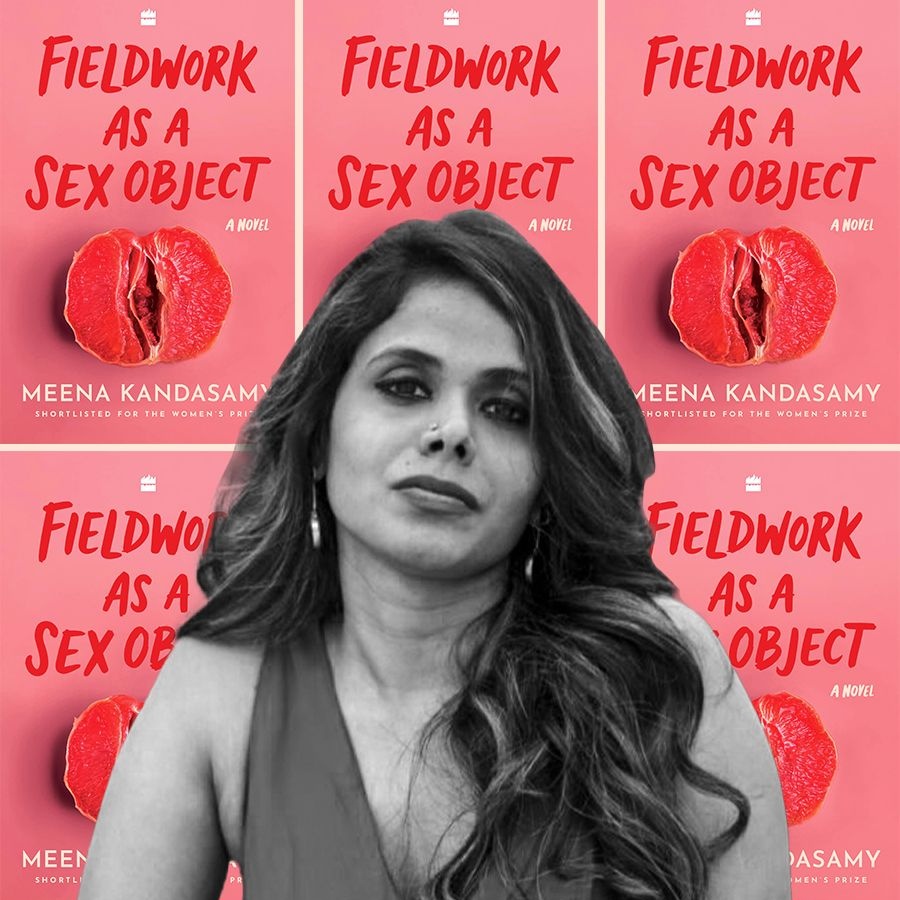
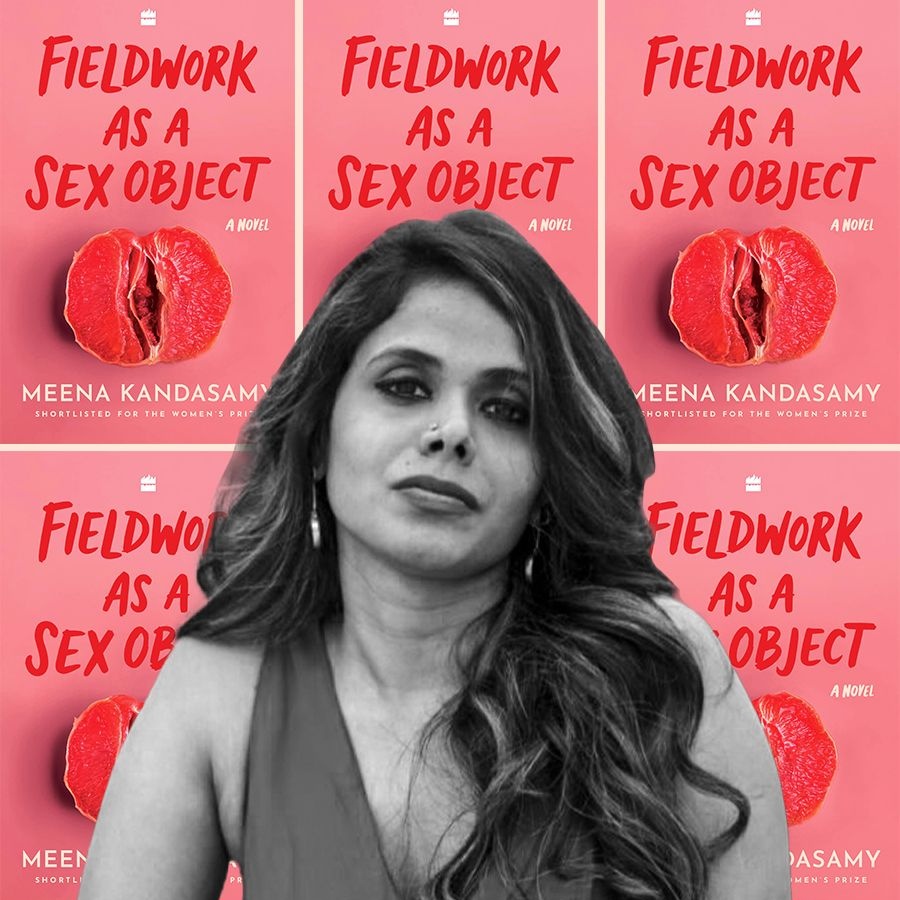
Meena Kandasamy’s new novel, Fieldwork as a Sex Object, moves from theory to praxis, imagination to action, the digital to the real, as it follows Amrita (Amy) Chaturvedi, a student activist living in London, whose life comes apart when a deepfake pornographic clip of her begins to travel and morph: through social media, WhatsApp groups, the ecosystem of Hindu incels and the manosphere (“all fascists sound the same because fascism is the enemy of individual expression”).
Darkly funny, deft, and provocative, this is, I think, the most Meena Kandasamy novel ever. Below, excerpts from our conversation at Waterstones bookshop in Birmingham this June.
How did you come to—and why did you choose to—write Fieldwork as a Sex Object?
There were multiple things I was trying to do with this novel. One was the female nude, not as art object or cultural artefact, or even as something scratched on a public restroom door, but as something produced (consensually or non-consensually) on any phone––and with the ability to turn into revenge porn in an instant. It could have been a thought experiment. Sadly, there have been so many women who have become its victims.
The other aspect was to chronicle the internet as we know it—not just emails (which are epistolatory novels for our era) but in a form and shape and tone and voice and style that captures what it is to be online. Because we are living in the moment, it feels hyperreal, but one day all this will be history. Twitter hate will be stored as files somewhere. How do we archive this moment in real time? How do we capture its mindlessness, the cancel culture, the baying for blood that has come to characterise social media? And for me, inevitably, the oligarchs controlling social media and the far-right using it to set narratives are geared towards one thing only: political capture.
You use the foreword and afterword to frame the novel. This felt reminiscent of Exquisite Cadavers, where you explain in the preface that the dual structure of the book was born from the response to your previous work, When I Hit You, a novel which drew from your experience in an abusive marriage. You published When I Hit You explicitly as fiction, but reviewers and critics across the board read and responded to it as memoir. What I find incredible across your wide-ranging body of work is how you simultaneously hold fiction and fact, a story imagined and a story found. Can you talk about playing with genre, and perhaps also readers’ expectations?
I learned something the hard way with When I Hit You. I wrote a novel—which, we all can agree, is an act of imagination, of shaping and selection and craft—about a violent marriage, and it was received as memoir. Even within autofiction, a woman can only be seen as doing an act of transcription, not an act of composition. This assumption made me realise that something bigger was at play: the border between fiction and fact is not neutral at all, and when writing about violence and intimacy, a brown woman is seen as leaking the material, not making the art.
So, I had to find a way to hold up the border and interrogate it fiercely. It was no longer my problem, it was everyone’s problem. So, in Exquisite Cadavers, I put the scaffolding on the outside of the building, so to speak. I showed my readers the choices, the margins, the making, and most of all, the beautiful alchemy between genres. Fieldwork as a Sex Object does something similar with its foreword and afterword: I frame the novel so that you can never quite forget you are being told a story by someone with reasons to tell it in that very particular way. I do not want the reader to believe that stories or histories are accidental. I want her to be alert to the artifice so that every emotional or political truth lands harder.