



The biggest, most carefully decorated room in Sridevi and Rajeshwara’s home in Devaravalasa village, near Ponduru, Andhra Pradesh, is the one that houses their frame loom. The loom, where the couple work side by side and weave the khadi cotton jamdani that the region is famous for, sits above a carefully painted muggu by Sridevi. One row of shelves is lined with brass and copper vessels polished so brightly they reflect the light, another with prints of gods and goddesses, and others with boxes that house more tools of their trade—spools of zari thread, boles of cotton. Cotton—still spun by hand in villages throughout this region—is the base for the tapestry the couple will weave by passing small shuttles of coloured, gold or silver thread through the weft, or pheka, as it’s known locally. It’s an intensive process that takes years of practice to master and will result in a sari that will be appreciated by wearers around the country.
ADVERTISEMENT
The scenic route to Kalaa by Kankatala goes through weavers’ villages
A new store in Visakhapatnam maps India’s textile traditions, from Ponduru to Phulia
An installation of a boat at the new Kalaa by Kankatala store in Visakhapatnam

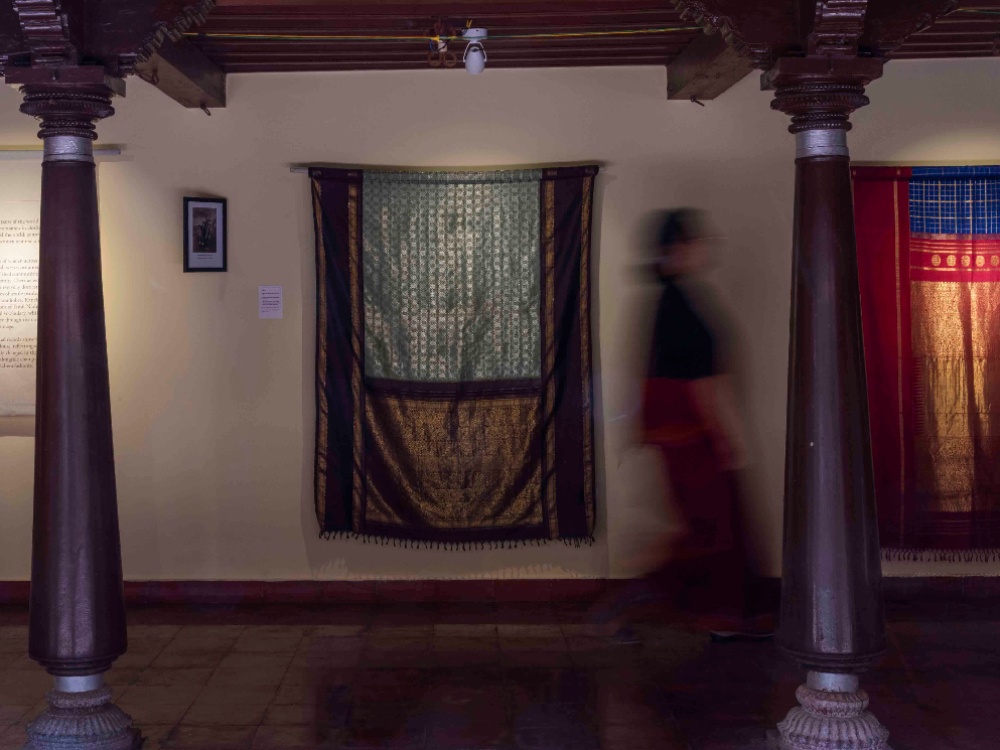
A jamdani sari woven by Sridevi and Rajeshwara
Sridevi stands by her loom at home in Devaravalasa village
Jamdani weaving is thought to have originated in the coastal regions of West Bengal and Bangladesh, but it arrived in Andhra Pradesh around the 17th century. Ponduru, meanwhile, has its own long history of khadi weaving. Walk through the streets of its villages and you’ll pass more homes like Sridevi and Rajeshwara’s from which you can hear the click-clack sound of charkhas spinning and looms being pedalled. If you arrive early in the morning, you might even catch the community starching and stretching lengthy warp yarn in the middle of the street using bamboo rods and twine.

A woman spins cotton on the charkha outside her home in Devaravalasa

Yarn freshly woven by Rajeshwara

Only two homes in the village house this large warping drum
Back in their home, Rajeshwara pulls out a delicate jamdani from a cupboard—it has temple motifs on the border and, instead of the typical bootis or geometric patterns, the pallu features two cows standing at the foot of a mango tree. The sari took the couple 10 days of work, and their mastery is evident when you pick up the lightweight piece and turn it over to see that it’s perfectly finished from behind as well.
Speaking in Telugu, Rajeshwara explains that there are no sick days when you’re a weaver. “We start at 5 am and carry on till 9 pm. You need two people at the loom at all times (at least), so if someone falls sick then no work can be done.” He learned weaving from his grandfather and father and has been deftly plucking, lifting, and combing fibres together since he was 14 years old. When I visit, he is wearing a maroon khadi cotton shirt he wove himself, but saris like the one he proudly showed me go far beyond his village. They’re sold either to government-backed NGOs who coordinate the sales process or to independent retailers via master weavers and middlemen.
Luckily, later in the day I’m due to visit one of these retailers—Kalaa by Kankatala, a new brand by the Visakhapatnam-based Kankatala family, who have been selling saris since 1943 and were generous enough to organise my visit to Devaravalasa. The Kankatalas already have over 13 stores around the country, but Kalaa is the brainchild of Anirudh, the third generation to enter the business and son of the current patriarch, Mallik Kankatala.
A former financial consultant at PwC, Anirudh was often regaled with stories of his father’s adventures travelling the country to source the finest saris. “My dad used to journey 36 or 48 hours on a train, then take a boat, scooter, or cycle rickshaw through tiny lanes in Benaras, Murshidabad, Kanchipuram… He would travel with an empty steel trunk, fill it up, and guard it on the journey back, sleeping on the railway platform or at weavers’ homes.”
Later, Anirudh would travel with his father, which was how he fell under the spell of the loom. “I was able to discover India in my search for weaves,” he says. He sees Kankatala as a bridge—connecting weavers with their customers, matching traditional knowledge with contemporary needs, translating between rural and urban India.
With Kalaa by Kankatala, Anirudh sees the iconic sari retailer evolving with the customer. “Earlier at Kankatala we would sell everything, from basic saris to more exclusive ones. But then we realised that people want an experience when they’re shopping for an occasion, like a wedding or a graduation. It’s why they might visit a designer like Anamika Khanna or Jayanti Reddy for what is essentially the same gold tissue sari. Other brands might do value additions—like a beautiful blouse or embroidery on top of the weave—but we’re all sourcing from the same people.”
Mallik Kankatala
A corner of the store with a sari on display

Anirudh Kankatala (left) and his cousin Bharat Kankatala
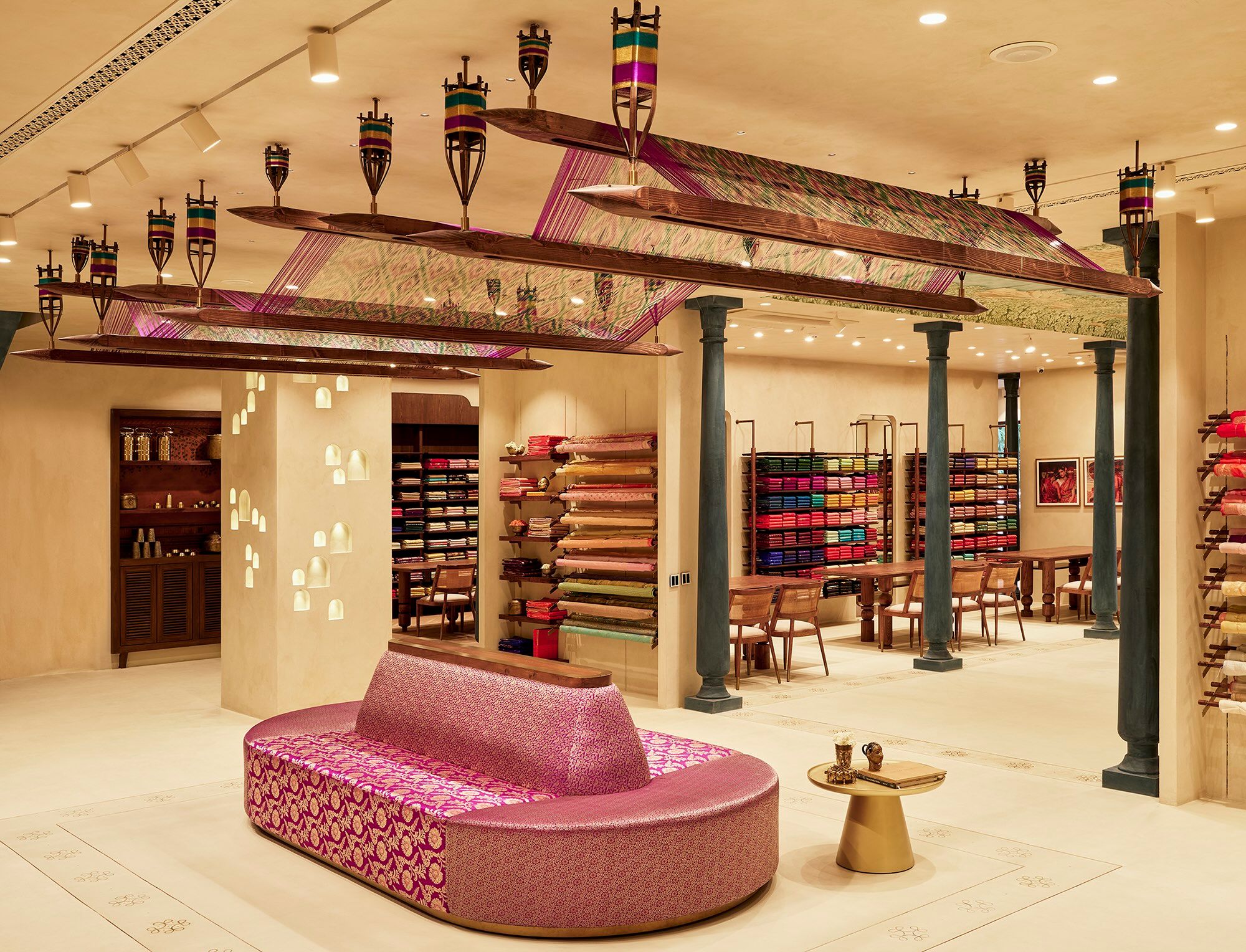
The result is a new brand and a store to match, with a more curated, refined set of offerings spanning 23 to 25 weaving clusters from around the country. Instead of travelling two hours out of Visakhapatnam like I did, you can just visit Kalaa by Kankalata’s flagship store to see jamdanis from Ponduru but also Parsi garas, Patan patolas from Gujarat, ilkal from Karnataka, paithani weaves from Maharashtra, and much more. All are housed in a space designed by creative director Devika Narain to reflect the family’s long-standing relationship with textiles and their home in Visakhapatnam. The walls are painted the same luminous blue as the Narasimha Temple nearby, and a hand-painted mural on the ceiling depicts the region’s waterways. There’s even a boat made of textiles on the first floor that harks back to Anirudh’s memories of watching the sunrise from fishing boats along the coastal city.
“We’ve told the staff at Kalaa that their first question to customers should not be about their budget. That doesn’t matter as much as the occasion they’re shopping for,” he adds. “We want it to be a space you visit when you have something special to shop for, a celebration. That’s what will change the experience of shopping, along with the store itself.”
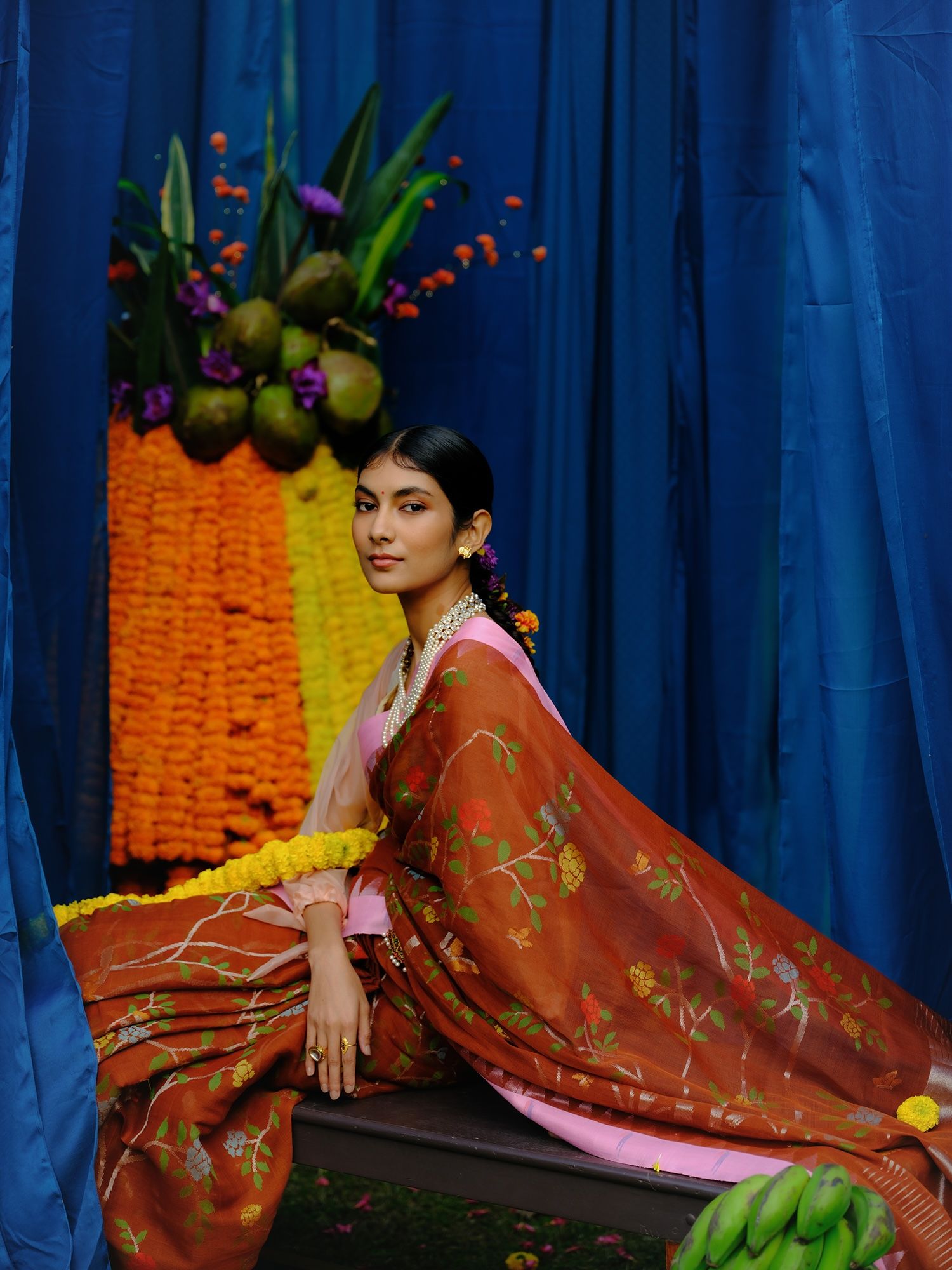
Jamdanis, of course, are part of the core offering at Kalaa by Kankatala. During my visit to the new store, patriarch Mallik is excited to reveal a cream 250-count jamdani sari with a colourful border and pallu depicting scenes from the Ramayana. The masterwork took two main weavers and their assistants from Phulia, West Bengal, over 14 months to complete.
The Kankatalas have also encouraged weavers to collaborate across state borders, resulting in rare, colourful jamdanis with silk, Kanjivaram or patola borders. “It’s a little bit more expensive, but it’s worth it for a special occasion,” says Mallik while opening out the colourful drapes. These pieces, in particular, reflect how for merchant families like theirs, travel has always been an exchange of ideas as well as goods. The curation at Kalaa captures that curiosity, that ability to marry tradition with contemporary to create singular pieces in which different textile traditions, places, and encounters converge.