




Long before I thought of food with seriousness and inquiry, it was simply how Kolkata lived around me. Some of my earliest memories of eating out in Park Street are of leaning back in my chair at the old Sky Room, staring at a ceiling studded with artificial stars while a mixed grill arrived at the table. I remember the glow more than the flavours and the thrill of being allowed to order a grownup dish for myself, as though that small act marked a quiet step into their world.
Over the past two decades, I have returned to Kolkata with steady regularity to visit my parents, meet old friends, and visit the city that shaped what I believe food should taste like.
The places I keep returning to (scroll below) are the ones that have survived my own private canon. Some may be dated choices, the equivalent of still playing cassette tapes, and the list is certainly lacking in newer establishments that have earned their own devoted followings. This isn’t a comprehensive survey; it can’t be. Kolkata’s food landscape is too dense, too argumentative, too personal for that. Everyone here has their own biryani place, their preferred Tangra or Park Street joint, their corner that does phuchka or jhal muri the only way it should be. What I’m offering is closer to testimony than guide, the places that have kept their coordinates in my internal map, the ones I circle back to as if by instinct, gathered over years and shaped by the particular hungers that living elsewhere creates. If your list looks different, you’re probably right. Or I am. That’s how it works here.
Kosha mangsho at Golbari, Shyam Bazar
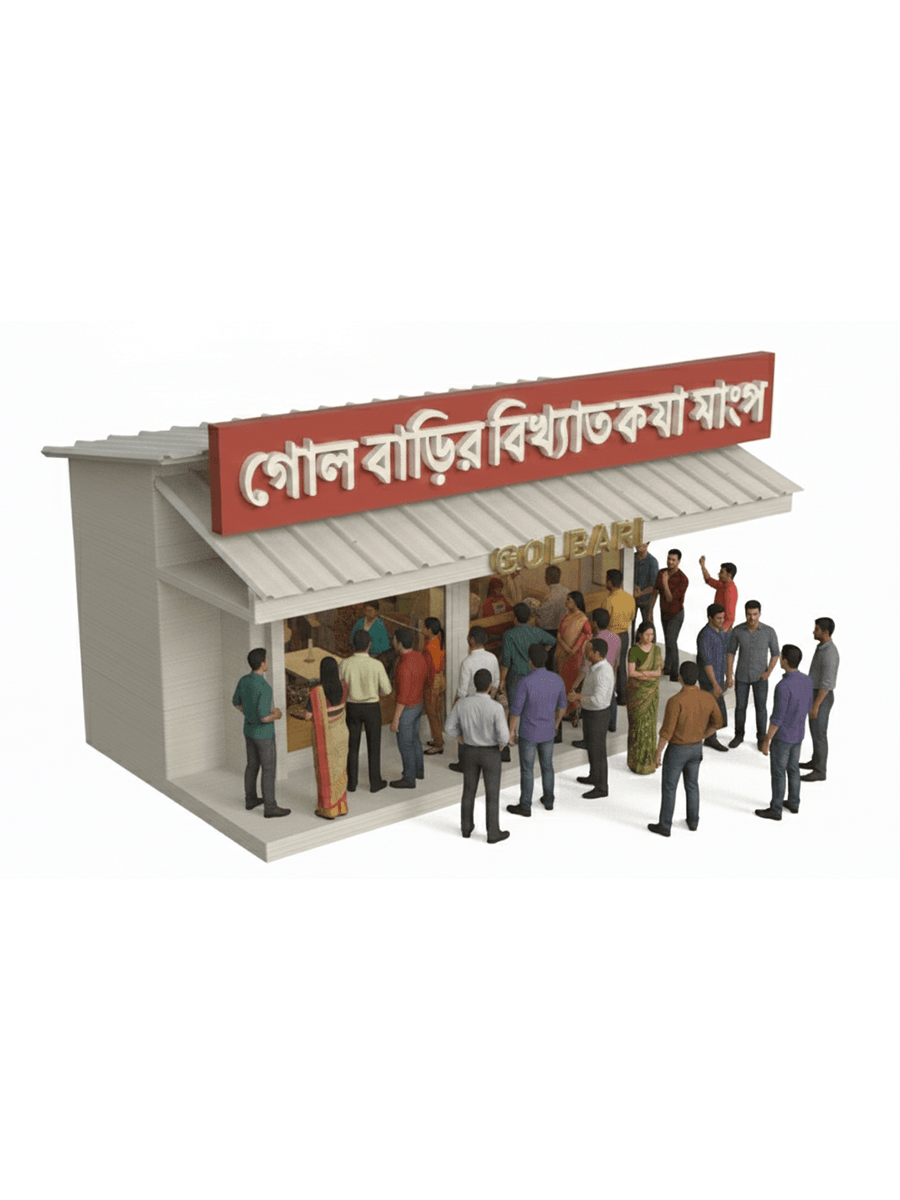
Every city has restaurants it calls legendary, and many are exaggerated. The legend accumulates through repetition, through inheritance, through the human tendency to love most fiercely what we were first taught to love. And eventually, the food becomes almost beside the point, a prop in a larger performance of a city’s identity. Kolkata isn’t immune to this. Neither, some argue, is Golbari. There are voices that say it has faded, that sentiment is doing more work than it once did. But sentiment had nothing to do with what I’ve experienced here. The mutton kosha, or kosha mangsho, is, still and without requiring your loyalty to it, the real deal.
Around a century ago, a Punjabi entrepreneur set up a modest roadside eatery at the bustle of Shyambazar’s five-point crossing, calling it New Punjabi Restaurant. The name didn’t last. People began calling it Golbari—‘gol’ for the semi-circular façade of the building, ‘bari’ for house—and the name stuck. The cult around their kosha mangsho is entirely self-sustaining: locals, weekend wanderers, food pilgrims from across the city still weave through congested streets to eat elbow-to-elbow there or, typically, to carry a parcel of the mangsho and parathas home.
‘Kosha’ refers to a slow-cooking process, similar to bhuna, where meat is cooked over a low flame for a long time, coaxing moisture out through repeated cycles of heat and patience until the masala has tightened around the mutton like a glaze. The colour of the kosha mangsho here is distinctive. It’s confrontationally dark, almost like something forged. That near black, almost inky brown, is the signature, and why people travel across the city. Because you can’t fake it. You have to earn it through reduction and slow flame.
The meat itself is tender enough to tease off the bone without a fight. The first flavour to bloom is dark and foundational, mustard oil and the long labour of caramelisation, before ginger and garlic move through mid-palate. Then the whole spices arrive—cardamom, cinnamon, clove, bay leaf—as a single, warm chord. Heat lurks behind each bite, not just chilli heat but a finish of deep, soulful spice. There is a confidence in the dish that isn’t arrogance but the certainty of a recipe that has never needed to be reimagined. Some swear by it as a rite of passage for any serious eater in the city.
Prawn cutlet at Allen Kitchen, Shobha Bazar
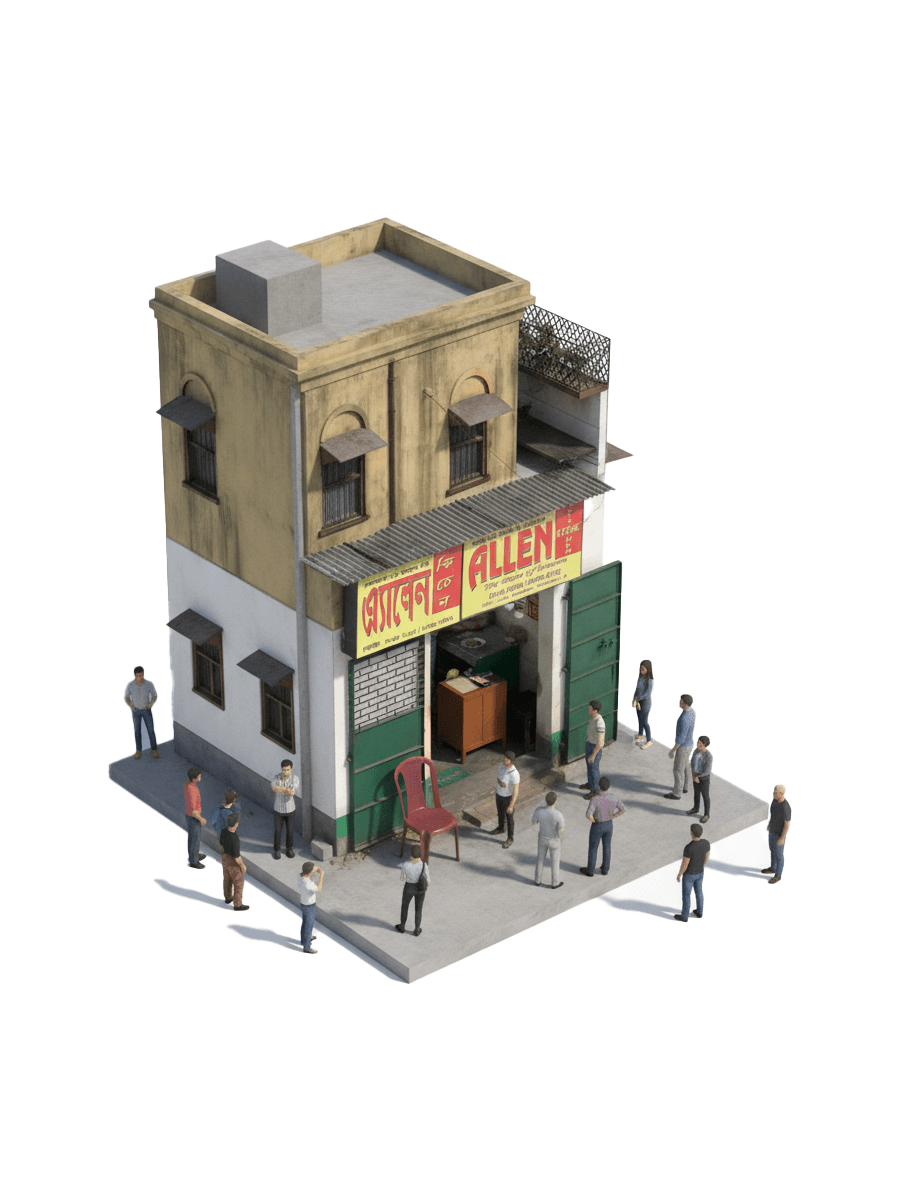
In the old quarters of north Kolkata, where time seems to cling to cornices and wooden shutters, stands Allen Kitchen. It’s less a restaurant than a relic. You walk through a kitchen to a narrow room. The ceiling is stained by decades of heat and held up by old wooden beams. Simple hardwood chairs stand with four marble-topped tables that have witnessed arguments, courtships, and gossip.
Allen is believed to have begun in the late 1800s, its origins tied to Allen Market in Chitpur. One account suggests that Jiban Krishna Saha, a former employee of a Scottish proprietor, kept the name Allen out of regard when he opened his own kitchen. What’s survived today is a way of cooking that feels curiously untouched by fashion. The Saha family, who have run the establishment for four generations, guard that legacy quietly and with fidelity.
Start by ordering the special prawn cutlet that they’ve been turning for more than a century. At first glance you might mistake it for the familiar kabiraji cutlet (similar to Parsi farcha) that Kolkata loves. The kabiraji wraps its breadcrumbed subject in a delicate egg-lace net, almost translucent, gossamer. What Allen’s does here is different: a refined flour batter coating instead of breadcrumbs, achieving a lightness that is startling.
It’s fried in pure ghee, not oil, which lends a kind of old-world generosity without turning heavy on the palate. The exterior catches and holds the ghee’s nuttiness, tasting faintly of clarified butter and maida and that indefinable fragrance of something fried in the right fat at the right moment. It’s crispy at the ridges, and softer, almost waffle-like, where the batter pooled thicker.
Inside, the butterflied prawn (split almost entirely in two lengthwise and flattened) is the sole protagonist. It tastes purely of itself—marine, gentle, and sweet. The spicing is minimal, almost invisible. It’s perhaps a whisper of black pepper and the faintest suggestion of ginger and garlic. But nothing that would distract from the essential prawn-ness of the thing.
Double mutton roll at Kusum Rolls, Park Street
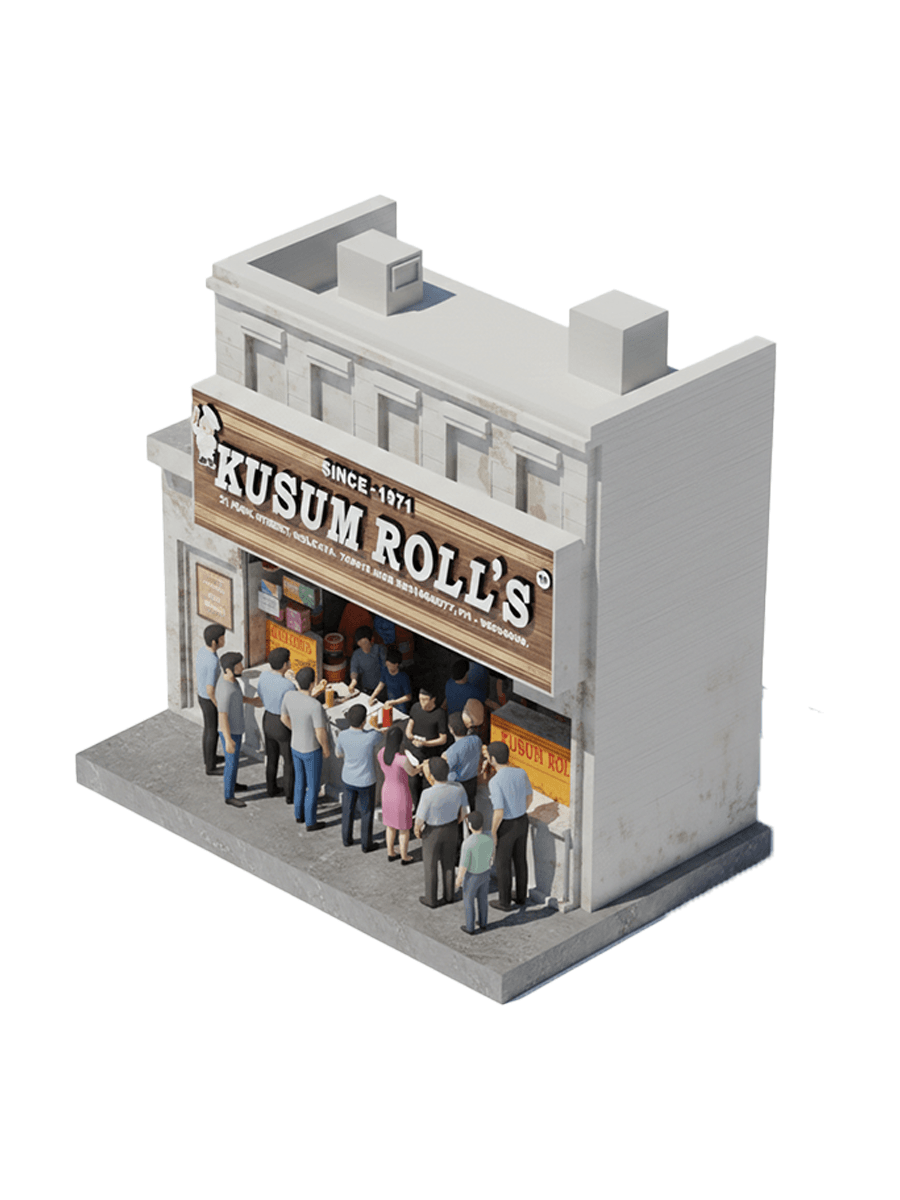
Few places on Park Street have earned their queue the way Kusum Rolls has. This is a place that runs on habit, not hype. The crowd on the footpath is just people returning to something that never let them down.
The kathi roll was born out of practicality in this very city, at Nizam’s restaurant. In the early 20th century, a paratha wrapped around grilled kebabs made a brilliant but messy thing portable. The bamboo skewer that replaced the original iron one gave it its name: kathi, or stick.
My usual order here is the double mutton roll. Off the tawa it comes blistered and layered, holding its form against juice and heat throughout. The mutton is well-charred and assertive. And the dusting of their house spice mix is the quiet genius. It’s not loud with garam masala. It hums with a peppery heat, a faint tang, a whisper of roasted cumin perhaps; no one will tell you the formula. Just skip the green and red sauces and ask for lime, which cuts the fat, sharpens the bite, and keeps the roll lively to the last. The pleasure is unapologetic.
A note for Mumbai readers: Kusum has outlets in your city. If you’ve tried one and wondered what the fuss is about, that’s a fair response. The Mumbai outlets do the original no favours. Kusum Rolls on Park Street is a different proposition entirely.
Hawksbay prawn cocktail and devilled crab at Mocambo, Park Street
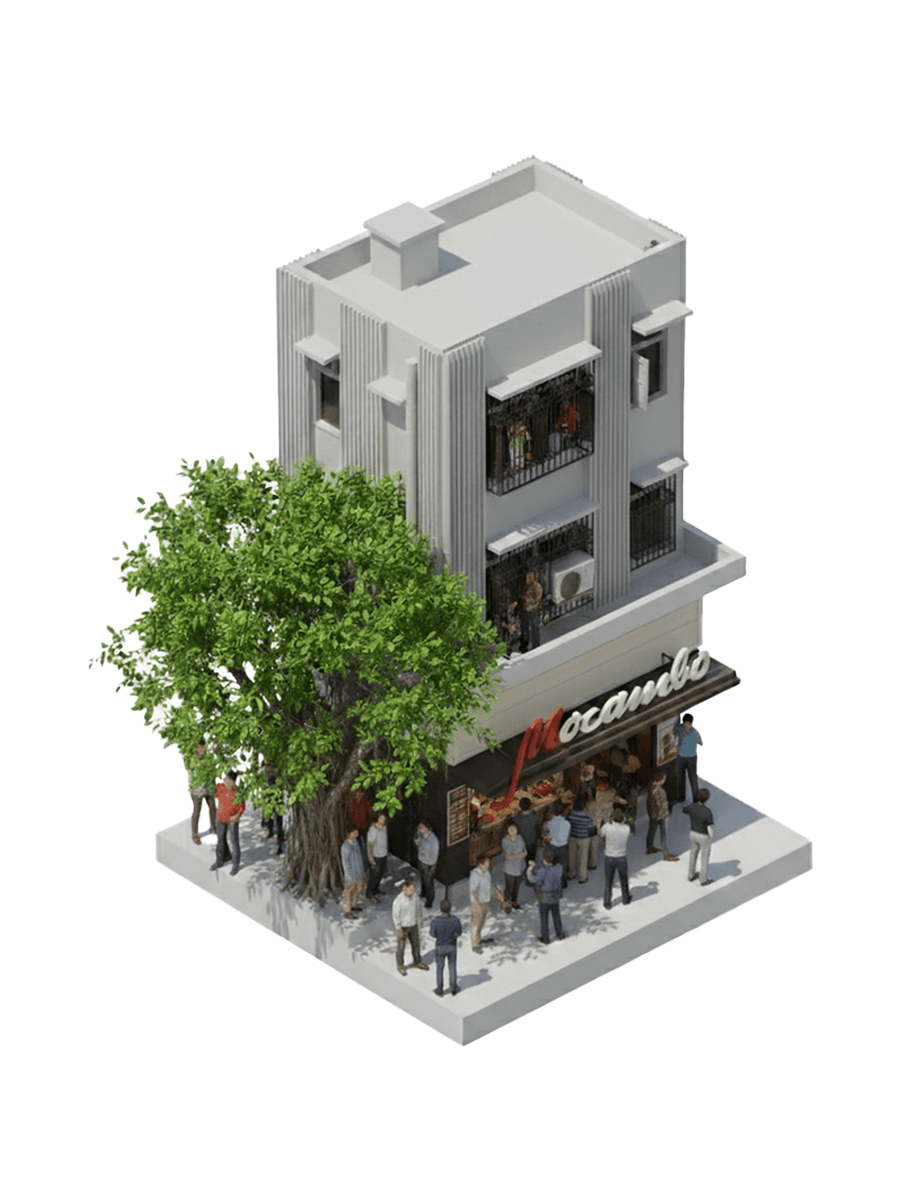
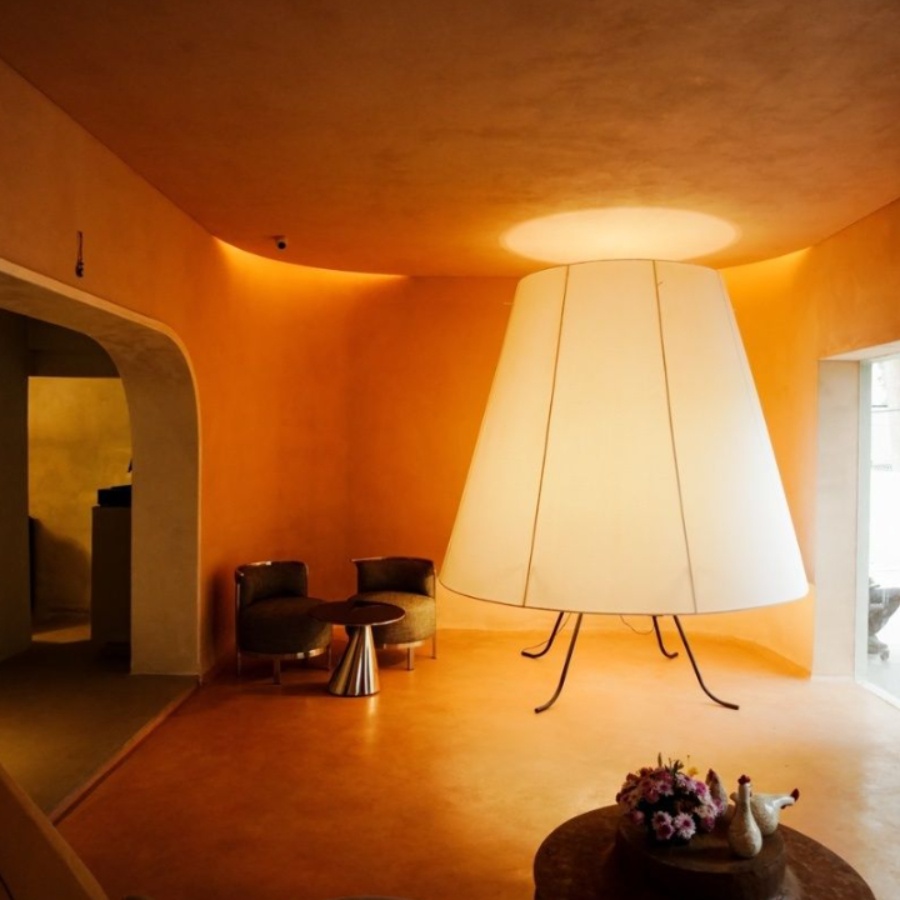
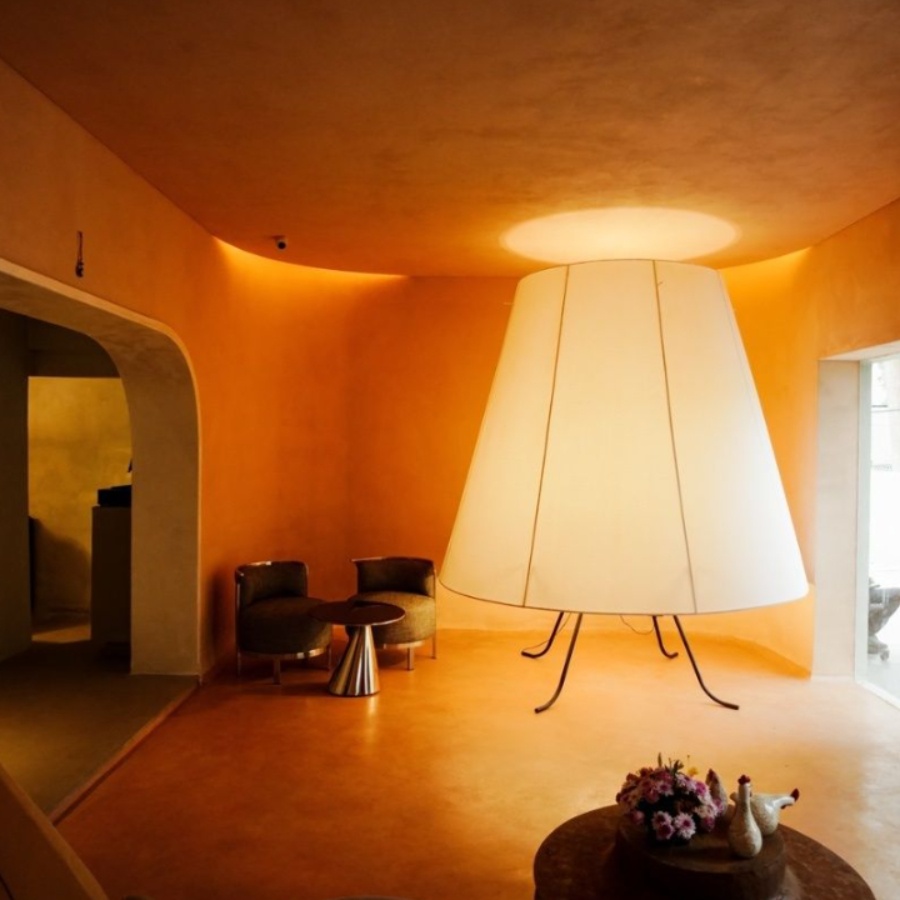
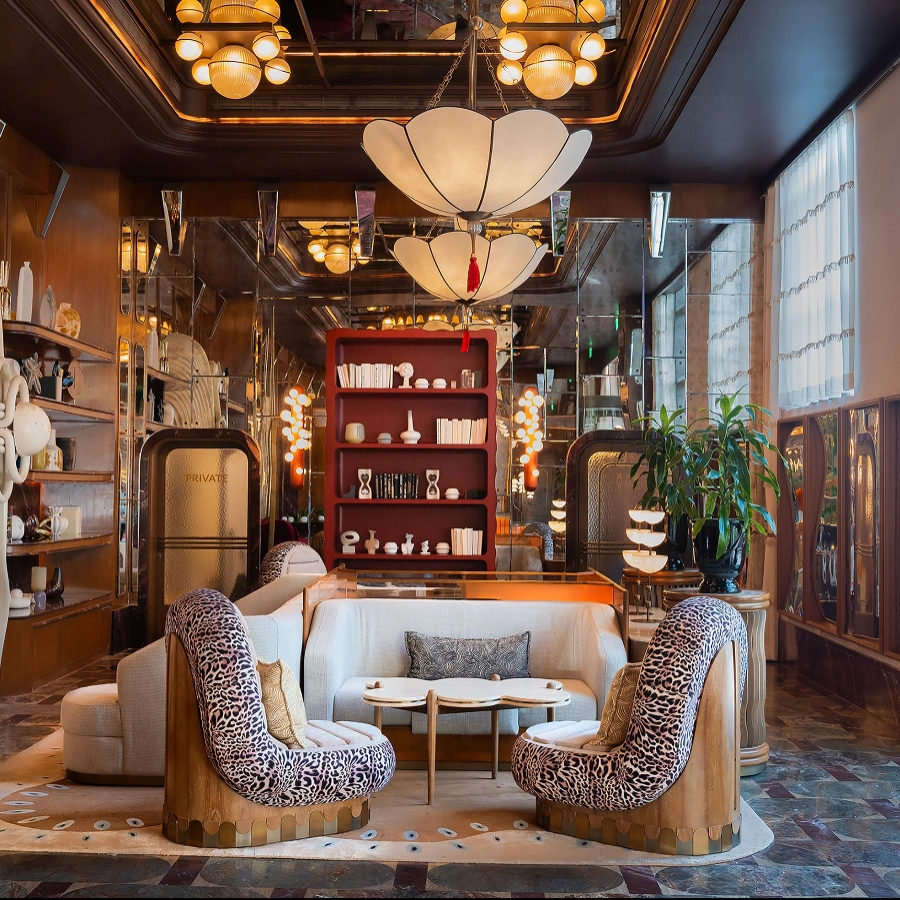
There’s a particular quality of light inside Mocambo that belongs to another decade entirely. Amber, unhurried, pooling beneath red lampshades that have hung in the same positions since 1956, it casts a glow the colour of aged Cognac over white tablecloths and faces that look, in this light, like figures in a slightly overexposed photograph from someone’s parents’ wedding. The room is all Art Deco bones and red leather worn soft by decades of use. Turbaned waiters move through it like figures in a slow dream.
Mocambo began in 1956 as a nightclub, possibly independent India’s first, born of an era when the city dressed for continental food and cabaret. It had a glass dance floor, a live band, and a 17-year-old jazz crooner named Pam Crain who would go on to reign over this street, becoming synonymous with everything it once was. An Italian chef built a menu of unabashed continental ambition: chicken à la Kiev, chateaubriand, cannelloni. The dance floor was gone by the ’70s. The kitchen simply continued, unmolested by trends.
Begin with the Hawksbay prawn cocktail that leans fully into its retro charm. It arrives in a gleaming silver-toned goblet. Inside, prawns are cloaked in a Marie Rose of deep blush-pink, thick and generous. The sauce carries gentle heat beneath its creaminess, a whisper of Worcestershire, a suggestion of lemon that brightens it. It’s dated, technically. But deliciously, undeniably.
Then the devilled crab. It comes in the actual carapace of the crab, filling baked to a golden crust, a slice of hard-boiled egg on top. Beneath, you find the crab meat in soft fibres folded through sharp mustard and melted cheese. The texture matters. It’s not whipped into anonymity. You can still feel the grain of the crab. The heat arrives slowly along with a gentle smokiness from the oven. A squeeze of lime sharpens it all. It’s a full, cheesy, forthright dish, but with the crab definitely audible. You find yourself working through it methodically, dragging your fork across the empty shell at the end.
Mocambo is also known for its fish à la Diane, using local bhetki that it’s always insisted on calling by its colonial-era name, beckty, a small stubbornness that feels entirely in character. The fish is poached in cream, with prawns folded through the sauce. And lastly, their chicken à la Kiev—a breadcrumbed breast, taut and sealed, that gives way under the knife to release a flood of herb butter. It’s said to be among the first versions of the dish ever served in India.
Kochupata diye chingri bhaapa at Kasturi, Mustaque Ahmed Street, New Market area
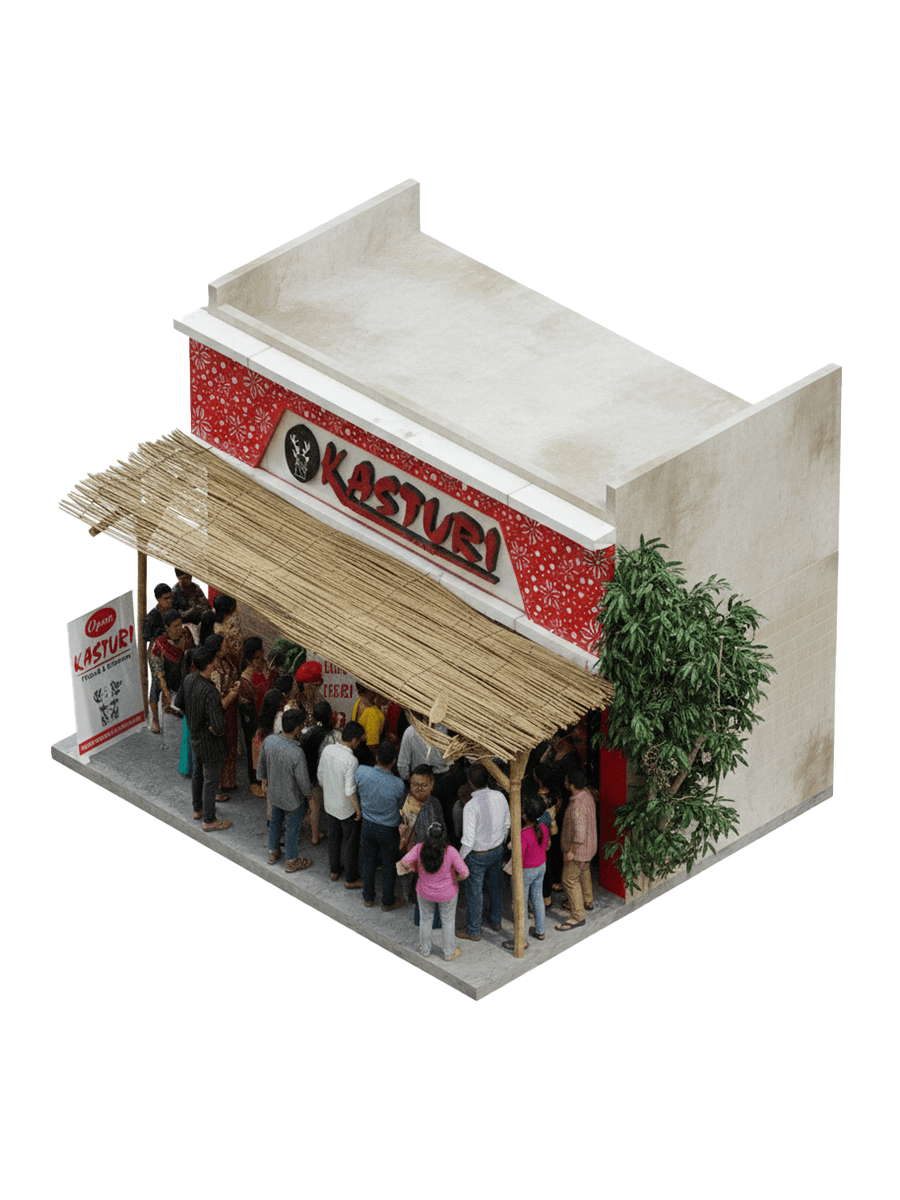
Kasturi has been serving what is best described as Dhakai-Bengali cuisine for the better part of three decades. This is the food of the eastern riverine plains, of old East Bengal, of undivided Bengal’s flooded delta heart. The kitchen follows the distinctly Bangal philosophy of no sugar in the savouries. The Bangals, Bengalis whose roots lie east of the Partition line in what is now Bangladesh, have always cooked this way: bold, unmediated, the spice and salt allowed to speak without sweetness softening the conversation. It is a culinary identity worn in deliberate contrast to the Ghoti Bengali tradition of West Bengal, where a gentle sweetness folded into savoury dishes has its own long, legitimate history. The difference between the two has been a source of decades of fond argument—nowhere more so than in households like mine, where Bangal and Ghoti parents have conducted this delicious, unresolved negotiation across the dinner table.
The kochupata diye chingri bhaapa (prawns steamed with colocasia leaves) is the dish that has made Kasturi a pilgrimage. It’s a tumble of finely cut kochupata (colocasia leaves) threaded through a mustard-gold sauce, small prawns nestled within. The leaves have given everything they have into the dish, their grassy, slightly astringent essence woven through the mustard, with poppy seed and grated coconut paste deepening it, complicating it. And there is considerable heat! The green chilli and mustard build together into something that opens warm and finishes fiercely. Every bite is a minor event—the sweetness of the prawn, the astringency of the leaf, the sharp bite and pungent depth of the mustard, and then that long, slow green chilli burn that lingers at the back of the palate long after the mouthful is gone.
Golden fried prawns and Peking duck at Beijing, Tangra
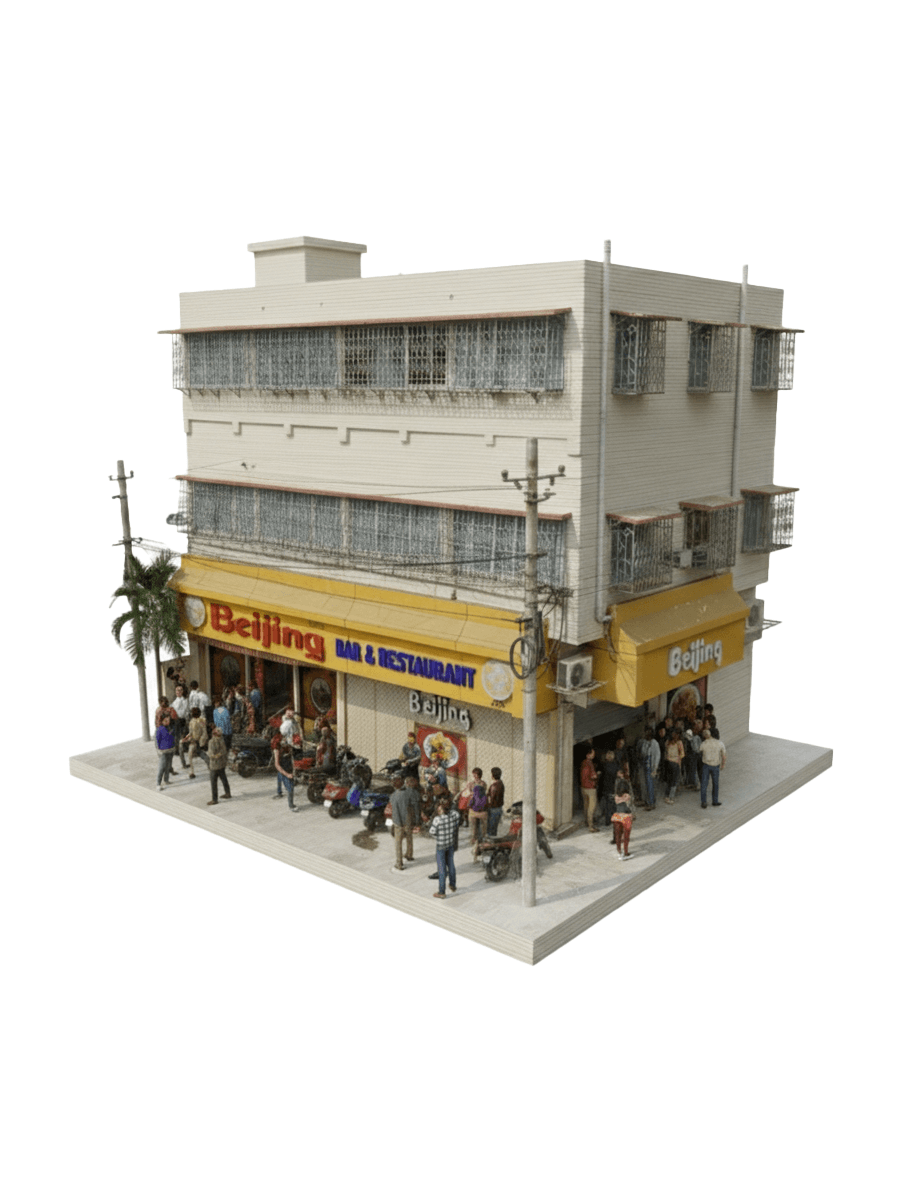
There’s a particular Kolkata ritual that involves navigating east, past tannery lanes, through streets that GPS tends to abandon, until you arrive in Tangra, the last surviving pocket of what was once India’s most vital Chinatown. The Hakka Chinese who settled here came as traders and leather workers, building a neighbourhood that held itself apart and yet opened itself completely—one in which they built a temple to Kali and offered noodles as prasad. The Indo-China War of 1962 fractured the community irreparably, and Tangra today is a shadow of its former self. But what remains carries an intensity of purpose that only communities under sustained pressure tend to produce. The food is proof of that.
A central figure here is Monica Liu, known across the city as the ‘Don of Tangra’—a title she earned in part by literally standing her ground against local strongmen who expected free meals when she opened her first restaurant, Kim Ling, in 1991. From that beginning she has built a small empire: Beijing and Kim Ling in Tangra itself, Tung Fong on Park Street, and two branches of Mandarin elsewhere in the city. Beijing, which she opened in 1998, is her flagship restaurant.
The golden fried prawns is their signature dish, ordered by practically every table. King prawns, fat and sweet, encased in a batter so delicate it barely registers as such, a featherlight armour that shatters at the first bite to release a burst of the prawn’s sweetness within. The colour is a pale, luminous amber, like afternoon light through old honey. There is no heaviness here, no grease. Just that clean, high note of prawn flesh, and that barely-there crunch. The custom here is to dunk it in a combination of house-made green chilli and honey chilli sauces mixed together on the plate, the heat of one rounded and deepened by the sweetness of the other.
Beyond the golden fried prawns, the dishes worth seeking out include the chilli garlic crab claws, the Peking duck, the special chilli chicken, salt and pepper fish, and the mixed Cantonese chow, arriving not as the dry wok-tossed noodle most people expect but as a generous bowl of soft noodles blanketed in a pale, silky cornstarch gravy loaded with prawns, greens, and meat. The soups, ranging from a simple hot and sour to a Lung Tung, are good meal starters.
A word of calibration for the discerning diner: this is not refined or ‘elevated’ cooking, and it makes no claims to be. The flavours are bold and unabashedly punchy—strong on soy, salt, MSG, and green chilli, built on the Tangra staples of wok heat, cornstarch, and vinegar. It is far removed from what genuine Chinese food tastes like. The Hakka community here consciously adapted its cooking to suit the local palate, using locally available ingredients, and what emerged became the living source of much of what India now calls Chinese food (Nelson Wang’s Chicken Manchurian invention in Mumbai aside).
Egg torka and chicken bharta at Ballygunge Dhaba, Ballygunge Phari
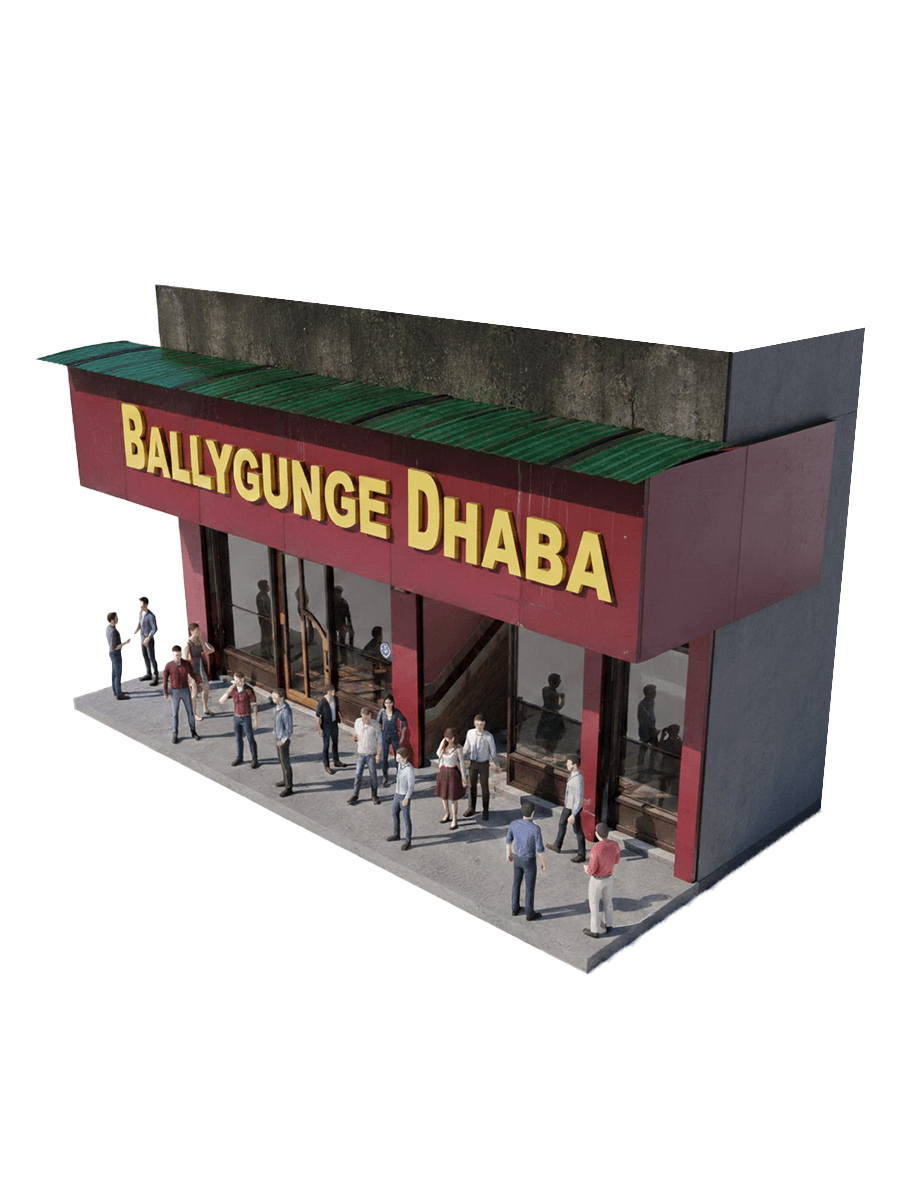
The Punjabi dhaba occupies a specific and beloved place in the geography of Kolkata’s appetite. These are places that smell of charcoal and clarified butter, where the ceiling fans move the warm air around without quite cooling anything, and where the food arrives without ceremony but never without care. They are unremarkable in appearance yet ferociously beloved. Azad Hind, Balwant Singh’s, Bachchan’s are institutions, each carrying decades of the city’s appetite. Ballygunge Dhaba belongs in that same breath.
The egg torka (tadka) here has a deep, smoky, savoury intensity. The lentils, whole green moong and black urad dal, bring a nutty, grounded earthiness that sits low and steady on the palate. The eggs are folded in, not scrambled but left in soft curds that cling to the dal, giving it a creamy, almost custard-like body that makes each bite feel thick and enveloping. You taste sweetness from cooked onion, a measured green chilli heat that spreads and lingers, and the rounded warmth of the garlic and spices. You may even encounter a small piece of ginger in the mix. The richness is pronounced and persistent, coating the mouth and carrying flavour well beyond the swallow. With rumali roti, that savoury weight clings and saturates, turning each mouthful into something full and deeply satisfying.
The chicken bharta—distinct from the Delhi and Punjab renditions that share only the same name—leans into creaminess and fragrance. The texture is lush, built on a gravy enriched with yoghurt and cream. The chicken is shredded or cut into small, tender pieces so it absorbs the masala rather than sitting apart from it. Onion and tomato form the backbone, cooked down into a thick, slightly sweet base. Ginger and garlic add depth without sharpness. The spice level is measured. Present, fragrant, but not aggressive. The defining notes are a faint smokiness, the sweetness of caramelised onion, and the gentle tang from cooked-down tomatoes. It is indulgent, yes, but not flat. There is contrast inside the richness. Tandoori roti, with its bite, is the right partner.
Biryani at Arsalan, Park Circus
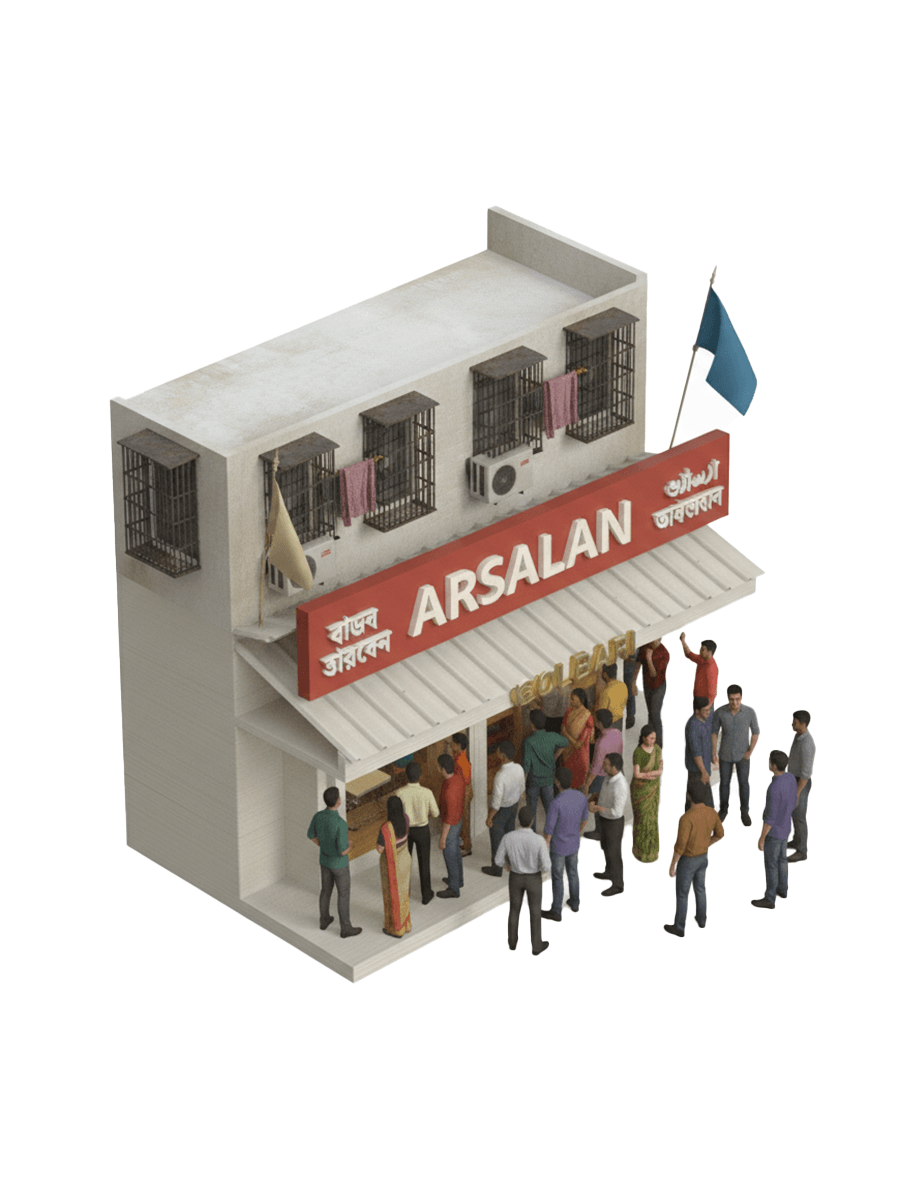
Nothing holds Kolkata more helplessly in its thrall than biryani. Not pizza, not burgers, not the global cavalcade of things that have arrived and demanded equal billing elsewhere. Biryani. Always biryani.
For years, my biryani was Shiraz Golden Restaurant. It had to be—my school and then my college were both close enough that the smell of it is almost woven into the very idea of those years. Shiraz was ritual. Shiraz was comfort. But things change, and sometimes a beloved restaurant loses the thread of itself in ways you can’t quite name, but your palate knows. And so, with the quiet pragmatism of someone who simply cannot be without a reliable biryani, I turned to Arsalan. My usual order here is the special mutton biryani and the chicken chaap. Together, they form a duet that defines Kolkata’s particular indulgence.
What you notice first about the biryani is that it’s not heavily spiced or greasy. The long grains of basmati sit separate and lightly bronzed, scented faintly with the aromatics: saffron, kewra, rose water, and meetha attar. When you hit the mutton pieces lacquered in their own fat, they’re tender and break into fibrous shards. You can taste the cardamom, a hint of mace, browned onions. The spices are restrained.
And of course, the potato, the city’s addition to the Awadhi original. In Kolkata, the biryani aloo is theology. People negotiate over it, guard it. It absorbs the meat stock and spice, its edges stained golden, the inside creamy and faintly sweet with the biryani’s flavours. In many ways, it’s the bridge between rice and meat. There’s also a boiled egg, which I’m indifferent to.
If the biryani is restraint, the chaap is indulgence. The chicken, usually a whole leg with the thigh, comes slathered in a thick gravy, the colour somewhere between burnished copper and dusk. The marinade is where the magic sits. It’s a thick paste of yogurt, cashew, poppy seeds and charmagaz (melon seeds), and a spice blend heavy on cardamom, mace, and nutmeg. The chicken is lightly seared to seal the exterior and develop colour, before it’s cooked in the thick chaap gravy. The effect is rich, creamy, mildly spicy, and deeply aromatic from the hit of kewra water.
To eat in Kolkata is to learn its temperament. Patient, argumentative, indulgent, deeply opinionated. The range is vast, but what binds it all is the conviction that food matters. People care deeply about where you ate, what you ordered, and whether you understood it. This is a city that wears its appetite with pride and expects you to take it seriously too. Other cities have food cultures. Kolkata has something closer to a food condition—chronic, untreatable, and entirely without embarrassment about its own obsessions. You don’t eat carefully here. You eat with gusto, and then you reach for the shelf, safe in the knowledge that Gelusil, Polycrol, Carmozyme, Aqua Ptychotis or Jowaner Arak are standing by. The antacid is strategy from the outset. Children can rattle off these names before they can spell them, and no Bengali household has ever run out.
Notable mentions
6 Ballygunge Place: The gold standard for Bengali home cooking in a restaurant setting—they serve luchi, kosha mangsho, chingri cutlet, chingri malai curry and gondhoraj ghol with the kind of consistency that has made it an institution.
Girish Chandra Dey & Nakur Chandra Nandy: Known simply as Nakur, this century-old confectioner is one of Kolkata's most revered addresses for mishti, particularly its sandesh.
Hamro Momo: A long-standing Kolkata address for Tibetan-style momos—thin-skinned, generously filled, served with a clear soup and a fiery sauce.