






Manoj Bajpayee is ridiculously youthful-looking for a 57-year-old. He’s trim, his face glows, he’s light on his feet. His body of work is already impressive and curated, and his physical self suggests the same level of care and attention. “You sacrifice a lot and don’t compromise with your daily routine,” Bajpayee tells The Nod at a shoot near the Mumbai international airport on a sweltering March afternoon. Outside, the sun is harsh enough to melt concrete. Inside, Bajpayee is cool and collected. It’s a rare day when he isn’t on a film set, getting under the skin of a character. There’s work to be done and no time to waste.
It’s been 17 years since he started skipping dinners, fitness advice that has now become a habit. If there are cheat days—and there are, he says—there’s little evidence of it. Anyone who has ever been on a film or photo shoot will tell you sets are mostly wasteful, with the crew just sitting around waiting for the talent to be ready or eating snacks. While the crew in Andheri was picking between matcha and sandwiches, Bajpayee retreated to his HMU room, asking for the AC to be switched off and calling for his homemade dabba of curry and rice for lunch.
From the beginning, there’s been a palpable hunger in Bajpayee’s progression—an unwavering journey towards excellence that has been present ever since he burst onto the scene in the mid-1990s. Back then, Bajpayee had scored a few minor roles in major films, such as Govind Nihalani’s Droh Kaal (1994) and Shekhar Kapur’s Bandit Queen (1994). He had a lengthier part in Ram Gopal Varma’s caper Daud (1997), before he became the centrepiece of Varma’s classic crime drama Satya (1998) as the flamboyant gangster Bhiku Mhatre.
Varma may have faltered in his career in the years to come but not Bajpayee. Over the years, the actor became the name to go to for films and shows that demanded an assiduous unpacking of characters with his ability to not just inhabit a part but also make its impact linger beyond the end credits. Today, he’s at the top of his game, occupying a position that once was the late Irrfan’s, straddling mainstream, indie, and middle-of-the-road projects.
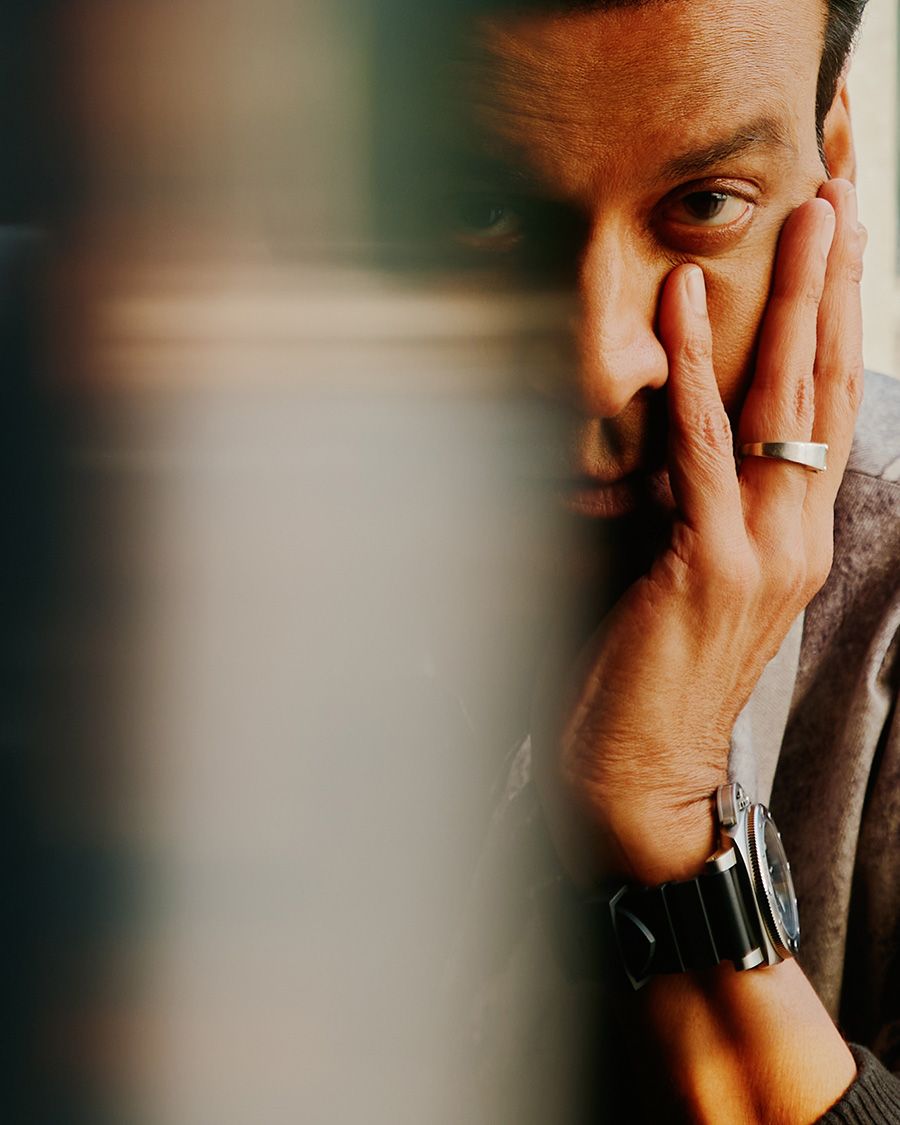
Experimentation, continuity with previous performances, a bid at posterity, or just for the fun of it... Bajpayee is up for all the above. He says he hates roller-coaster rides in real life but enjoys the unpredictable thrills of his profession. “Getting out-of-the box stuff in any genre is something I am always looking forward to,” says the actor whose filmography is sprinkled with roles that reach the darkest recesses of the human soul. “Sometimes, you get tired of waiting for the role, so then you try to create it by finding the right director.”
His filmography is a “mixed bag”, he points out—by design. His upcoming projects include Governor directed by Chinmay Mandlekar, whose Inspector Zende (2025) Bajpayee also headlined. There’s a reunion with Ram Gopal Varma for the horror comedy Police Station Mein Bhoot. Neeraj Pandey’s crime thriller for Netflix, whose original title, Ghooskhor Pandat, caused a controversy, is also in the pipeline. As is American director Ben Rekhi’s upcoming adaptation of Arvind Adiga’s novel Last Man in Tower. “I am picky. I don’t do anything just because it’s an independent film, or middle-of-the-road or a potboiler,” he says. “The primary reasons are the artistry of the filmmaker and the script. Is it going to compel the actor in me to go beyond whatever I have done? Am I improving myself? Am I breaking new ground?”
It sounds like the sort of response you expect from any ingénue after a breakout role. But Bajpayee is at that sweet spot in his career where he can take the long view. On screen, he has played losers and heroes, but IRL he’s able to balance celebrity with craft and Bollywood’s ruthless demands with his individual ambitions. While he has rarely been out of the spotlight, there’s a polish to his recent persona. These days, you will see him post a steady stream of stylised shoots, appear at award shows, and even get a photo op with French President Emmanuel Macron. Even his roster seems to be changing.
For him, mainstream cinema is a strategic choice. “The Hindi film industry is very market-oriented, so to keep one’s value alive one has to balance it with things on which I don’t compromise,” Bajpayee explains. That kind of commercial venture would include Bhaiyaa Ji (2024), in which Bajpayee unleashed his inner macho hero to play a vigilante. It’s a genre he can call his own. Bajpayee specialises in this kind of role: the honest man pushed to his limits by dishonesty, willing to break the law and a few limbs when every other method has failed. One of his most cherished performances is in E Nivas’s Shool (1999), in which a principled police inspector lashes out under severe pressure from a venal politician.
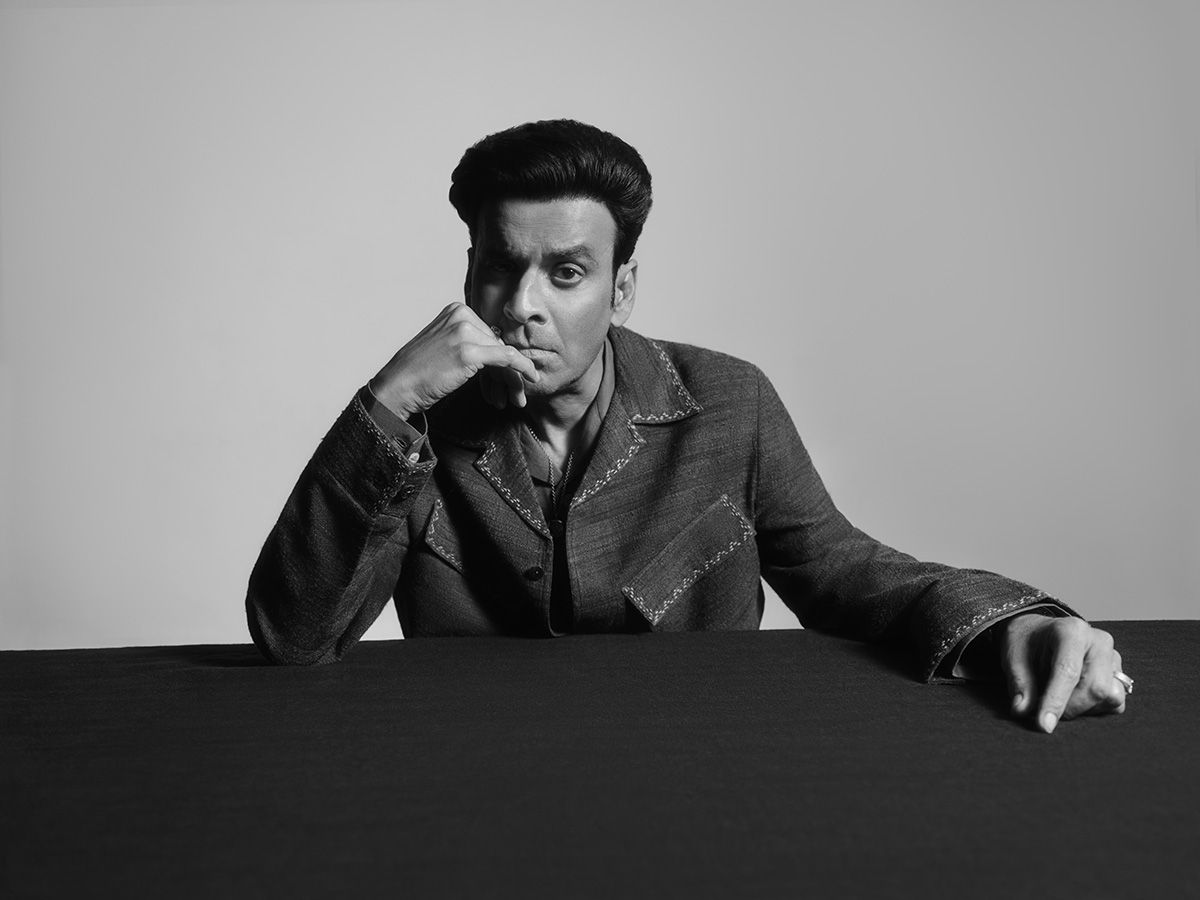
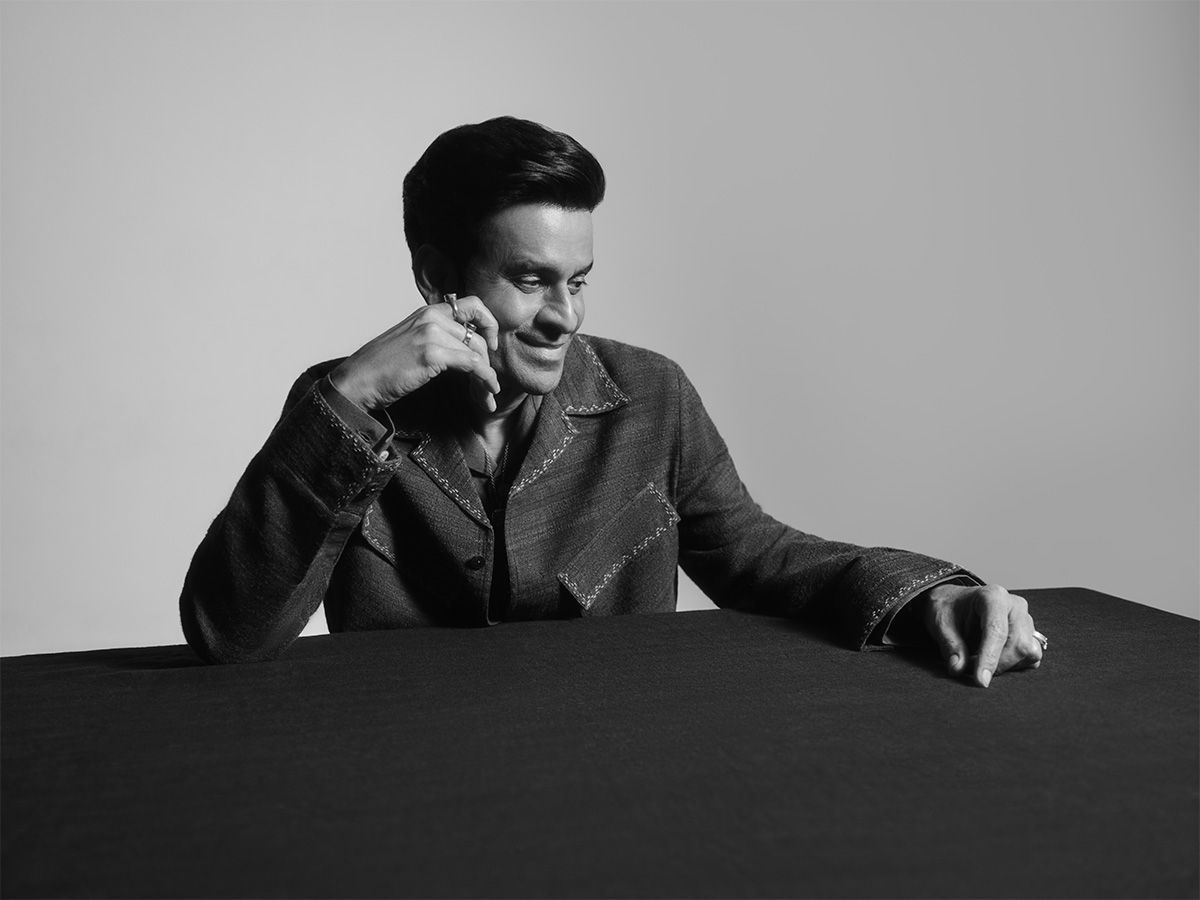
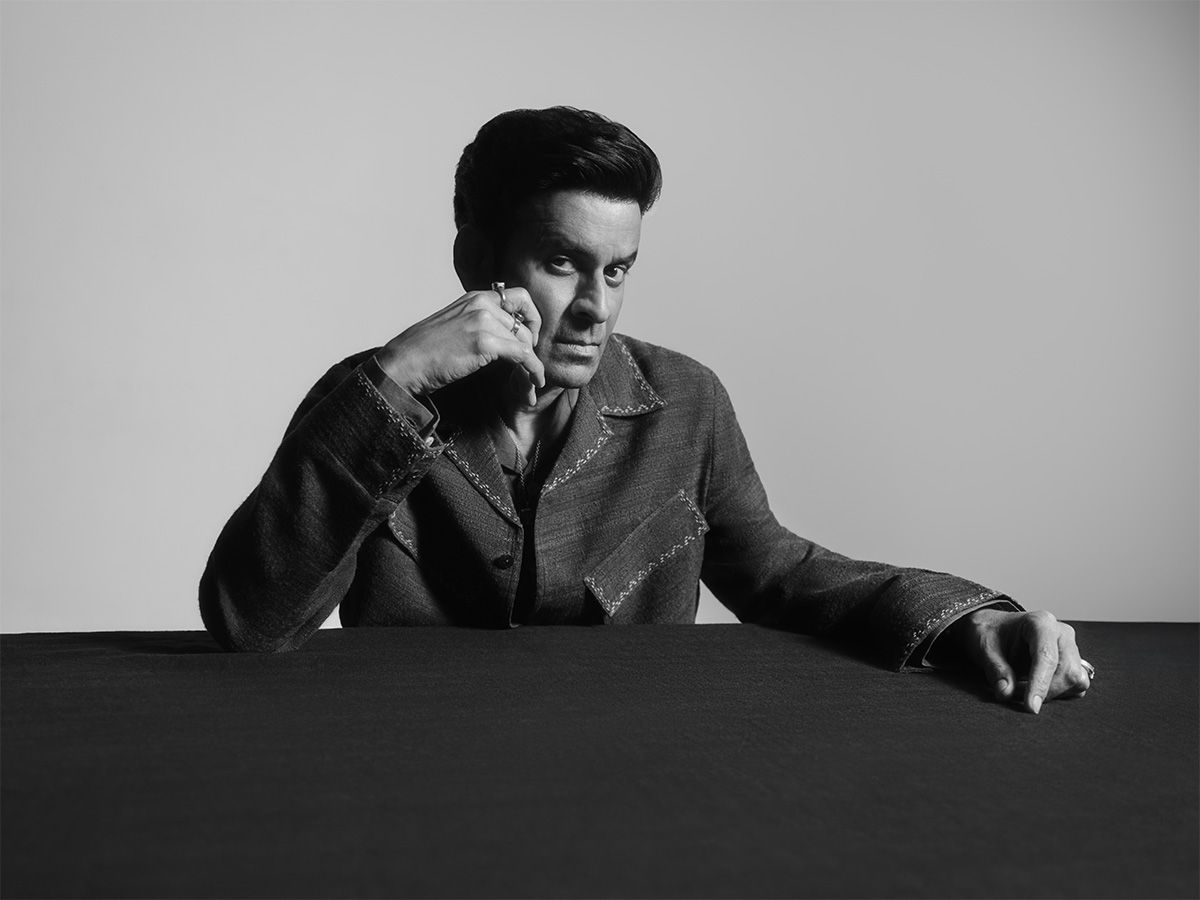
Upright cops and amoral gangsters, deranged stalkers and grubby-handed politicians, clownish men and serious men, Bajpayee has played them all. Since the 2010s, his filmography has become richer, ranging from Gangs of Wasseypur (2012) to Aligarh (2015) and Gali Guleiyan (2018) to Gulmohar (2023), Sirf Ek Bandaa Kaafi Hai (2023) and Jugnuma (2024).
A few of these films are by directors at the starting point of their careers. And by headlining their projects, Bajpayee has made them visible and viable. “It’s not just about supporting filmmakers; it’s also about a desperate need to look out for something that I have not been getting,” the actor explains. “I’m not doing a favour to anyone; I never have. It’s my inner urge to keep satisfying the artist within me. Somewhere, I also feel that as an actor you are really limiting yourself if you stick to a genre and don’t put yourself out there.”
Bajpayee has a remarkably expressive face, and in a matter of seconds, he is able to twitch a nerve and make a brooding face and almost instantaneously switch to flashing a smile. He needs no direction from the photographer—but he’s happy to do his thing till the flash feels fulfilled. For an interviewer, he comes across not just as thoughtful but also analytical. It’s not only just smooth professionalism at work here but also a willingness to understand his own journey, with honesty and openness. “I am ready to be judged and critiqued. I don’t fear these things,” he says with a candour that can only come from years of experience.
He doesn’t care for nostalgia, he adds, preferring to look ahead rather than crane his neck backwards. Born in Belwa village in Bihar’s West Champaran district into a farming family, Bajpayee nursed his dream of becoming an actor all the way through school and college. In the mid-1980s, he moved to Delhi to enrol in the National School of Drama but was famously rejected four times. It seems he always knew what he wanted to do. Soon enough, his work in professional theatre was being noticed, which led to early roles in Bandit Queen and Droh Kaal before his eventual breakthrough in Satya.
A richly detailed account of the actor’s life can be found in Piyush Pandey’s Manoj Bajpayee – The Definitive Biography (Penguin Random House, 2024). The Hindi journalist writes about his subject: “Manoj always believed in his dreams. He had a strong desire to make it big as an actor and knew the only way to do that was to step out of his comfort zone, his village. Manoj knew if he could turn his dreams into reality, it would serve as an inspiration to many like him. And that is exactly what happened. The important question here is: was Manoj able to reach his destination? The answer to that is no. Because the day an artist finds nothing new to attain, they are finished. Besides, Manoj is also on a spiritual journey, the destination of which he is unaware of.”
The book includes a tantalising detail about Bajpayee: a steel trunk containing the actor’s belongings has travelled with him from school to Delhi and eventually to Mumbai. Bajpayee says he still has the sandook. “It may sound silly, but I want to remind myself where I started from,” Bajpayee tells me. “The journey started with a certain kind of passion. I don’t want that to go away. That small metal sandook reminds me of why I am here, my passion to be an actor, without which I might lose the reason for living.”
A lot of actors I meet spout opinions on everything, but him? He is a throwback to the days when it was acting first with no idea what Instagram is.
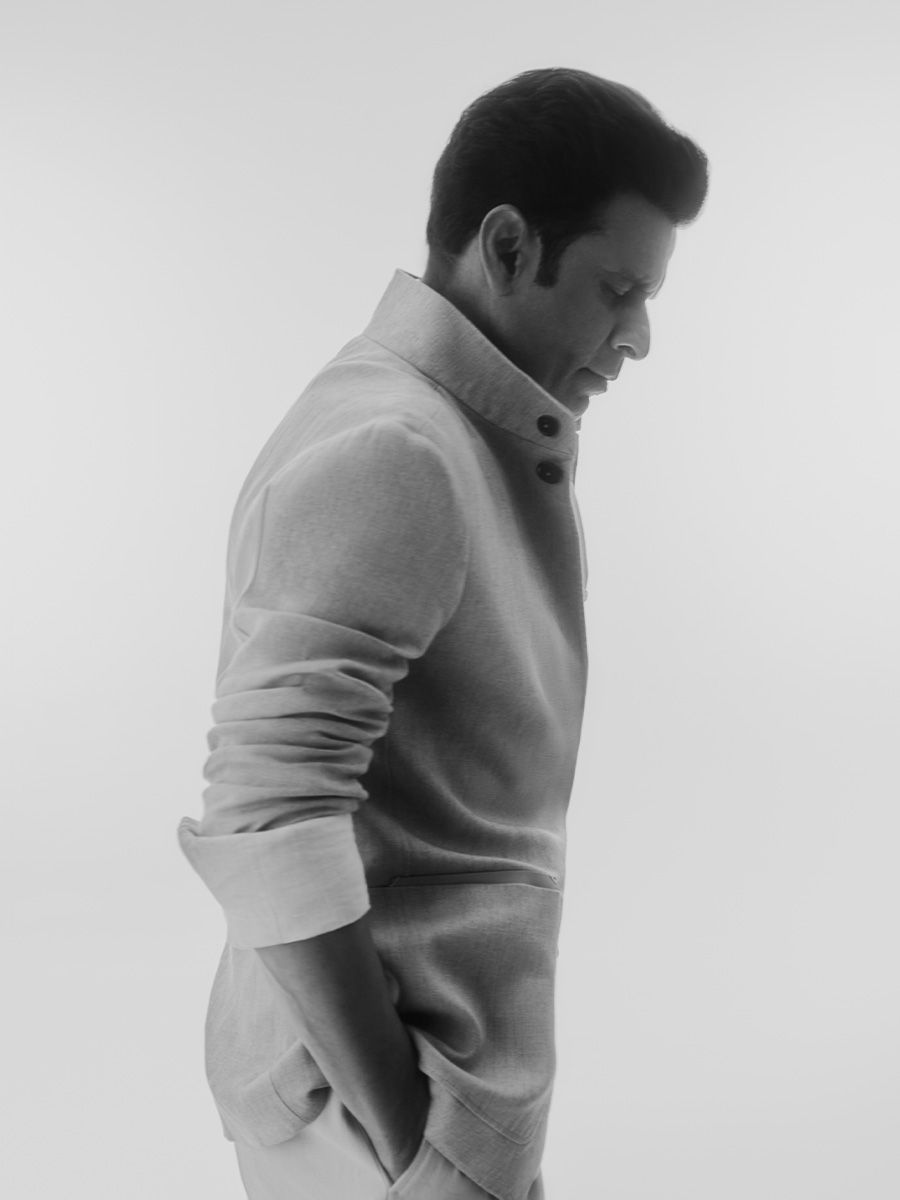
He is old-school and wary of any Gen Z-coded terms that The Nod’s social media team may throw at him. His defence mechanism is to “pretend to be angry”, he says, perhaps only half-jokingly. A white jacket against a white background? What an absurd idea, Bajpayee tells the stylist, his irritation only skin deep. At the shoot, he is fully switched on, and switched off to every other stimuli. “When I am shooting, I am shooting,” he says firmly. “It’s a very immersive time and I don’t focus on anything else. Everything else is on the fringes for me.”
It is said that authors write principally for themselves, and directors make the films they want to watch. Who is Manoj Bajpayee performing for? “I am performing for my utmost bliss and satisfaction. I want validation for my own self,” he says.
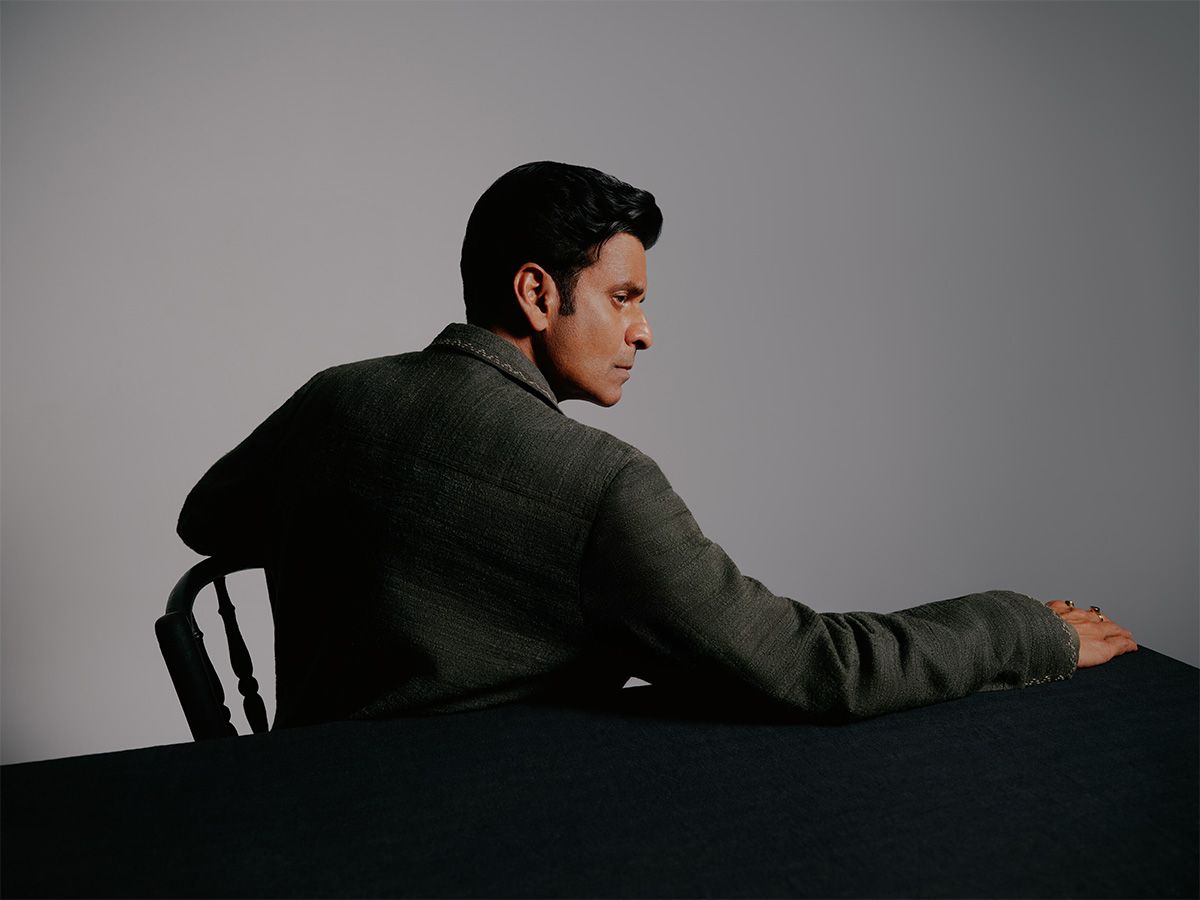
Over 30 years, Bajpayee has played so many varied characters that their ghosts linger, even haunting him at times. “The residue of all of these characters is bound to be there. I’d be fooling myself if I said otherwise,” he says. “I work on my characters with so much incentive, intensity, and preparation that they don’t go away. They are pushed somewhere to the back of my mind. Sometimes they surface. Sometimes, they are troubling. That’s the curse of being a very immersive actor. And I don’t know any other way to do it.”
Roles such as Dipesh Jain’s intensely psychological drama Gali Guleiyan (2017) or Devashish Makhija’s fast-paced Joram (2023), about an Adivasi man on the run with his infant, have been emotionally and physically draining. “You can’t afford to get away from the character even for an hour,” Bajpayee says. “You are never relaxed. You are scattered. You are sacrificing everything. You can’t give time to your child or friends or enjoy a cricket match on TV. You can’t do anything but be with the character and the graph of the film.”
So, a role like the undercover agent Srikant Tiwari in Raj & DK’s web series The Family Man might seem like a departure. Bajpayee’s Srikant is deceptively light-hearted and likeable. Scratch beneath the surface and a complex, crotchety individual emerges, one with ambivalent feelings towards his family, impatience with the demands of his job, and a healthy disregard for lesser mortals. Since 2019, he has played Srikant with unerring consistency and rigour over three seasons. It’s also one of his defining roles, something that he is eager to discuss.
“Srikant Tiwari is me and Srikant Tiwari is everybody,” Bajpayee says. “You find this character in every household, struggling to strike that fine balance between job and family. Every season, Srikant’s challenge has been different. In the first season, his marriage is slowly slipping away. By the third season, it’s gone, it’s a pretence. It has been difficult to maintain the character’s graph without losing the interest of viewers. Sometimes people see the nuances, sometimes they don’t. But you do it for your own self, because if you don’t, you won’t grow as an actor.”
He likes to keep his own family life under wraps. He’s been married since 2004 to the former actor Shabana Raza, who made her debut under the screen name Neha in Vidhu Vinod Chopra’s Kareeb in 1998. They have a 15-year-old daughter, Ava Nayla.
Pandey, Bajpayee’s biographer, recounts a charming anecdote of how the two met sometime in 1999. Raza had turned up at a party at the director Hansal Mehta’s home “without make-up and with oiled hair and a pair of spectacles”, Bajpayee tells Pandey. “I told myself that no Bollywood heroine had the courage to arrive at a party with oil in her hair. Her simplicity won me over.”
Acting might be Bajpayee’s grand obsession, but these days he is making an effort to spend more with his wife and daughter. “After a shoot, I straightaway go home, where I try to be with my family, my child,” he shares, ready to call it a wrap. “I’m a mostly absent father, but I am trying to change that by spending as much time as possible at home.”
Editorial Direction: Megha Mahindru, Ridhima Sapre. Photography: Pulkit Mishra. Director: Sainil. Stylist: Naheed Driver. Visual Direction: Jay Modi. Art Direction: Harry Iyer. Bookings Editor: Nikita Moses. Multimedia Designer: Mehak Jindal. Social Media Editor: Diya Parakh. Visual Editor: Ria Rawat. Makeup: Mannya Joshi. Hair: Sachin Jadhav. Styling Assistant: Kashish Jain. Production: Imran Khatri Production, Radhika Chemburkar