



One of the first techniques Punit Balana ever learnt wasn't taught in a classroom. It came from a karigar in Bikaner named Muhammad Ajeez, who showed him Mom Ka Chhapa, a wax printing method that looks nothing like the block printing most people picture when they hear the word. Instead of a wooden block dipped in dye, the design comes from a specially made metal block filled with wax and stamped straight onto the fabric. Gold powder is dusted over the wet wax, sticking only where the print sits, which is what gives the finished surface its raised, glinting texture.
This wasn't a one-off apprenticeship either. Since 2001, Balana had spent years travelling to Bikaner, Sanganer, Jaipur and other craft hubs across Rajasthan, learning techniques directly from the artisans who practised them and, in many cases, recreating the processes himself by hand. Mom Ka Chhapa was one craft among several he picked up this way. What sets it apart, more than two decades later, is that it's the one relationship that never ended.
Balana still gets his Mom Ka Chhapa printing done at the same karkhana in Bikaner today, and the person running it now is Ajeez's son.
A technique that stayed put while everything else changed
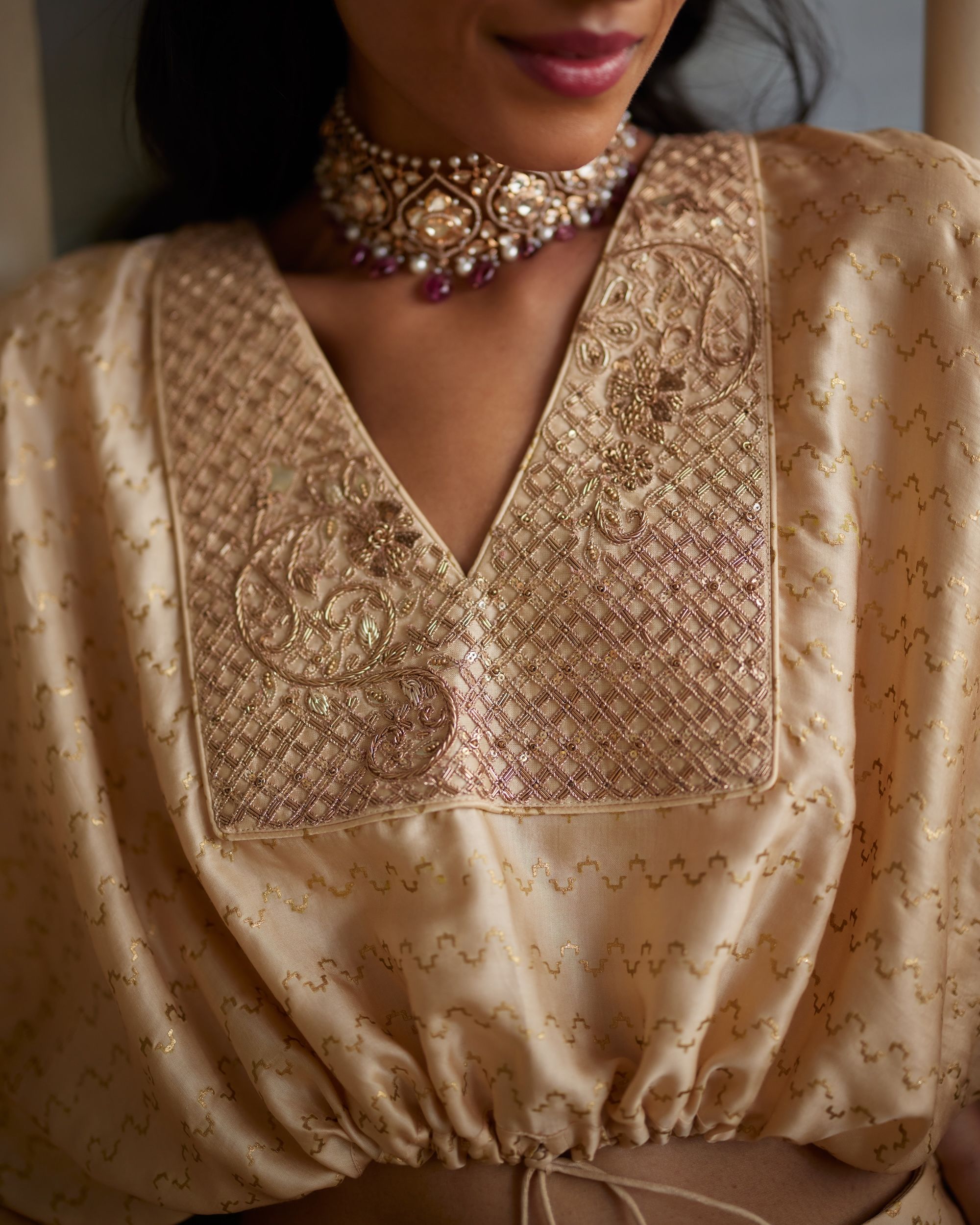
Balana kept coming back to the same workshop, year after year, long after he no longer needed anyone to teach him the craft. "It's a beautiful connection between where my journey with craft began and how we continue to practise and preserve that craft today," he tells us. That's not a small thing in an industry that tends to treat craft techniques as seasonal ingredients, something to be discovered, used for a collection or two, and replaced by what's next.
Where it shows up now
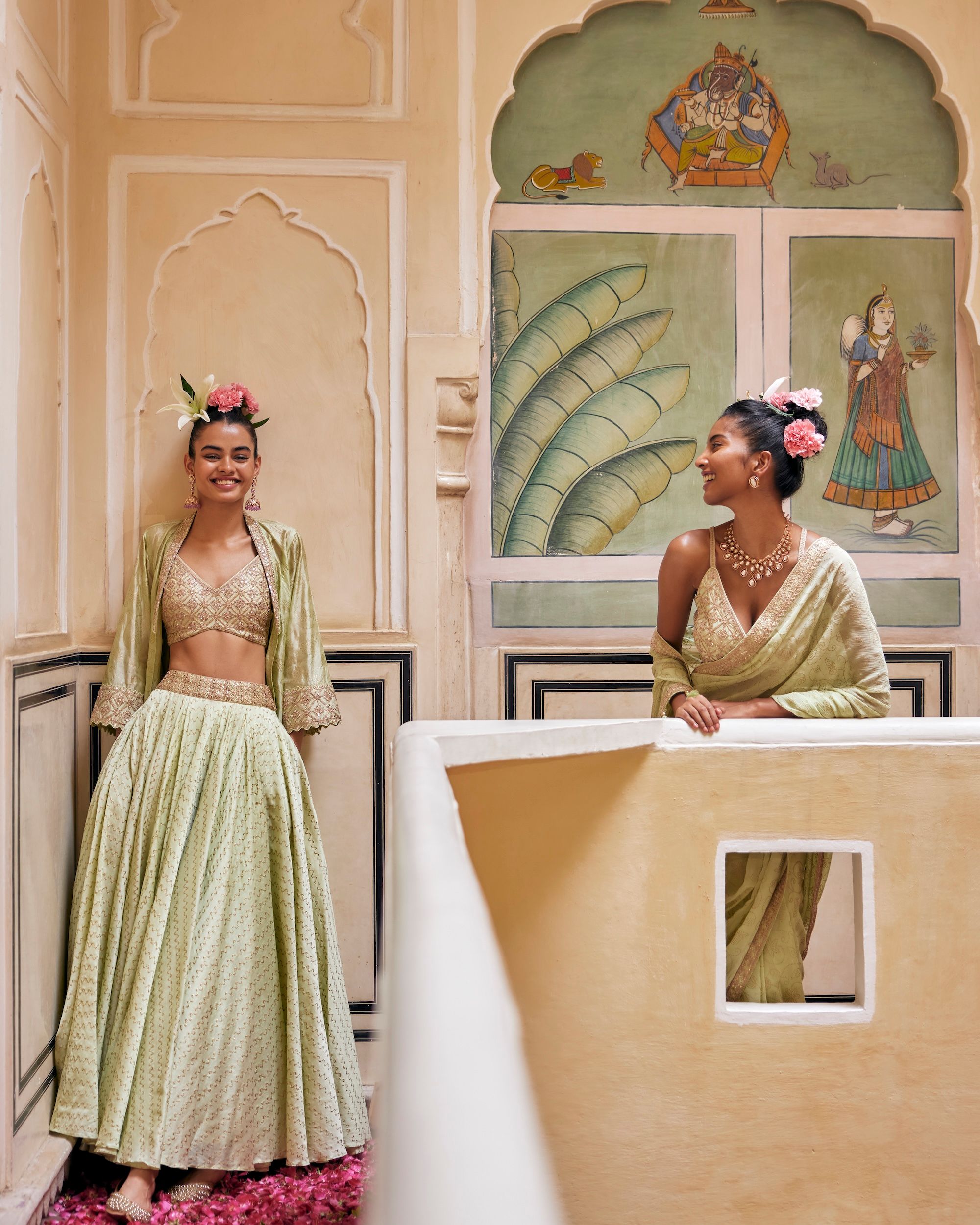
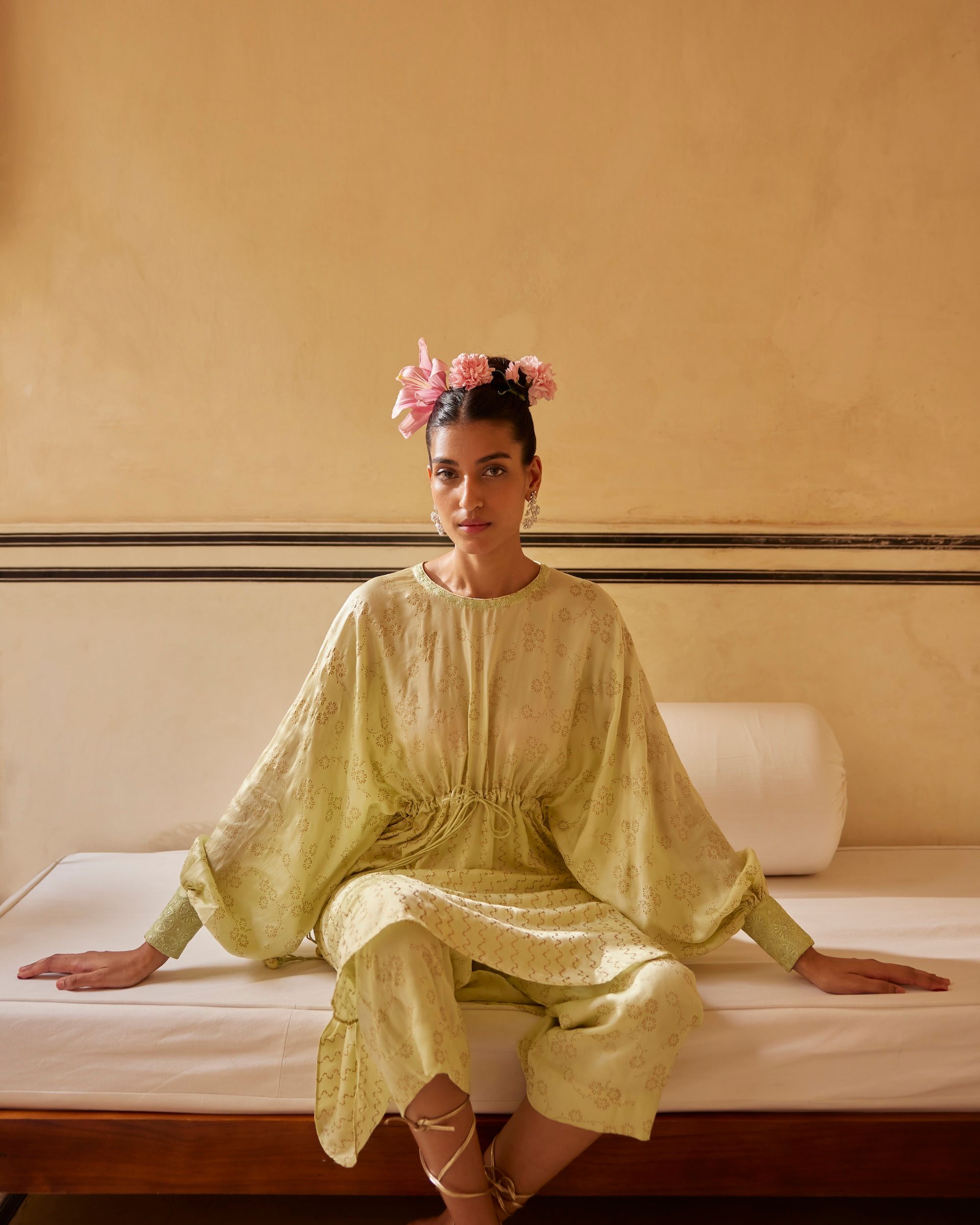
The clearest proof of that commitment is Chhaap, a recent collection built almost entirely around this one printing technique. Nearly every piece in it carried the Mom Ka Chhapa treatment, which meant leaning on the same karkhana at a scale many designers wouldn't for a single technique, let alone one they'd already moved past learning. It's one thing to use a craft as an accent somewhere in a collection. It's another to hand an entire body of work over to it, and to the same small workshop that's been doing it for over twenty years.
Student, and something closer to a partner
Ask Balana how the relationship has shifted since those early training days, and he doesn't describe it as outgrowing a teacher. "Over the years, it has evolved from a teacher-student relationship into a beautiful creative partnership," the designer says. "Today, his son works with us, and together we continue to keep this craft alive, while finding new ways to interpret it through our collections." The word partnership is doing real work there. It's no longer one person teaching and one person learning. It's two generations, on either side of the same craft, figuring out together what it can still become.
Balana is fairly direct about why he's stayed loyal to one karkhana. "Fashion is all about change, but I don't believe craft needs to change for the sake of it," he says. "If you present a craft differently, it can look completely new and modern. I believe that when you discover something beautiful and an association has worked for you for years, you should hold on to it. You should preserve it, protect it, and keep finding new ways to celebrate it."
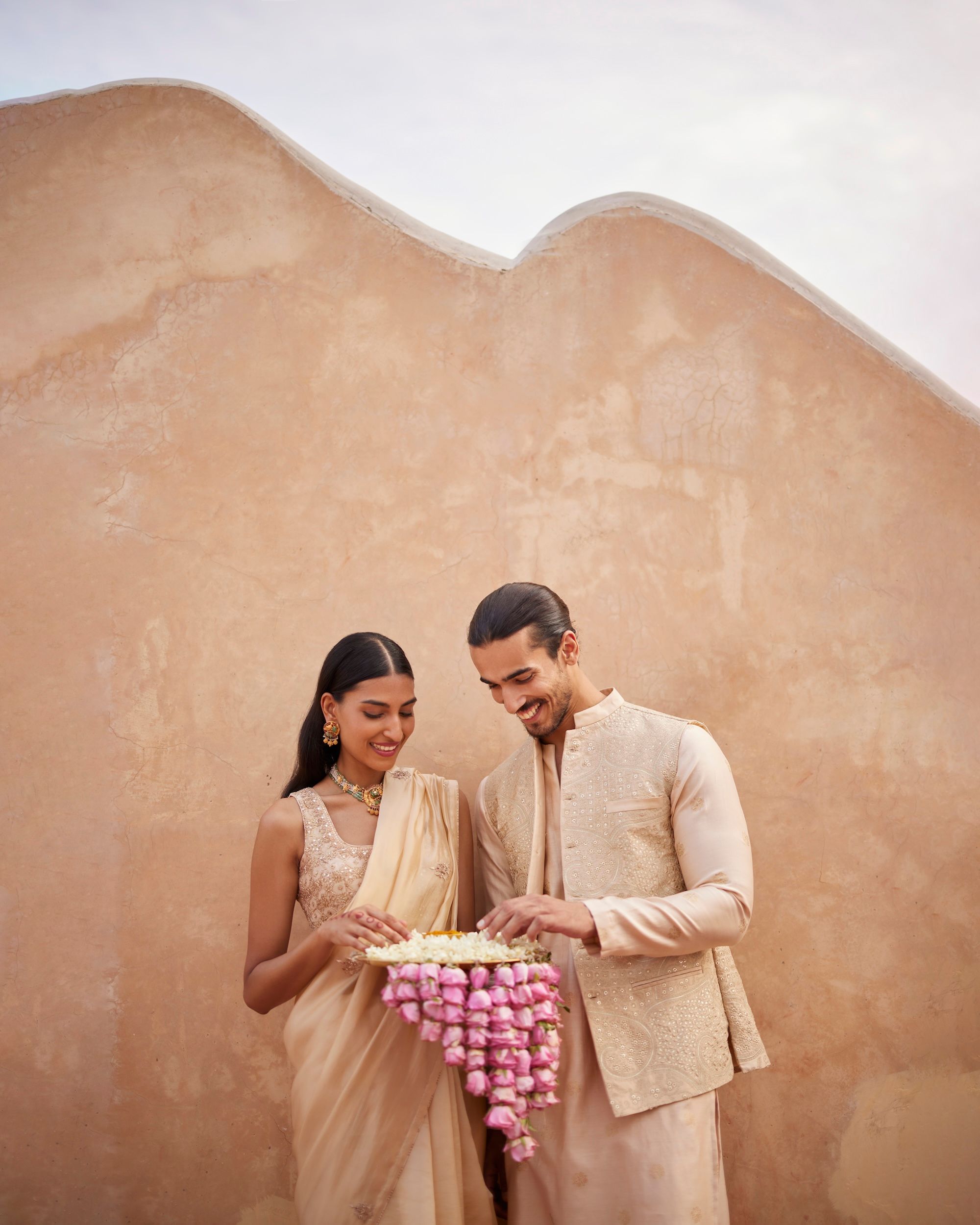
It's a fairly unfashionable thing to say in an industry built on newness, where designers are expected to reinvent their references every season just to stay visible. But it also explains something specific about how a wax-printing technique from a small karkhana in Bikaner is still showing up on runways two decades after a young designer first watched someone else's hands do it, not because the craft was rediscovered or revived, but because it was simply never put down.