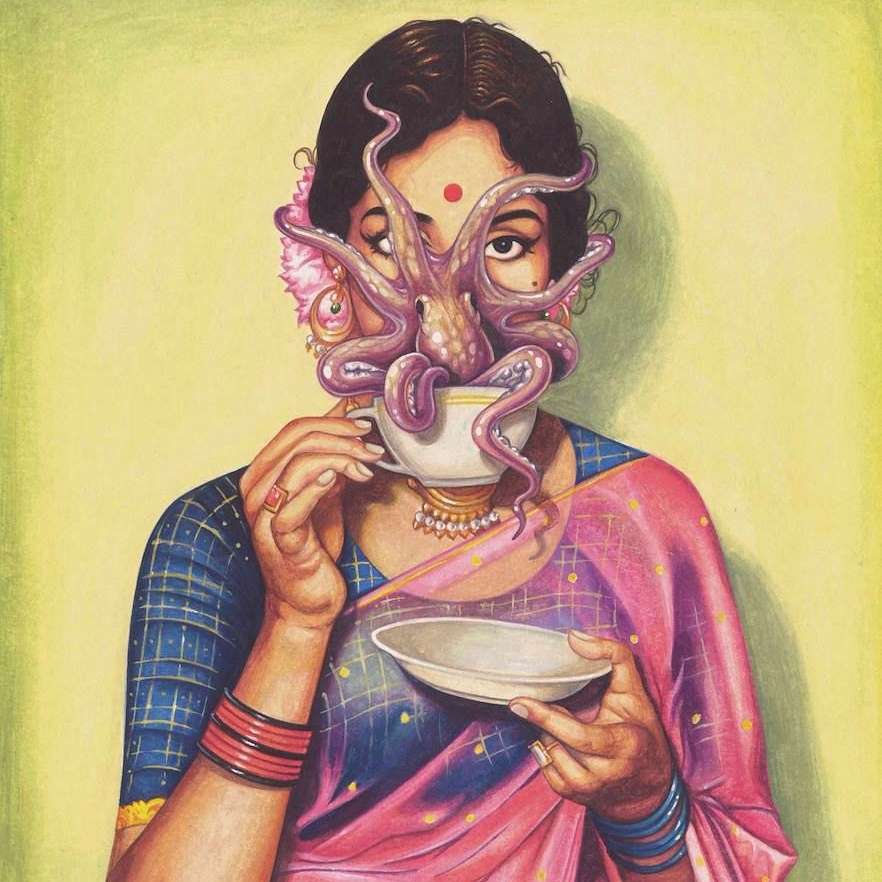
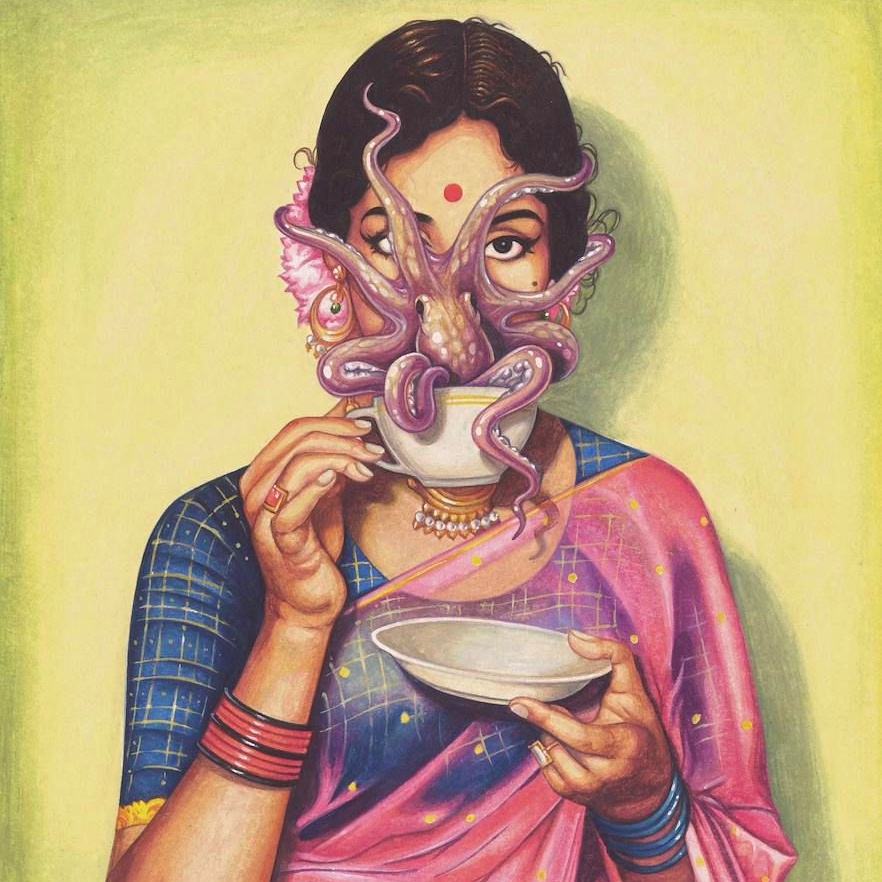
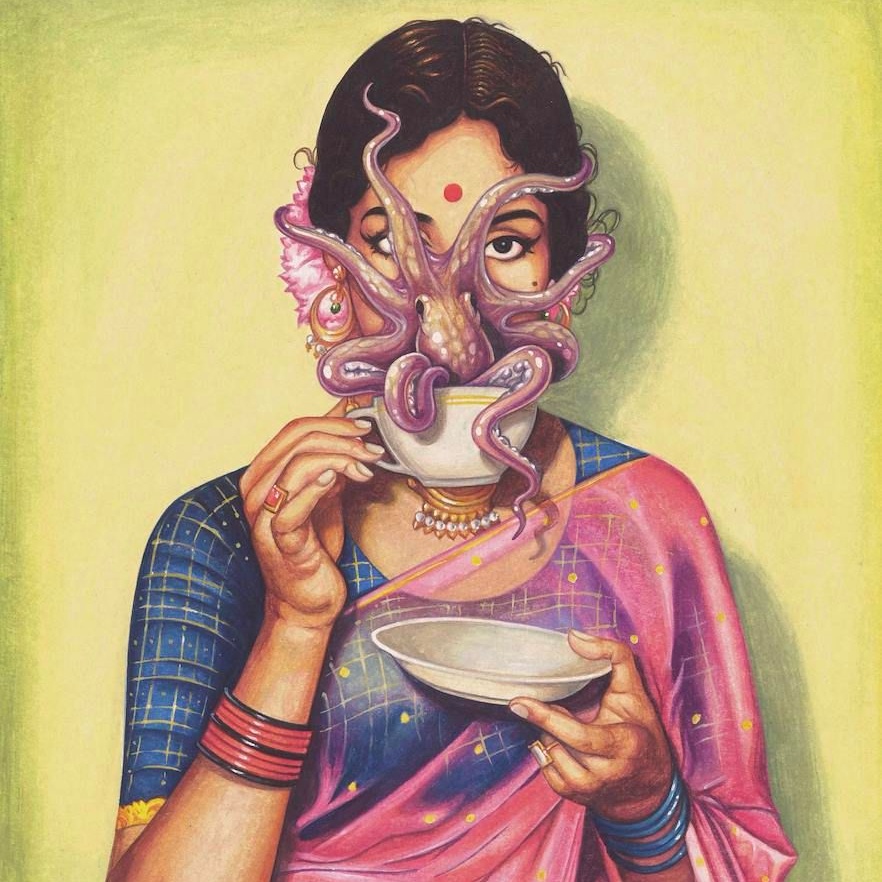
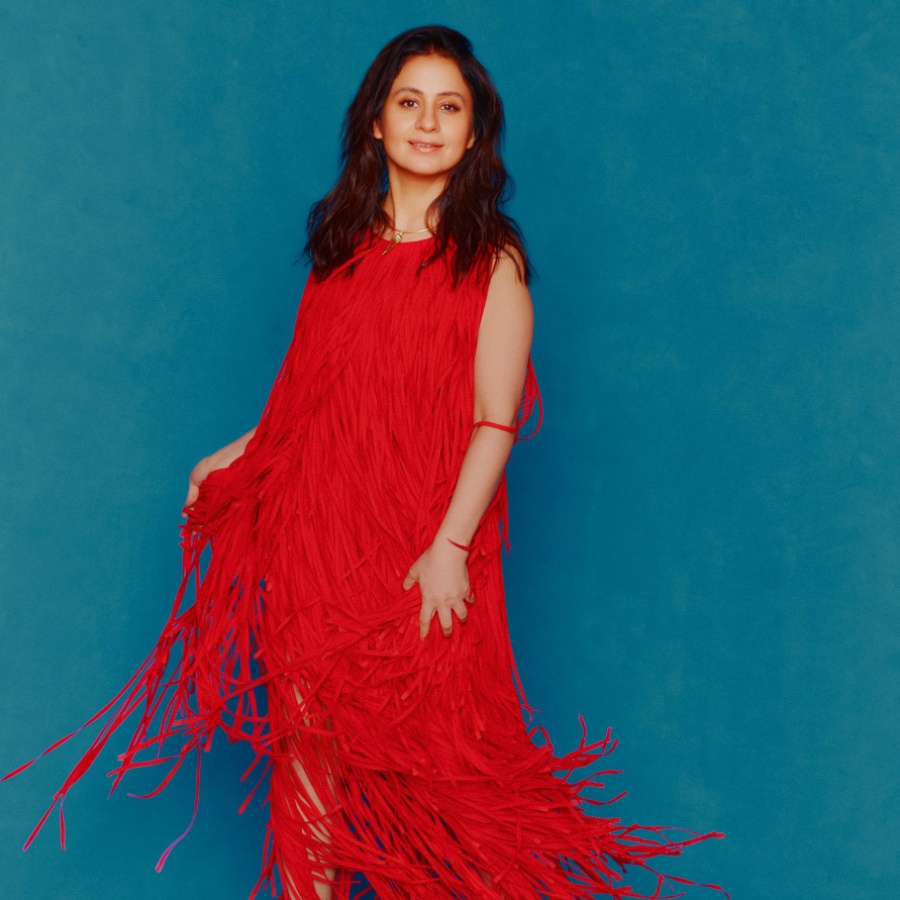
For years, the Chamba rumal has functioned as a ceremonial object that drew from miniature paintings and illustrated manuscripts. With her brand Rumals of Chamba, Rohini Arora now hopes to see it in your home and wardrobe
What happens when an embroiderer interprets the work of a miniaturist? New Delhi-based Dr Rohini Arora has spent decades exploring the answer to that question, first through academic fieldwork and then a brand she called Rumals of Chamba, which specialises in their namesake Chamba rumals, a traditional form of textile art that originated in the hill regions around Chamba, Himachal Pradesh.
Historically, the rumal functioned as a ceremonial wrapper used to cover offerings, manuscripts, and sacred objects, a tradition with roots in older Buddhist and Jain practices of wrapping and preserving valuables. In Himachal, these textiles evolved into richly embroidered objects that drew heavily from the region’s flourishing tradition of Pahari miniature painting.
ADVERTISEMENT
Chamba rumals are embroidered versions of motifs first painted by miniature painters
“The embroiderers never had to look far for inspiration,” says Arora, an academic by training, who studied textile design before completing her PhD from Lady Irwin College, New Delhi. “Palace murals, temple paintings, and illustrated manuscripts provided a ready visual vocabulary. Themes such as Krishna’s Raas Leela, episodes from the Ramayana and Bhagavata Purana, and depictions of courtly life were first sketched by miniature painters before being translated into embroidery by women.”
Over time, a parallel folk tradition emerged, where women without access to court artists interpreted these narratives in their own distinctive styles, giving rise to a more localised visual language.
Historically, the craft enjoyed strong royal patronage. Chamba’s rulers and queens commissioned elaborate embroidered pieces for palaces, religious ceremonies, and personal devotion. Rumals served as thalposh (ceremonial covers for offerings), wall hangings, and sacred gifts exchanged during important occasions. Some of the most celebrated examples survive in museum collections today, including a monumental Mahabharata-themed embroidery commissioned by Raja Gopal Singh that is now housed at the Victoria and Albert Museum in London.
“As I began reading more extensively, I noticed that the Chamba rumal was often relegated to a small paragraph, while other craft traditions occupied entire chapters,” Arora says. “What fascinated me was the contrast—this is a textile represented in major international collections, yet it remains largely under-recognised in India.”
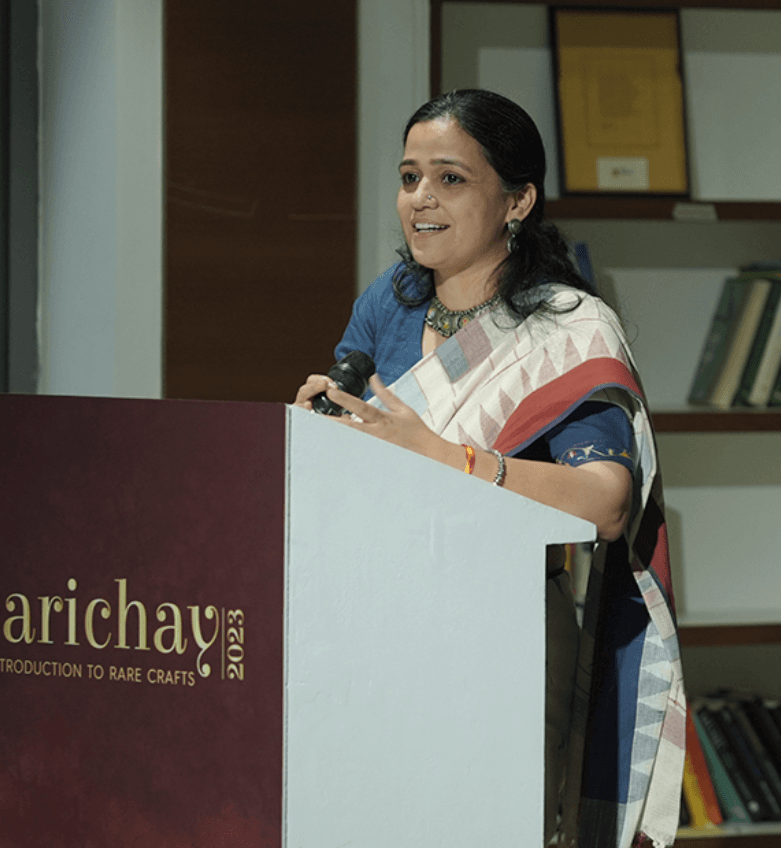
Dr Rohini Arora, founder of Rumals of Chamba
Beyond the thesis
What distinguished Arora’s research was its focus not just on documenting the Chamba rumal’s history but on understanding its technical evolution. Through the course of her doctorate, she closely studied museum-held examples alongside contemporary pieces, analysing the gaps that had emerged over time. “I wanted to understand which stitches were disappearing, where the aesthetics were changing, and what elements of the original technique were being lost,” she explains.
Rather than limiting the work to academic observation, Arora translated her findings into practice, recreating the original craftsmanship through a series of embroidered samples developed in collaboration with a miniature painter and a small group of artisans she met during years of fieldwork in Chamba.
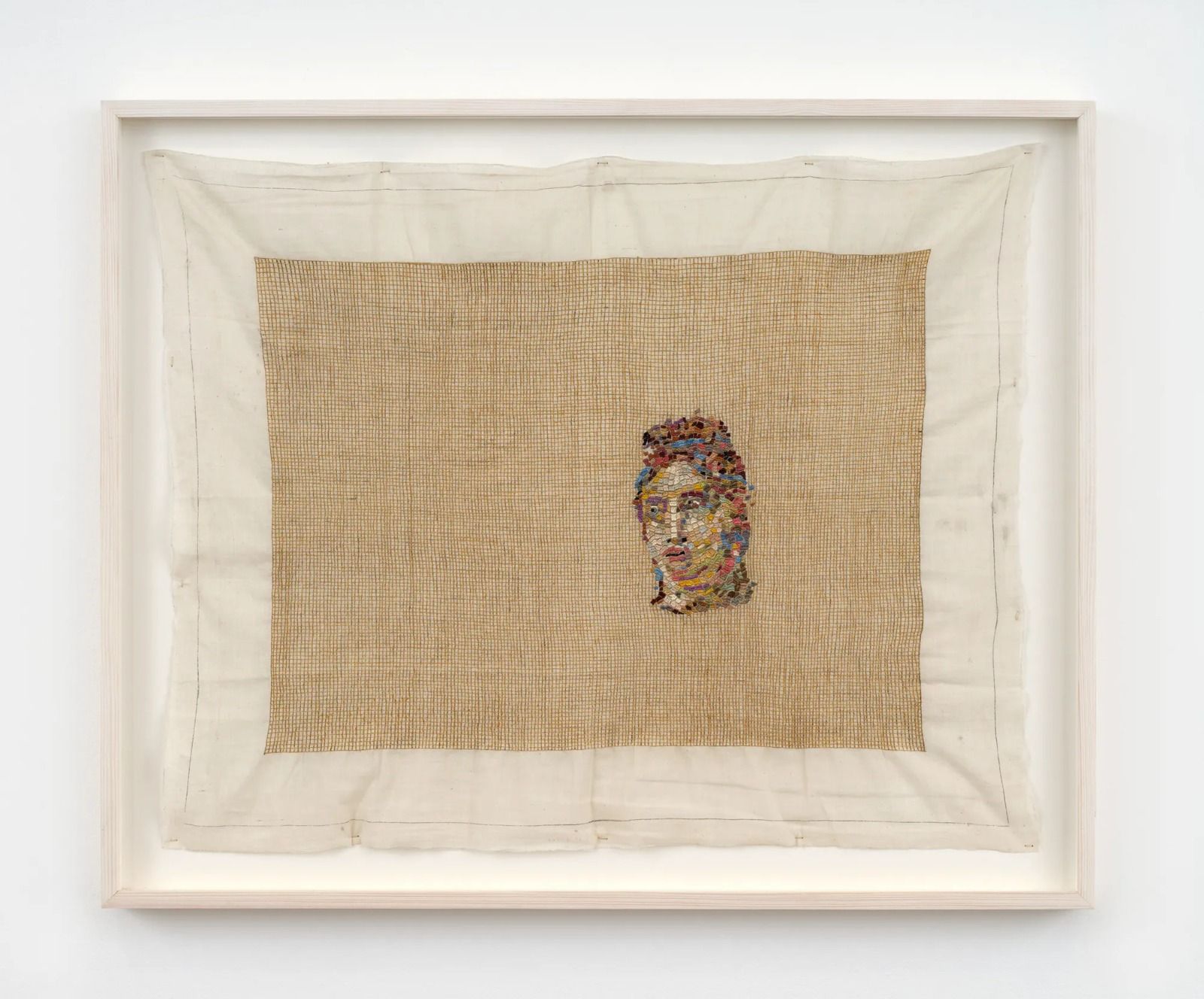
An embroidered interpretation of a mosaic artwork by Paolo Colombo
By the time she completed her PhD in 2015, Arora had amassed more than 120 research objects—painstaking recreations that demonstrated the technical and aesthetic nuances she had uncovered. Encouraged by cultural scholar Kapila Vatsyayan, the collection was exhibited at the India International Centre in Delhi before travelling internationally. The turning point arrived during the Covid-19 pandemic, when, upon her husband’s prompting, she decided to transform years of scholarship and experimentation into a formal enterprise. Rumals of Chamba emerged not as a revival project but as a continuation of a body of research decades in the making.
As commissions grew, maintaining quality emerged as a new challenge. A major breakthrough came when the brand Taneira commissioned 78 saris based on the Panch Kanya narrative, revealing the shortage of artisans trained to execute museum-quality Chamba embroidery. To address this, Rumals of Chamba established a production and training centre in Bajaura, Kullu, where women trained in embroidery and tailoring undergo a three-month paid apprenticeship. Today, the centre employs between 15 to 20 artisans, while master embroiderers from Chamba continue to guide the craft’s technical direction.
From ritual to ready-to-wear
While the Chamba rumal has historically existed as a ceremonial object, Arora is increasingly interested in exploring how the craft can be translated for contemporary audiences. The offerings range from traditional rumals and home furnishings to pashmina shawls, framed artworks, and intricately embroidered saris. Some of her most ambitious commissions draw upon classical literature and mythology: one recent sari translated Kalidasa’s Abhijnanasakuntalam into embroidery, while an ongoing series interprets episodes from the Mahabharata through a sequence of embroidered panels.
ADVERTISEMENT
A contemporary artwork created in collaboration with Swadesh
An embroidered sari
An embroidery artisan at work for Rumals of Chamba
The brand is also expanding into ready-to-wear categories, including shirts and Nehru jackets, yet Arora is careful to distinguish adaptation from commercialisation. Every piece adheres to the principles established during her doctoral research, from the use of authentic materials and traditional techniques to a design process rooted in narrative and symbolism. “The motifs cannot be picked casually,” she explains. “Each composition has a deeper significance.”
Accessibility is another consideration; the brand offers customised pieces developed around a client’s budget, creating entry points for a wider audience. The approach has attracted everyone from collectors and heritage enthusiasts to younger consumers seeking wearable interpretations of the craft. The studio has also begun translating contemporary artworks into embroidery, recently collaborating with an American design house to reinterpret mosaic-inspired works by artist Paolo Colombo through Chamba embroidery.
For Arora, these projects demonstrate the craft’s remarkable adaptability. Equally important is helping clients understand the labour behind each piece. “They want to know how much time has gone into it, who has made it, and why it is valuable,” she says. The studio regularly shares updates from the making process, which unfolds at a deliberately slow pace. “On an average day, around 10 inches of embroidery is completed. It requires immense concentration and patience.”
Ultimately, Arora hopes the future of the Chamba rumal lies not behind glass but in everyday life. “I hope fifty years from now these pieces are not locked away in museums and archives alone,” she says. “I want to see them in people’s homes, being appreciated by younger generations and used as they were meant to be.”