



Fashion17 Apr 20265 MIN

Swayam Sitar can strum the strings. But he can also turn them into jewellery

Fluent in Indian textiles as much as ragas, the musician believes the best outfits are the ones you can take apart and play with. And those striking ear cuffs? Homemade

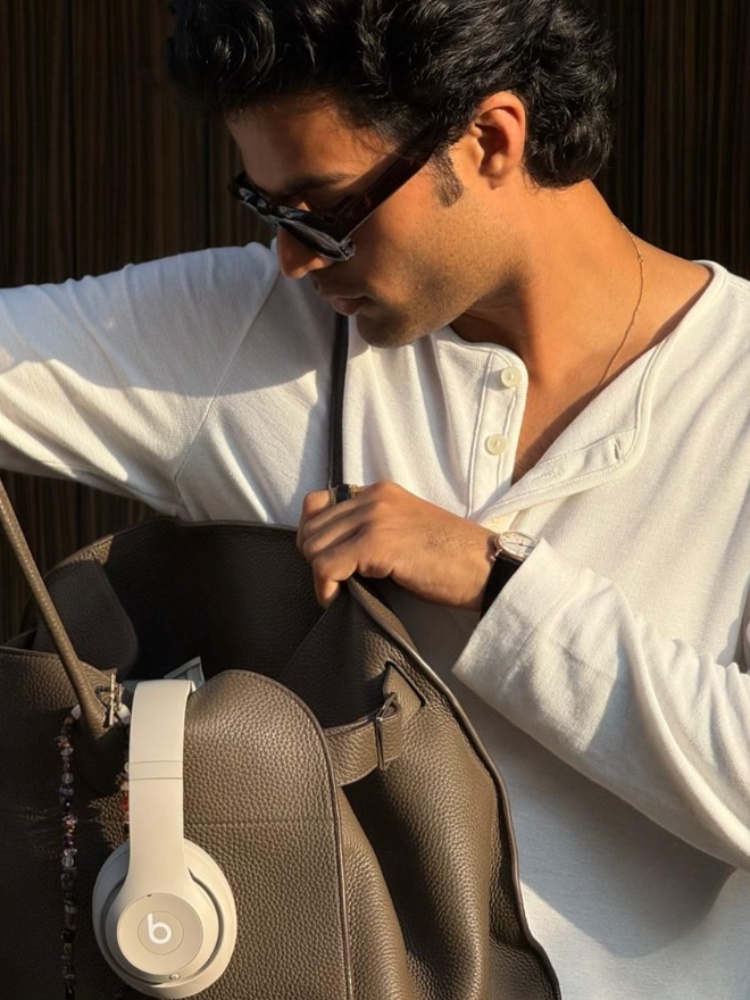
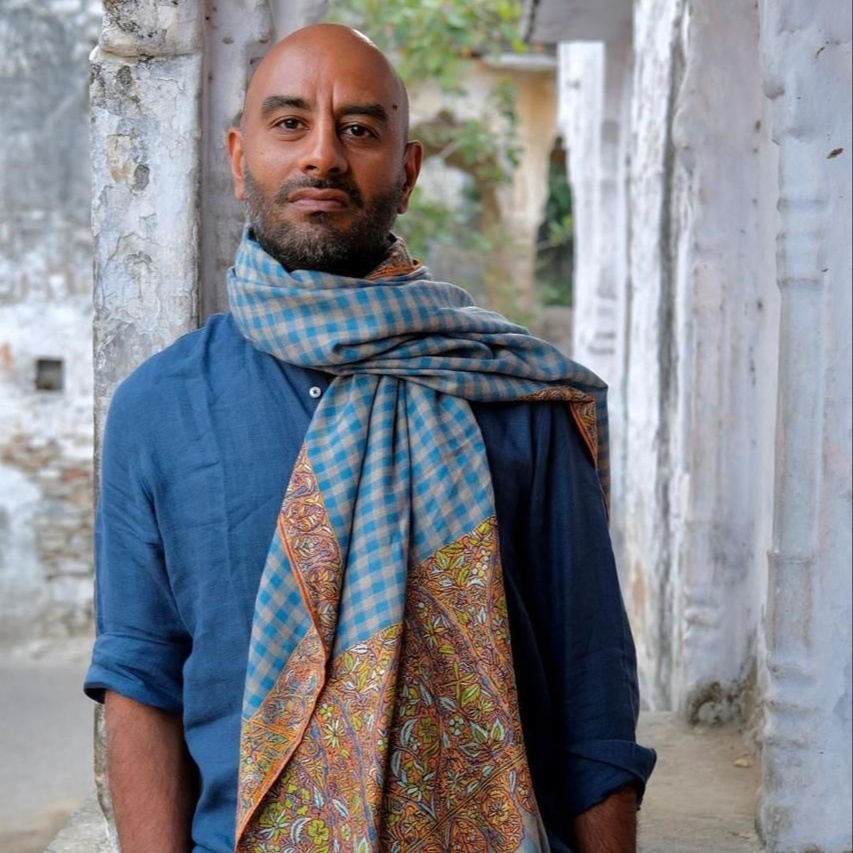
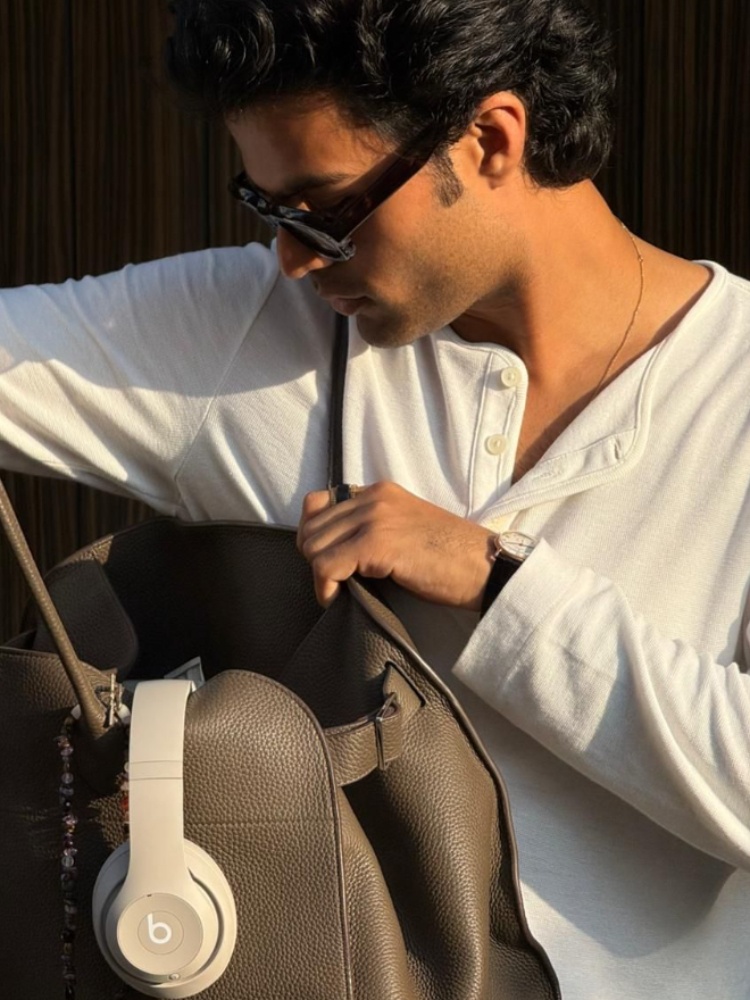
The musician Swayam Siddha Priyadarshi

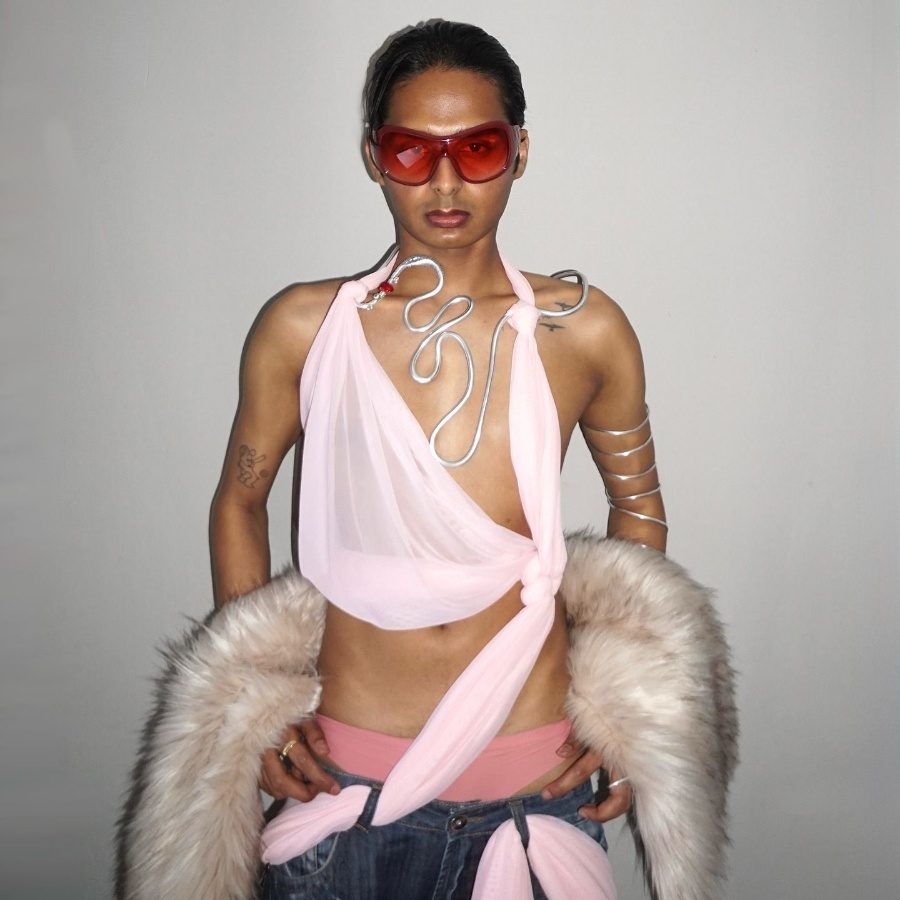
The musician Swayam Siddha Priyadarshi aka Swayam

The early evening in Hyderabad was just beginning to settle when I hopped on a video call with Swayam Siddha Priyadarshi. The internet knows him as @SwayamSitar, but his roots are as much in a workshop as they are on a stage, tuning metals as intuitively as he tunes strings. Five minutes in, Pookie—the ginger female cat who has essentially become the co-star of his Reels—joined us, trilling and chirping over our conversation.

Born and raised in Bhubaneswar, Swayam, who’s now in his late twenties, has spent over 15 years with the sitar, trained in the Etawah gharana under Ramprapanna Bhattacharya. His practice moves between performance, composition, and arrangement, with a steady run of shows across India and an international roster of clients that includes brands like Valentino and Swadesh. Last year, Swayam completed his first India tour, a 12-city event marked by sold-out shows everywhere, and he’s won the appreciation of the likes of AR Rahman and Anoushka Shankar. 

 But along with his compositions, Swayam also pays attention to his performance wardrobe, customising looks with brands and even making his own jewellery.
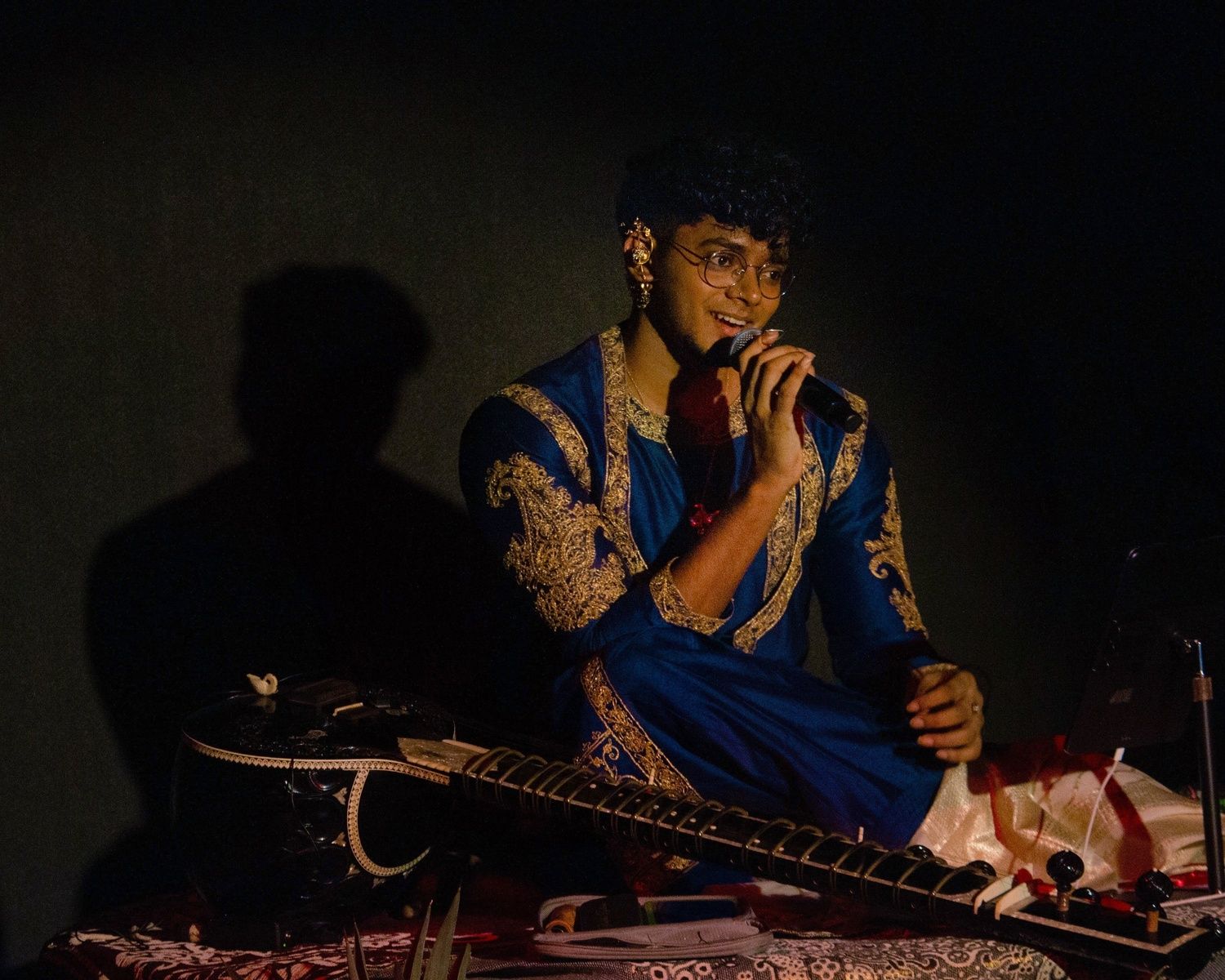
Swayam Siddha Priyadarshi on stage
Swayam on stage with his sitar

His personal style was shaped early, perched on the back of his mother’s scooty at handloom fairs in his hometown, where he first encountered the geometries of Sambalpuri ikat and Bomkai. Later, while studying at NID in Ahmedabad, he would spend afternoons in the old city sourcing block prints and fabrics that retail simply couldn’t offer. “The pieces that I strive to wear are not easily or readily available. I think that was, in a way, my segue into fashion,” he says. “Now, the more I grow as an artist, the more I want to custom-make my stage outfits.” It’s no wonder that his TEDx talk dwelt on the theme of the intersection of music and design. 

Most of his wardrobe is still built outside the usual system, shaped by a rotating mix of tailors rather than a single collaborator. “I’m yet to find that one person; everyone comes with their own point of view, and you get a different output every time.” The range runs from boutique ateliers to roadside setups to collaborations with smaller labels like Conscious Couture by Amrit.


While his favourite textile remains intricate ikat—a nod to his Odia roots and the Berhampuri and Sambalpuri weaves he grew up around—it rarely makes it into the spotlight. “Being on stage demands that you wear something that reflects a little bit of light,” he explains. His performance wardrobe leans toward maximalism, the high glitz of heavy silk and patola, and dramatic drapes, while his daily wear stays grounded in the matte, unplugged textures of handloom cotton. “Stage outfits are so heavy and full of embroidery... at home, I want to give myself and my skin a little bit of respite,” he says.

His downtime dressing comprises linen shirts, cotton pyjamas, and lighter fabrics that work through the day, with the occasional turn to athleisure. That’s where labels like Aram Viram, Turn Black, Cord Studio, Wabi Sabi by Anshul Ritesh, and Dash and Dot come in, alongside designers like Heena Kochhar and Agni Ghosh, with whom he’s worked on custom pieces. The musician also points to newer labels he’s watching, with names like Torani and Style Marty in his current rotation. Colour plays into that fluidity—bright pink, mustard yellow, and shades of green. “Bring it all in,” he says. And yet, some of his most recognisable looks sit at the other end of the spectrum, in black and white.

Swayam tends to circle back to what he already owns. Older garments, his mother’s saris, and dupattas are pieces that can be reworked rather than replaced. Ahead of a performance at the NMACC, he had to put together a look in a day. “I took one of my angrakhas. It was a plain black piece stitched some time ago,” he recalls. Instead of heading to a boutique, he went to the textile shops in Hyderabad’s old city. “I sourced some Kanjivaram borders; I got a few metres of that,” he says. He then took it to a local tailor. Back home, he used the leftover fabric to make a cummerbund and styled it with temple jewellery. He likes the idea of being able to ‘disintegrate’ a look—taking the borders off later and repurposing the fabric for a different silhouette.

This technical approach extends to his jewellery. If you’ve clocked the striking ear cuffs he wears during his Bridgerton-esque takes on Western pop songs, chances are they didn’t come from a boutique window. He builds them at a home station stocked with brass wire and pliers, a tiny lab where riffs turn into hardware. “I’m looking forward to finding a workshop where I can get my hands dirty and do the welding and soldering,” he says. When he isn’t assembling jewellery, he’s raiding the family archives. The musician is a frequent recycler of his mother’s saris, treating them less like precious heirlooms and more like raw material for his next silhouette. “I have a couple of her saris that I wear as dhotis all the time,” he confesses.

The sitarist is clear about what he avoids. Digital prints and mass-manufactured pieces that mimic handloom fabrics are an easy no. He’d pick the real thing every time. For him, the beauty is in the flaws—the tiny deviations a digital printer would smooth away. “It’s a red flag. The fabric doesn’t look as rich as it should because you lose the irregularity of the weave,” he notes.

As for silhouettes, he’s less rigid. “Everything has a place as long as it is styled in a certain way. If you look at a lot of my stage outfits, they’re pretty much gender-neutral. Even jewellery, in my opinion, is extremely gender-neutral,” he says. He’s pushing for a world where men feel comfortable clipping on an ear cuff for a night out, not just a gala. And while he’s stretching silhouettes and playing with avant-garde shapes, he agrees that skinny jeans should probably remain cancelled in perpetuity.

As for the future of his creations, the “commissions” inbox might open soon. He plans to bring his initial ear cuff designs directly to his fans as concert merchandise (he’s already collaborated on a line with jewellery brand Carat & Kin), and though he’s a natural tinkerer who could easily pivot to rings or bracelets, he isn't in a rush to move on. “I’ve still not exhausted the form of the ear cuff. There’s a lot more to be done,” he says. “Once I’m tired of that, maybe I’ll get into other pieces. But not as of now.” He is, quite literally, still finding new ways to bend the wire.

The Nod Newsletter

We're making your inbox interesting. Enter your email to get our best reads and exclusive insights from our editors delivered directly to you.