



Food01 Jun 20265 MIN

Even before its opening, Zetu has become Delhi’s most coveted table

The buzzy Geoffrey Bawa-esque space serves Sri Lankan staples like a deconstructed parippu, local bread carts, and hearty lamprais around a 500-year-old banyan tree

Image

Zetu is the only restaurant inside the 1AQ complex in Mehrauli, sharing space with Ojas Art Gallery

Photographs by: Suryan Saurabh

For about a month now, one name has been doing the rounds in Delhi’s group chats. It’s all over the Instagram too. And the place hasn’t even opened yet.

It started with soon-to-open Soho House Delhi’s ‘Cities Without Houses’ event, where members from the community got a taste of Zetu’s Sri Lankan menu. The soft launch continued with the who’s-who of the city showing up—designers Gaurav Gupta as well as Amrita Khanna and Gursi Singh of Lovebirds Studio, entrepreneur Kalyani Chawla, and most recently the Sri Lankan High Commissioner Mahishini Colonne have all been early patrons if social media posts are anything to go by.

The common impression everyone left with, I am told, is that the space doesn’t feel like Delhi.

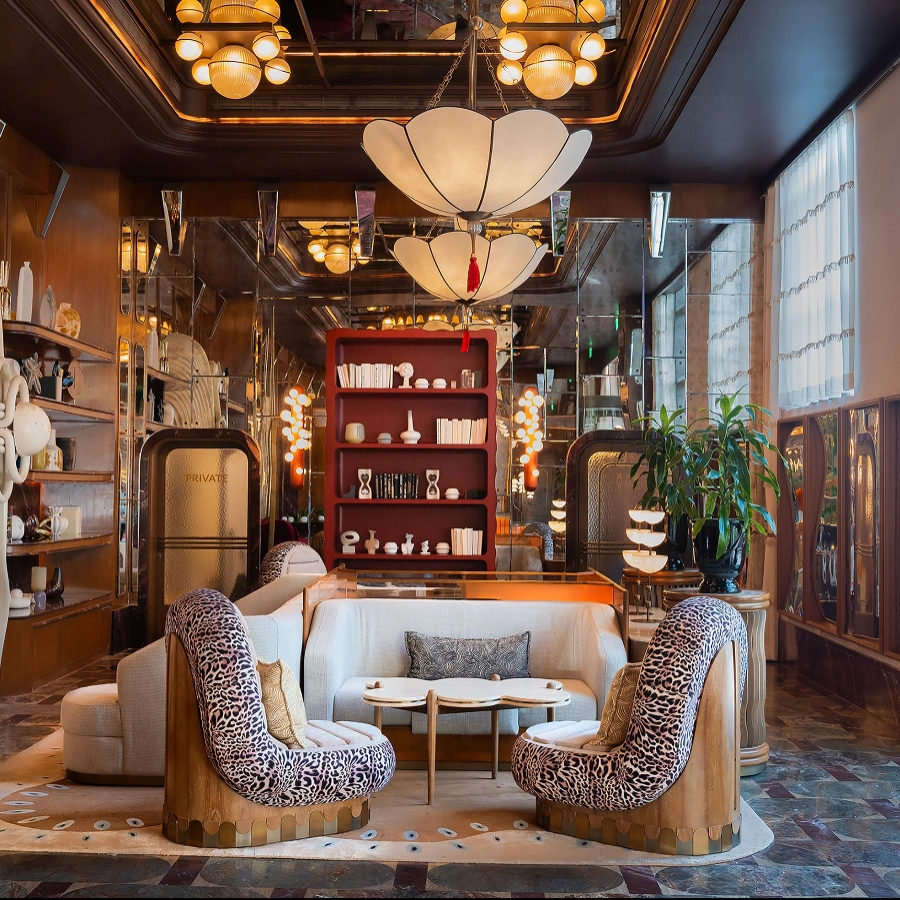
Zetu, the 175-cover space designed by co-founder and architect Anurag Dania (of Covah and Congo fame in Gurugram), is the only restaurant inside the 1AQ complex in Mehrauli, sharing space with Ojas Art Gallery, and looks like a tropical modern haven, straight out of the teardrop island.

While Zetu is in the same neighbourhood as popular dining spots like Swan, Olive, and The Grammar Room, the location is more popular as a fashion boutique area than a restaurant lane. In Delhi, restaurants are increasingly opening in malls or bustling markets (such as GK-2 or Vasant Vihar) or office complexes in Gurugram that’s reinvented itself as a food destination.

But here, Zetu makes getting inside the complex feel like part of the experience. A golf cart picks you up at the entrance, there’s tender coconut water in your hand, and the noise retreats. As the heavy wooden doors swing open, a water body comes into view. By the time I arrive, the space is bathed in candlelight. Plants spill into every corner; at its heart stands a 500-year-old banyan tree with a sprawling canopy. The design channels the spirit of Geoffrey Bawa’s tropical modernism—an open-air courtyard, coastal tiles, and earthy textures that seem to breathe in Delhi’s heat in a way most restaurants can’t, thanks to discreet temperature-controlled technology woven into the design. Tables are generously spaced, lending the restaurant an airy, unhurried sense of calm.

“Many people have already told me it feels like a staycation,” says co-founder Sarah Nikahetiya, a former British diplomat to India married to a Sri Lankan.
While this is Nikahetiya’s first hospitality venture, his other partners Dania and Abhishek Mathur (CEO of Good Game Investments) and Sagar Garg of Addoni’s are seasoned operators. The collaboration shows. For Nikahetiya, who now lives in Colombo, this isn’t about making some grand cultural statement. It’s about what’s actually possible when modern Delhi and Sri Lanka talk to each other. The name reflects that: Zetu is from ‘setu’, the Sanskrit word for ‘bridge’.

The indoor dining room reflects this cross-cultural spirit most clearly. The vibe is a little stripped back, with textiles and artworks from Sri Lanka doing the heavy lifting. One wall is adorned with a batik sarong from Lovebirds Studio’s spring/summer 2026 collection co-created with artisans from One World Foundation in Bentota. Nearby hangs ‘Future Fragments’, a series of oil pastels on paper by Austrian-Sri Lankan artist Raki Nikahetiya, director and co-founder of the sã Ladakh Biennale, the world’s highest regenerative art biennale. The works draw from his grandmother’s family photo album from 1940s Sri Lanka, adding a layer of personal memory to the space.

Right below the frames lies the ‘Next Door Café’ chair from the Lunuganga collection by Bengaluru-based furniture brand, Phantom Hands, which is exclusively licensed to produce edits of Geoffrey Bawa’s furniture designs. The frame is crafted from North American red oak paired with Indian leather and brass fasteners. Upstairs, there’s a terrace with cabanas for private dining.

Delhi has had its Sri Lankan moments in places like Zambar and, more recently, Draavin Canteen, but never a restaurant entirely devoted to the breadth of Sri Lankan cuisine. With Zetu, the city gets an introduction to the island’s culinary traditions—from family recipes and beloved street-food staples to community-specific preparations, all presented with a contemporary sensibility. Sri Lankan chef Dush Ratnayake leads the kitchen alongside Indian chefs Mohit Kumar and Romil Malhotra. The menu moves between the Nikahetiya family’s dry pineapple curry, the much-loved kotthu, and pickles inspired by Colombo’s Malay community, offering a glimpse into the diversity that defines Sri Lankan food.

The experience opens with a bread trolley, a nod to the choon paan tuk, the iconic bread cart that winds through Sri Lankan neighbourhoods each morning, waking residents with freshly baked loaves. Here miniature breads arrive at your table with a trio of butters: curry leaf with pesto, cashew, and tandoori flavours.

The appetizers keep the storytelling going without making it feel forced. The Pillow Fight—puffed rice pillows topped with salmon and avocado—draws from the village games played during Avurudu, the Sri Lankan New Year. It’s a single, airy bite that leaves you immediately wanting more. The Garden After Monsoon follows as its counterpoint: melon, cucumber, passion fruit vinaigrette, cultured curd, and herbs. It’s sharp and refreshing, with that specific freshness that comes right after rain.

In the small plates, the Tea and Treasure Rolls are miniaturised and elevated, but the story’s the real thing. Ratnayake explains how this dish was carried to Sri Lanka through Chinese trade routes and adapted with Sri Lankan flavours over time. At Zetu, they’re panko-crusted, with a satisfying crunch that gives way to jackfruit, prawn, chicken or egg variations. The Gram Dahl in Contrast deconstructs parippu, the red lentil curry everyone knows locally, into delicate bites that sit atop coconut-wood spoons—miniature versions of the traditional cooking spoons—laden with whipped citrus crème fraîche and nori, the earthiness of the dahl playing against the acidity of the citrus.

For heartier appetites, there’s lamprais, a dish introduced to Sri Lanka by the Dutch Burgher community. Here, lightly spiced rice infused with stock is layered with curries and condiments such as shrimp paste and traditional Dutch-style spiced mini meatballs, or frikkadels, before being wrapped and cooked in a banana leaf. It’s the kind of dish that relies on slow-building flavours rather than overt spice. Also worth ordering is Air and Gold (I chose the egg version), which reimagines appa, Sri Lanka’s beloved bowl-shaped hopper, in a luxe avatar. It is served with accompaniments like crab, shaved truffle, sour cream, and caviar, elevating a familiar comfort food without losing sight of its origins.

The bar explores Sri Lanka’s tropical spirit through coconut, spices, tropical fruits, pandan, curry leaf, cinnamon, and Ceylon tea. The frangipani Martini is crisp and floral, opening with gin’s botanicals before the flower comes through. The Achcharu is sharp and spiced, a Picante crossed with Sri Lankan street food heat, while the Zetu is an umami-forward tipple with brown-butter-washed rum that’s warm and layered with vanilla, banana, Ceylon chai, and cashew milk. There’s also a zero-proof menu with beverages infused with collagen or spirulina.

I end the night with the Chocolate and Biscuit, where layers of Marie biscuit and chocolate come together with every bite. But the star is the guava pie, cooked in a raisin and arrack purée with a lemon curd base, which is tart, boozy, and slightly caramelised.

So, you may ask, does Zetu deserve the hype? And that would be a resounding yes. Because it actually functions as a bridge—not by trying to be everything to everyone but by letting Sri Lankan food stand on its own terms in Delhi. And perhaps, that’s what all the excitement is really about.

Zetu opens to the public on June 4, 2026

Address: 1AQ, Seth Sarai, Mehrauli, New Delhi - 110030

Timings: noon to midnight

Cost for two: ₹8,000 + taxes (without alcohol)

Reservations: +91 8796056111

The Nod Newsletter

We're making your inbox interesting. Enter your email to get our best reads and exclusive insights from our editors delivered directly to you.