




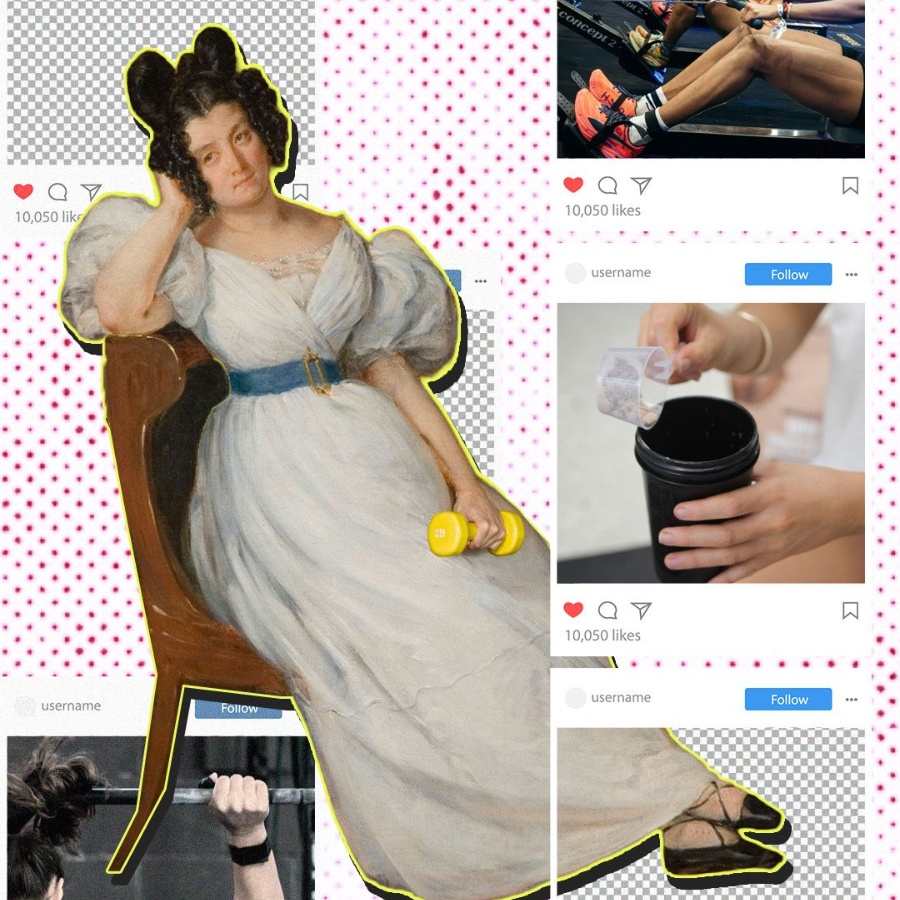

Last Tuesday at 11 pm, I was walking laps in my living room because my ring said I was 900 steps short of my target. The steps were meant to come from that evening’s workout, except I’d watched one video explain why my planned session was wrong, then another contradict the first, and somewhere between the two the workout died. The ring doesn’t accept research as cardio, so I paced.
Being pregnant doesn’t help: half the internet wants me lifting my body weight through the third trimester, the other half would prefer I didn’t walk too briskly. But the problem started long before the bump. I have a saved folder with 63 workout Reels in it, and I think the influence is the problem. Because everything looks so good right now. There’s a new Gyrotonic class on my list to try. Unlock Everyday has my favourite books on its walls and a matcha that looks very promising. Courtside is currently the most photographed place in Mumbai. Last week, I watched an influencer do her 12-3-30 on a hotel treadmill and felt a genuine pang for a treadmill I have never wanted. I’m influenced, and I want to try every single thing.
A PhD in workouts I have never done
The people I know who think about fitness the most seem to do it the least, and I don’t mean lazy people. I mean the ones with the saved folders and the smartwatch they consult like a horoscope. I wanted to know whether this was a me problem or something bigger, so I started asking people whose job it is to know.
Jenai Sanghai, a sports and exercise psychologist, recognises it immediately. Athletes call it paralysis by analysis: a player knows exactly what to do, then under pressure starts overthinking every detail instead of trusting their instincts. She thinks people who spend a lot of time on fitness content end up somewhere similar. “Most fitness enthusiasts already know the basics,” she says. “The challenge isn’t knowing what to do, it’s deciding what not to do.” It’s why, she says, beginners who stick to the basics often progress faster than those chasing every new method. “Sometimes knowing more doesn’t create clarity. It creates doubt.”
That doubt is easy to miss, Jenai says, because it rarely feels like anxiety. It can look like checking your Oura ring to confirm you’re in the right zone, or losing sleep over a step count. She was describing my Tuesday night. She isn’t against data, though; the trouble starts “when we feel like we need to follow all hundred things we’ve read or heard that week”.
Chavi Singhal, founder and mind-body wellness coach at Ishva Wellness in Delhi, watches the same thing at her studio. She defends social media first, and she means it: fitness has never been more accessible. The volume is where it sours. Every week there is a new best workout or a new hack, and people show up to class already convinced they’re doing something wrong. Fitness, she says, now feels “exhausting before you even begin”.
Better is better
Sanika Vaid, founder of SAVA Fitness and Nutrition, has watched trends arrive and dissolve the whole time, and she is cheerful about all of it. New formats excite her. They don’t wear her out because she already knows what she’s doing and why, so everything new gets to be, in her words, “a very warm competition”.
“More isn’t better. Better is better,” she says. She builds every client’s programme on depth in strength, mobility, and cardio, and files whatever is trending this month—the run club or the reformer class—under what she calls a very welcome sprinkle on top. She isn’t asking anyone to stop having fun, only to stop mistaking the sprinkle for the base.
Her diagnosis of the wider mess stayed with me. “The fitness world today does not have an information problem. We have information overload, but I believe there is a structure problem.” Her fix is unglamorous: know how many days a week you train and what you do on each of them, in a plan that fits into your life rather than making your life fit into it.
Everything that isn’t the base
Some of the paralysis is built into the marketing. Nothing in my folder presents itself as just a workout because every class and method claims it will change your life. Pregnancy turns the volume all the way up because when your body is already mid-transformation, the claims start to sound urgent, and choosing wrong feels like it might actually cost everything. Brides deep in wedding prep will know the feeling, as will anyone whose body has temporarily become a project with a deadline.
On Wednesday, I wrote three training days into my calendar and pulled up a prenatal strength programme I had saved in March and never opened. The first session ran 20 minutes with the dumbbells I already own, and nothing about it claimed to change my life, which turned out to be the most relaxing part.