



Invite only10 Feb 20264 MIN

At this party, try not to sit on the art

Shalini Passi’s annual India Art Fair party turns her Golf Links home into the fair’s unofficial opening ceremony

Image

Photographs by Amisha Gurbani

If India Art Fair had a first ball of the season, this would be it. The night everyone pretends is casual but secretly schedules around. Inside Golf Links, at the 20,000-square-foot home of Shalini Passi, the fair begins not with speeches or previews but with a party that behaves like theatre.

You know it the moment you walk in. Sculptures stand guard at the entrance, gently informing you that this is not a shoes-off, sink-into-the-sofa situation. Past the foyer, the house opens into a sweeping lawn shaped by a crescent façade on one side and dense trees on the other. Sit anywhere and look up and it feels like a dome. There is mist on the grass, fire pits glowing, and stars that seem almost fictional for Delhi. Somewhere next door, a golf club connects with a ball, like an accidental sound cue.

At the centre of the lawn sits a Buddha head by Subodh Gupta, calm to the point of indifference as the art world orbits it with drinks in hand. Bars appear exactly when and where you need them, which is intentional. This is not a party that believes in long walks between cocktails. Conversations overlap. Near the back of the lawn, someone points at a suspiciously functional-looking object and whispers, “No, no, that’s not a seating.” A pause. “Or is it?” Nobody sits. Nobody wants to be wrong.

Inside, the house leans fully into its museum identity. A Ravinder Reddy head stops people mid-stride. A curator announces, with conviction, that it is their favourite piece. Works by Anita Dube and LN Tallur appear in passages and corners, prompting frequent halts and whispered commentary. Even the washrooms refuse to behave. One features a 2009 inkjet print mounted on a lightbox by Daniele Buetti, turning a bathroom break into a gallery visit and a mirror selfie into a cultural requirement. Someone suggests, only half joking, that you could throw a parallel party in there. Outside, Atul Dodiya wanders past the shuttle works he made for Passi years ago. “She commissioned these ages ago,” he says, laughing, before disappearing back into conversation. His wife, Anju Dodiya, is nearby, deep in discussion. Around them, art fair murmurs ripple. Is it sold already? Not yet? Give it a day.
It is this first-time reaction that art curator Noelle Kadar looks forward to every year. “My favourite part of Shalini’s event is watching guests who’ve never been to her home experience it for the first time,” she says. “It’s incredibly impressive, and it really speaks to the quality of Indian art and the ecosystem we’ve all worked so hard to build.”

The appetisers arrive with classic Delhi confidence. Malai paneer, seekh kebabs, vegetarian and non-vegetarian starters that refuse to be subtle. This is not small-plates energy. The formal dining area stays untouched for most of the night, anchored by a three-tiered cake that guests keep circling back to like they are scouting terrain. Others are too busy crowding the bar, spilling onto the lawn, and starting an impromptu dance pocket near the centre. Inside, curators lounge on sofas like they have survived a really long day.

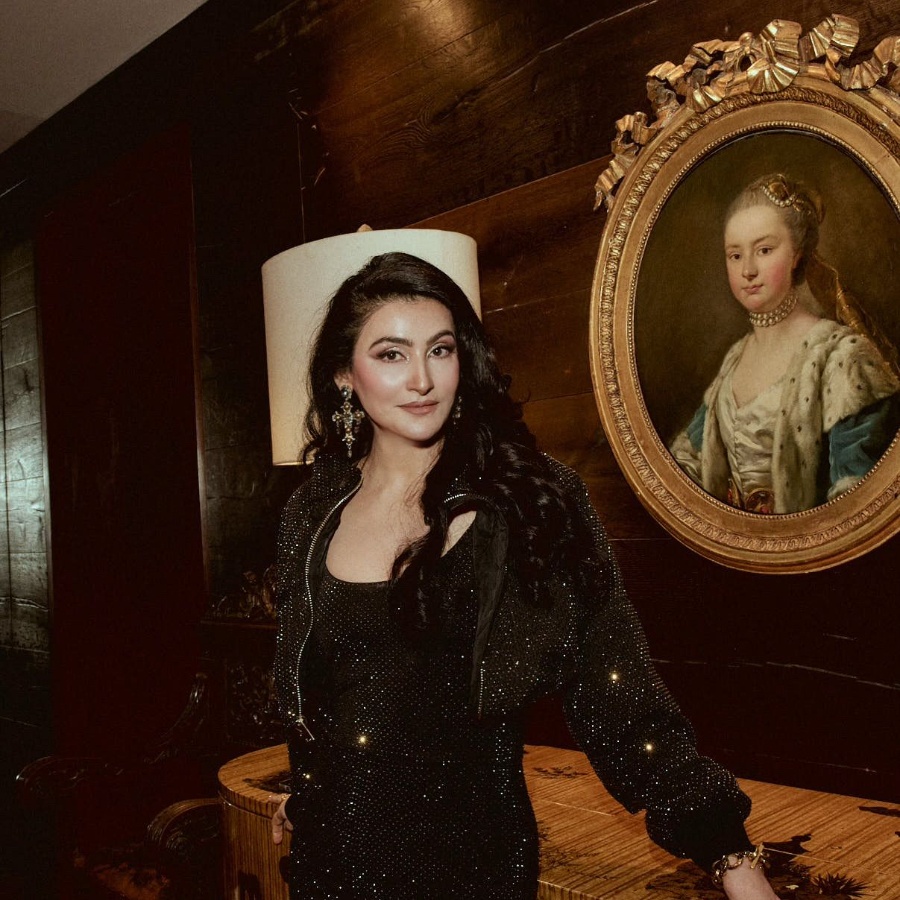
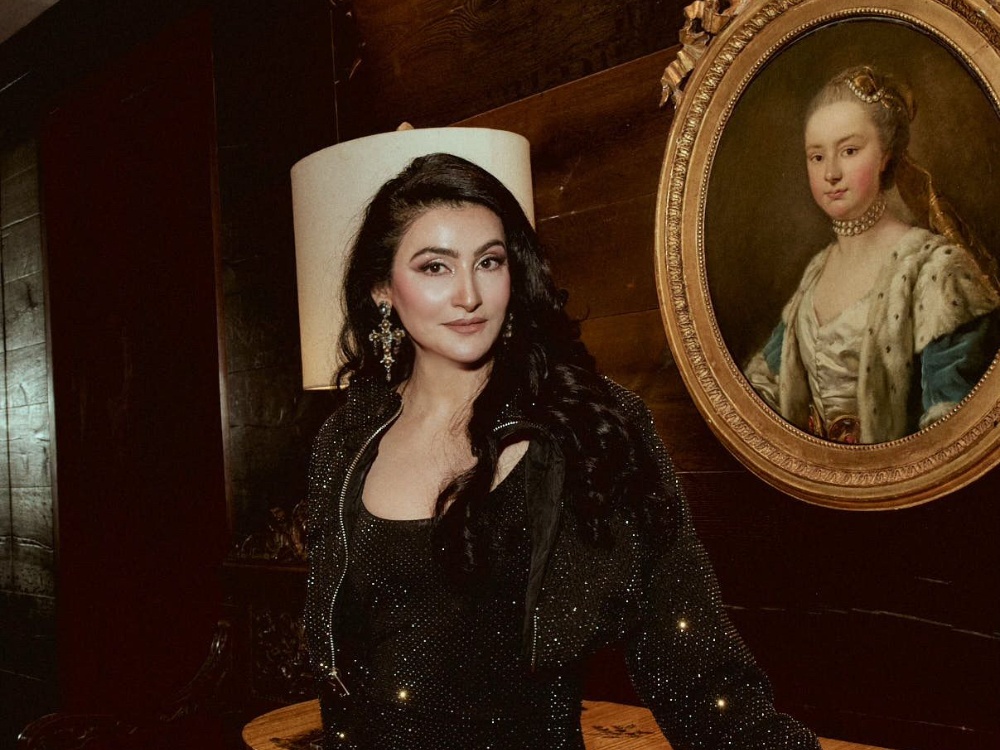
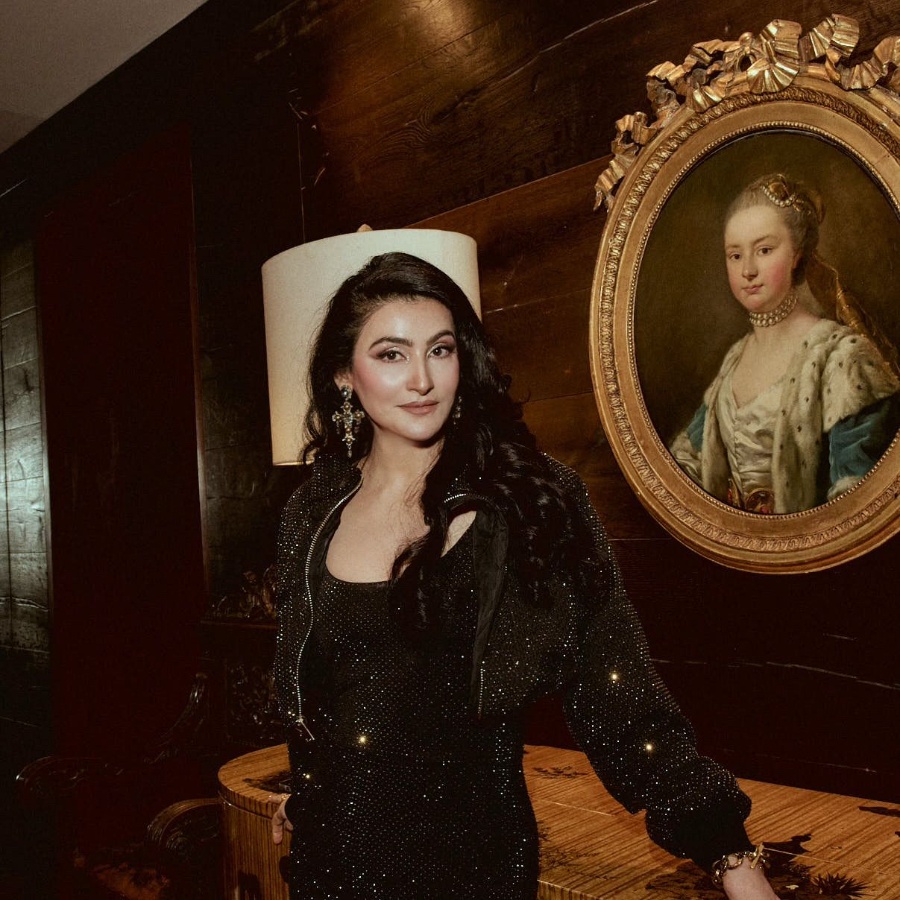
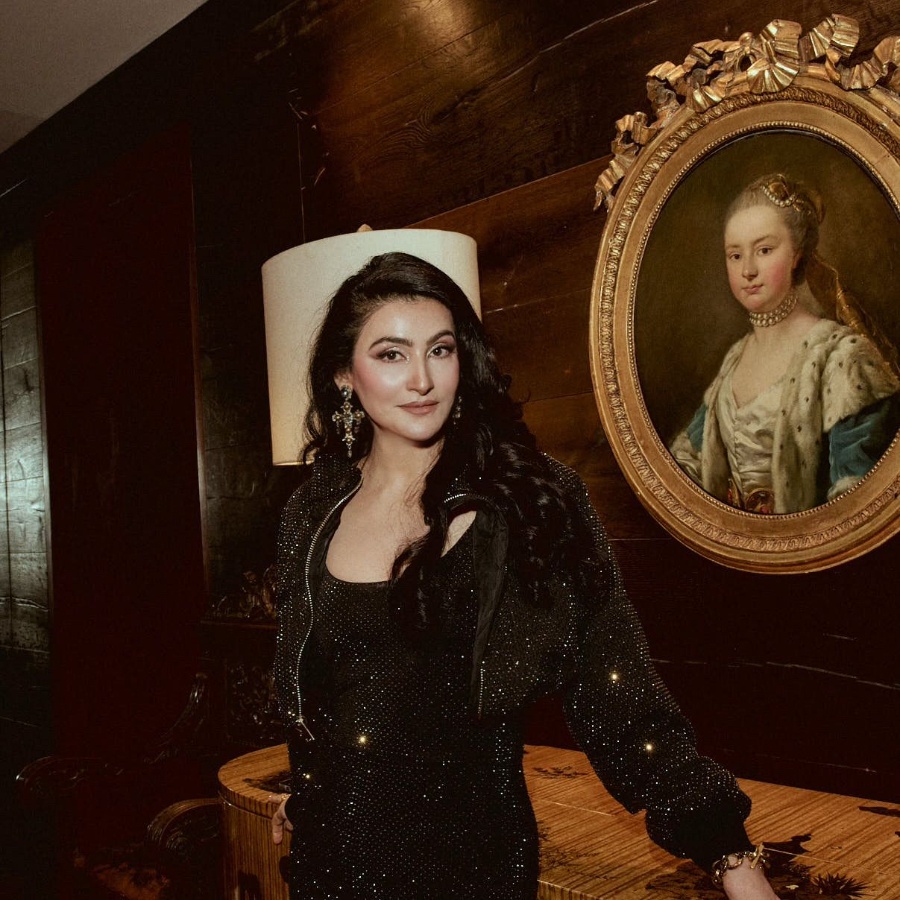
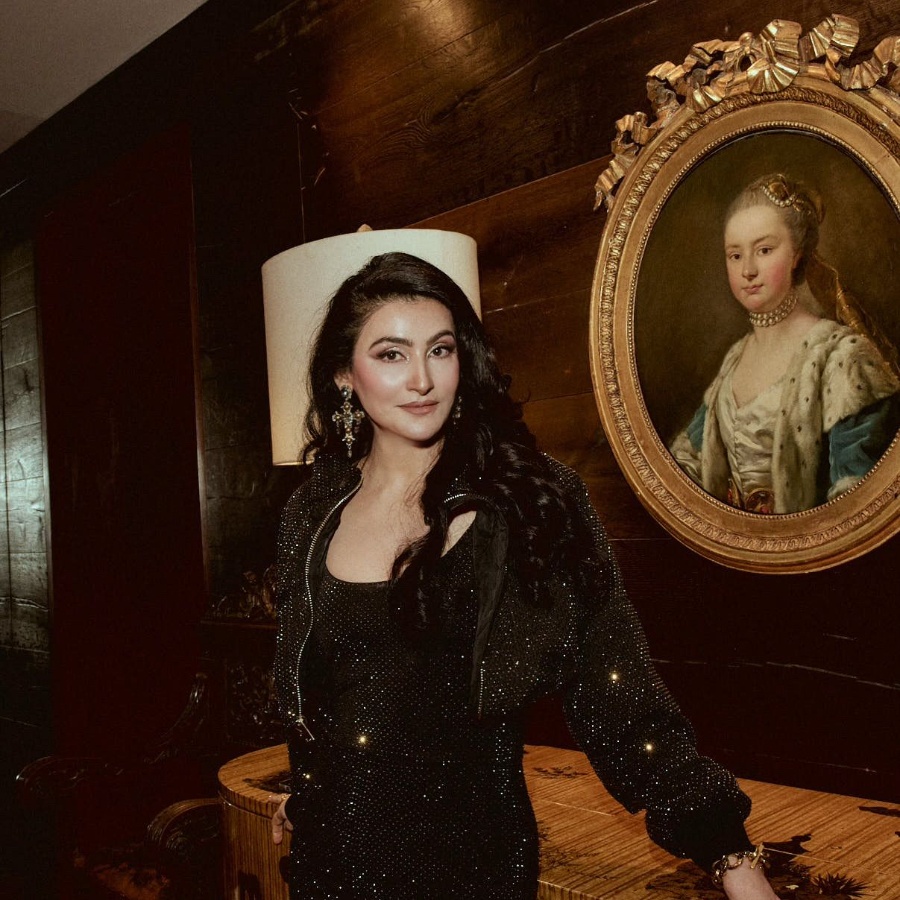
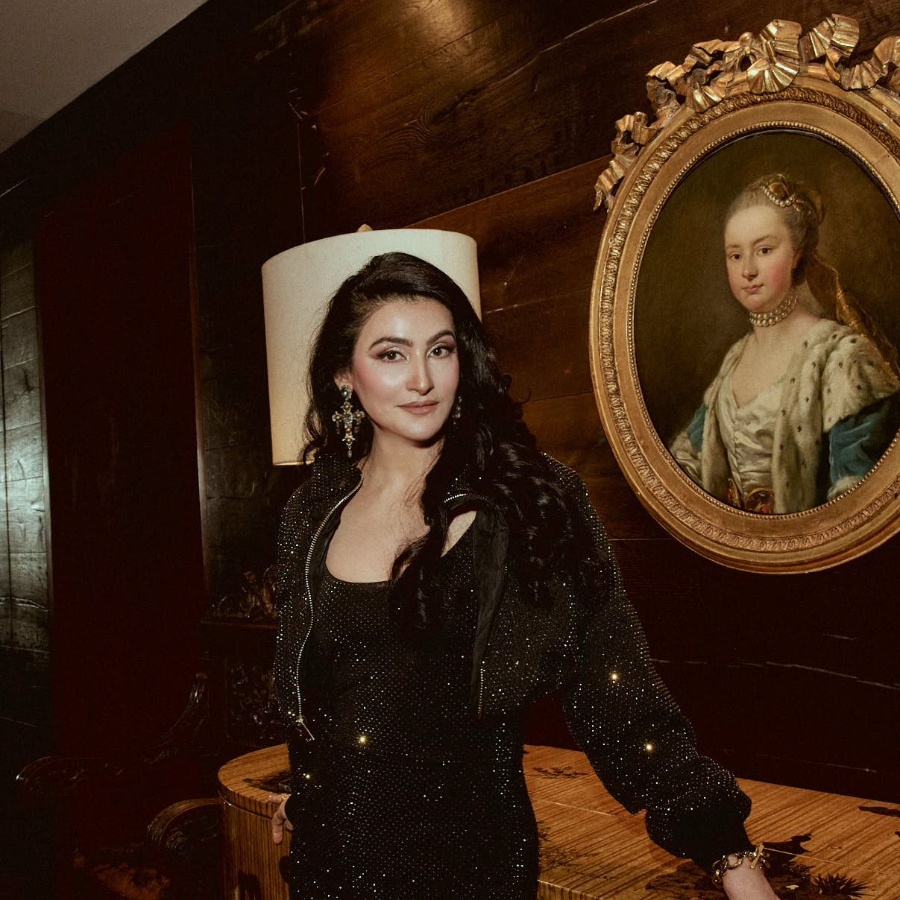
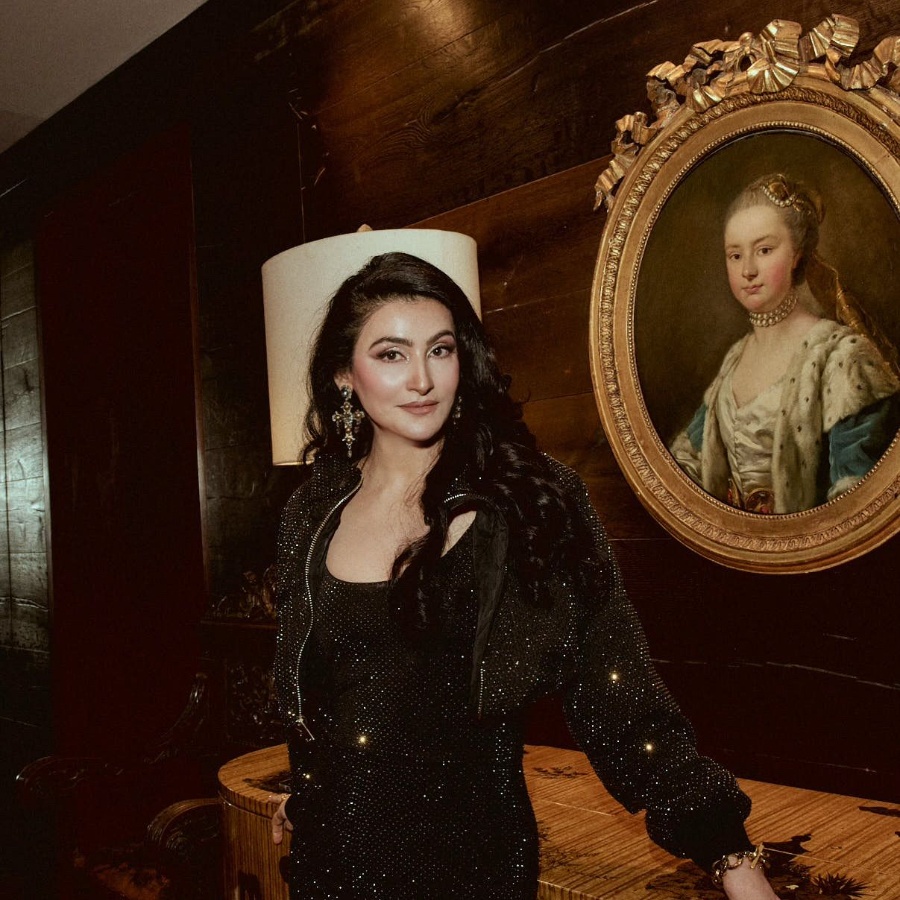
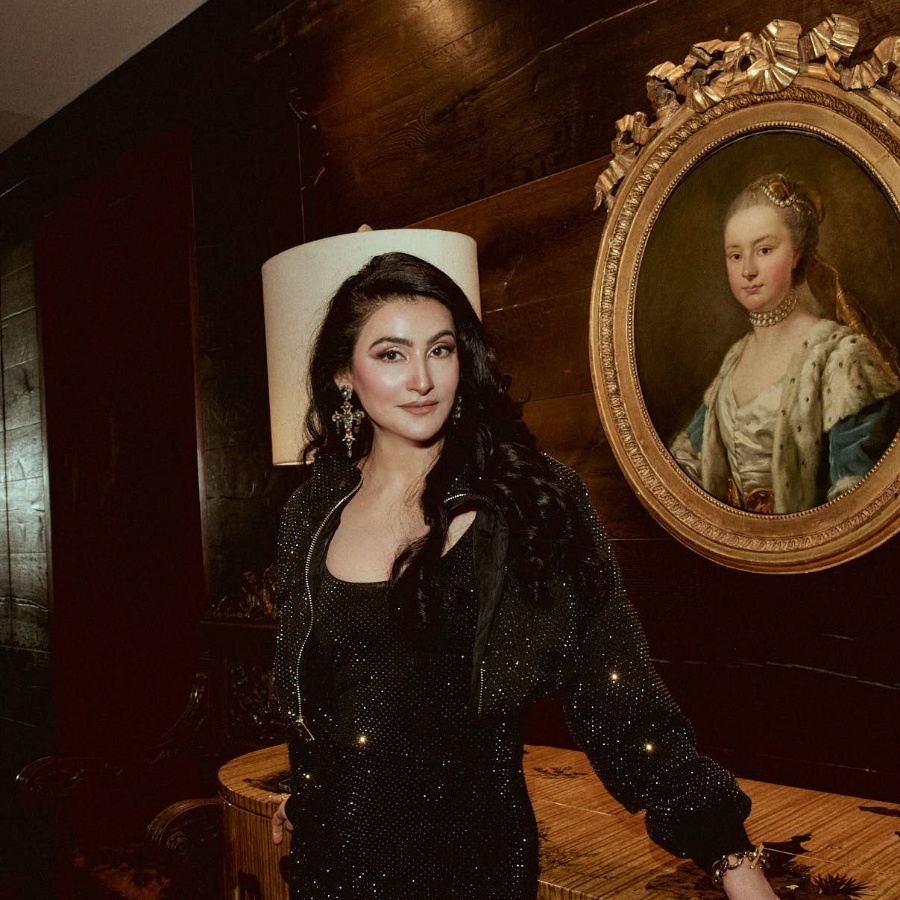
Then there is Passi, who runs the evening like a general and hosts it like a natural. One moment she is clocking that the dessert table is positioned slightly wrong and correcting it instantly, the next she is greeting a new arrival, pulling them into a photograph, introducing them to three people they should definitely know, and posing for a bank of cameras without breaking rhythm. Staff move when she moves. Details snap into place. It feels less like micromanagement and more like choreography.

She does all of this dressed like the evening’s main event herself, in an embellished flared-hem jumpsuit and matching jacket by Alice + Olivia, glinting under the lights as she moves between hostess, curator, and command centre. For Passi, hosting at home is not just preference, it is strategy. “People come from all over the world and they want to bond over good art and be comfortable,” she says. “A lot of art deals happen here. And for me, being at home makes it easy. Going out and interacting becomes difficult. Here, I’m meeting everyone on my terms.”

Long before the third season of Fabulous Lives of Bollywood Wives sent Passi flooding onto Instagram feeds and turned her into a pop culture fixation, she had already perfected this role. The show did not invent her presence. It simply made it impossible to ignore. “I feel very comfortable being here,” she says, gesturing around the house. “This is where I can really be myself.”

Over the years, her parties have been so legendary that she’s had her fair share of gatecrashers. People have tried sneaking in under false names in the past, she admits, which feels less like a security breach and more like a compliment. By the end of the night, someone finally risks sitting down and is gently told that it is, in fact, art. The Buddha remains calm. The bars remain crowded. And the fair, unofficially, has begun.

The Nod Newsletter

We're making your inbox interesting. Enter your email to get our best reads and exclusive insights from our editors delivered directly to you.