





“I only sweat in merino wool now” declares an influencer, announcing her switch from polyester leggings to those made of the natural fibre. “I don’t want to exercise in plastic,” declares another fashion Substack. As we scrutinise ingredient lists on skincare and protein powders, buy organic fruit and pay extra for consciously farmed coffee, it should come as no surprise that we’re finally paying attention to what sits against our skin when we sweat.
Increasingly, wellness enthusiasts and fitness creators are documenting their shift from activewear made of synthetic materials to those made of natural fibres. With the conversation gaining traction online, one might wonder: is activewear actually causing harm to our bodies?
Synthetic activewear made of polyester, nylon, and spandex is often treated with performance finishes for moisture management, odour control, or stain resistance, some of which have raised concerns about chemical exposure. A study published in Environmental Science & Technology suggests that sweat and skin oils can help certain chemical additives leach out of microplastics and sit on the skin’s surface. It’s not concrete proof that wearing a pair of leggings can cause harm, but it does complicate the idea that activewear is chemically inert.
For others, making the switch is about a larger decision to ditch fossil-fuel based materials and build a more sustainable wardrobe. Polyester makes up 59 per cent of total global fibre output which means it has a huge carbon footprint and is one of biggest sources of greenhouse gas emissions.
Beyond the polyester set
When New York-based Pranjal Jain began thinking about what would eventually become Praali Yoga, her frustration wasn’t with the materials but with the entire category itself. For something built around movement, activewear had spent a long time standing still. “The activewear industry is the only industry in fashion that has so little innovation,” she says, pointing to polyester leggings and sports bra sets that have dominated over the last decade.
“Why are there no mainstream Indian or South Asian-owned yoga clothing brands?” she recalls asking her mentor at eLab, Cornell’s entrepreneurship accelerator programme. “How weird is it that these random white men are designing clothes for women’s bodies?”
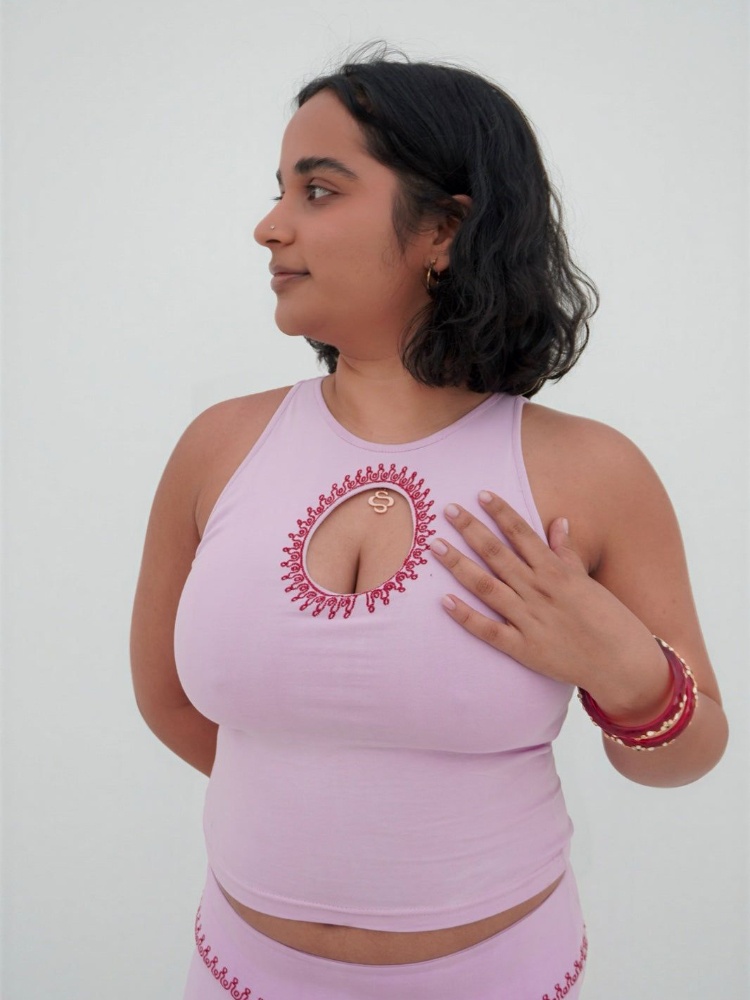
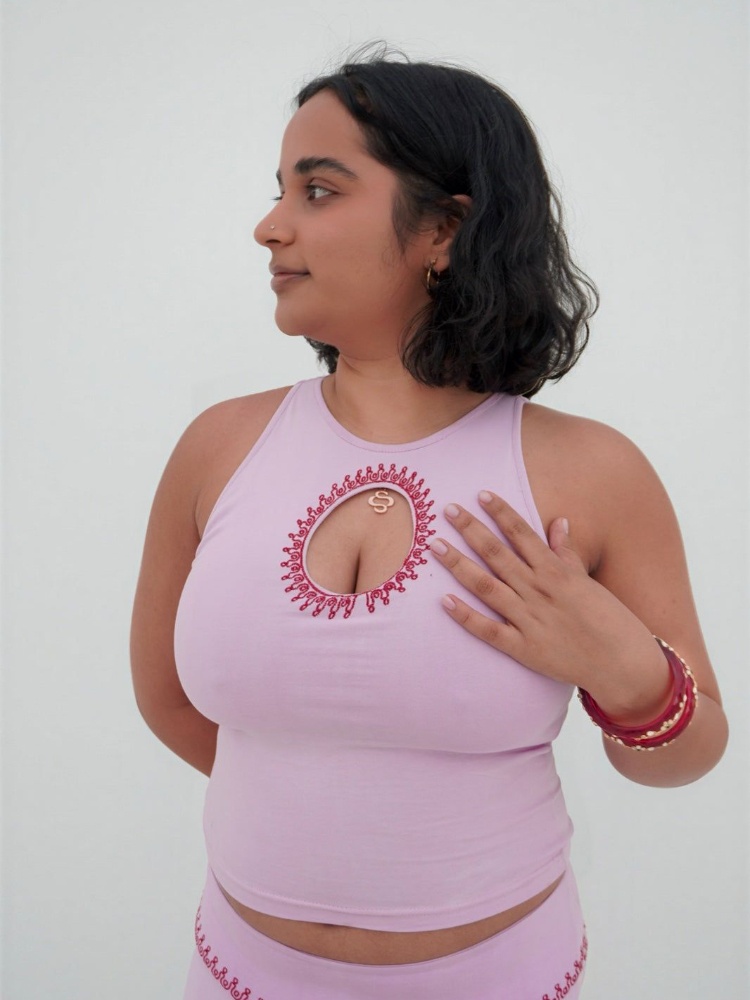
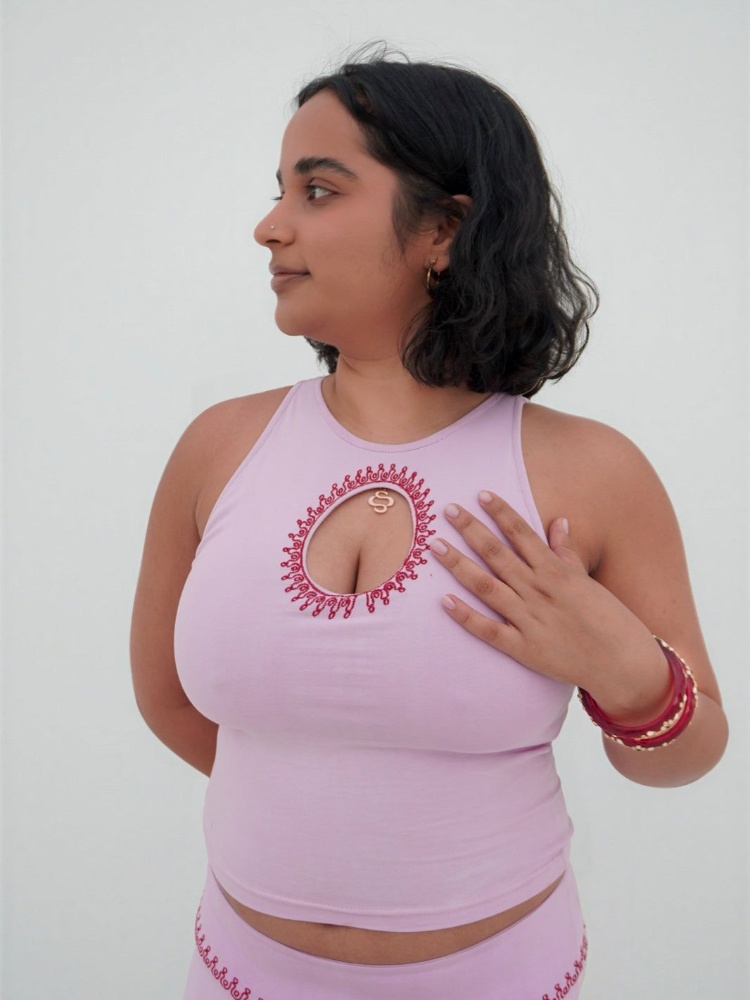
After teaching barre, completing her yoga certification, and working in fashion media, Jain launched Praali as an alternative. The label pairs organic cotton fabrics with block-print-inspired motifs, Kashida embroidery, and Bandhej references. Though Jain is based in New York, Praali Yoga is made in India, bringing craft traditions into a category long dominated by technical fabrics and minimalist basics.