





Covid had us all doing things we never thought we had time for—whipping dalgona coffees and baking focaccias. For me, it was strength training and eating healthy, practices I fell in love with and carry to date. So, when I checked into Tulah Clinical Wellness, Kerala’s newest wellness retreat—which is not all about spas and relaxation (although that’s on the menu too) but a serious clinical wellness resort that assesses your health before anything else—I was confident that I would top the class.
How terribly mistaken I was.
’coz gym selfies are not a health report
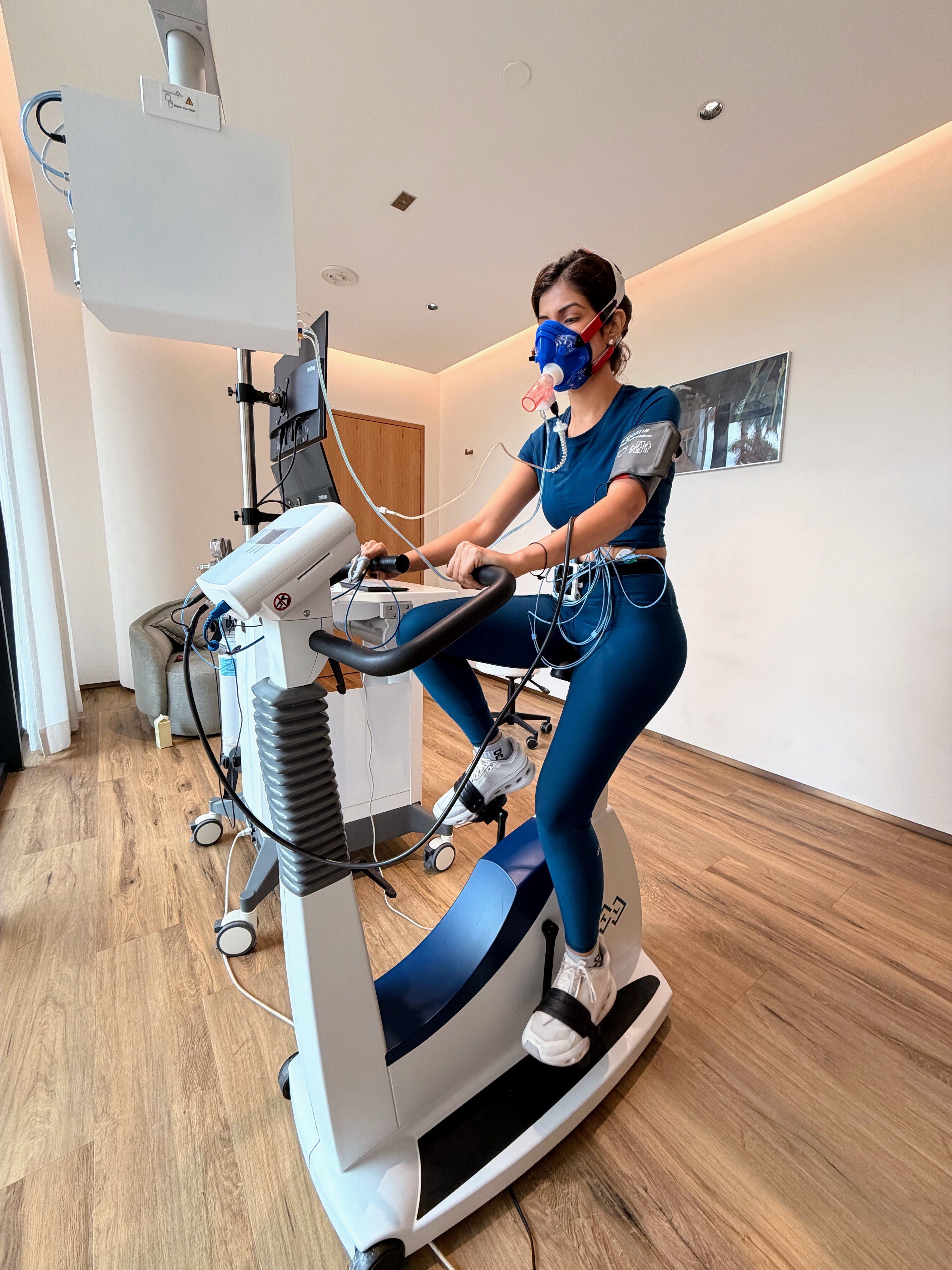
Soon after the standard blood work and body composition analysis, I found myself cycling (read: panting) on a bike to check my VO2 max, a score that determines how well your body pumps oxygen under stress. I was running out of breath faster than I’d like to admit, though my muscles featured in years of gym selfies. Then came the DEXA scan to test my bone mineral density. My T-score was -1.4, which is mild osteopenia territory. When I closed my eyes to balance on one leg during the fitness test, I realised I had the stability of a Jenga tower mid-collapse. And my cortisol levels blew my cover—my type-A personality was coasting on stress, not the discipline I’d been bragging about.
Turns out you can look and feel strong, but it’s hard to tell what’s going on within. A consultation with Dr Sumayya Sameer led me to understand that I could be weight training, but if I’m not meeting my protein requirements daily, my attempts to build muscle have gone in vain. My consultation with Ayurveda specialist Dr Nimisha Narendran helped me understand through a nadi pariksha that my irritable bowel syndrome flare-ups—a condition I had long endured—could be leading to malabsorption of nutrients and a vitamin D deficiency, which is why my bone health is so weak.
This is the whole premise at Tulah, where modern medicine is blended with 5,000 years of Ayurveda wisdom to get to the root of your problems and prevent them. There’s a team of 13 doctors on board, from a clinical psychologist to a dentist. “We hardly realise how poor oral health can lead to some of the most serious diseases, from cardiac problems to cancer,” said Dr Prafeena Phalgunan.
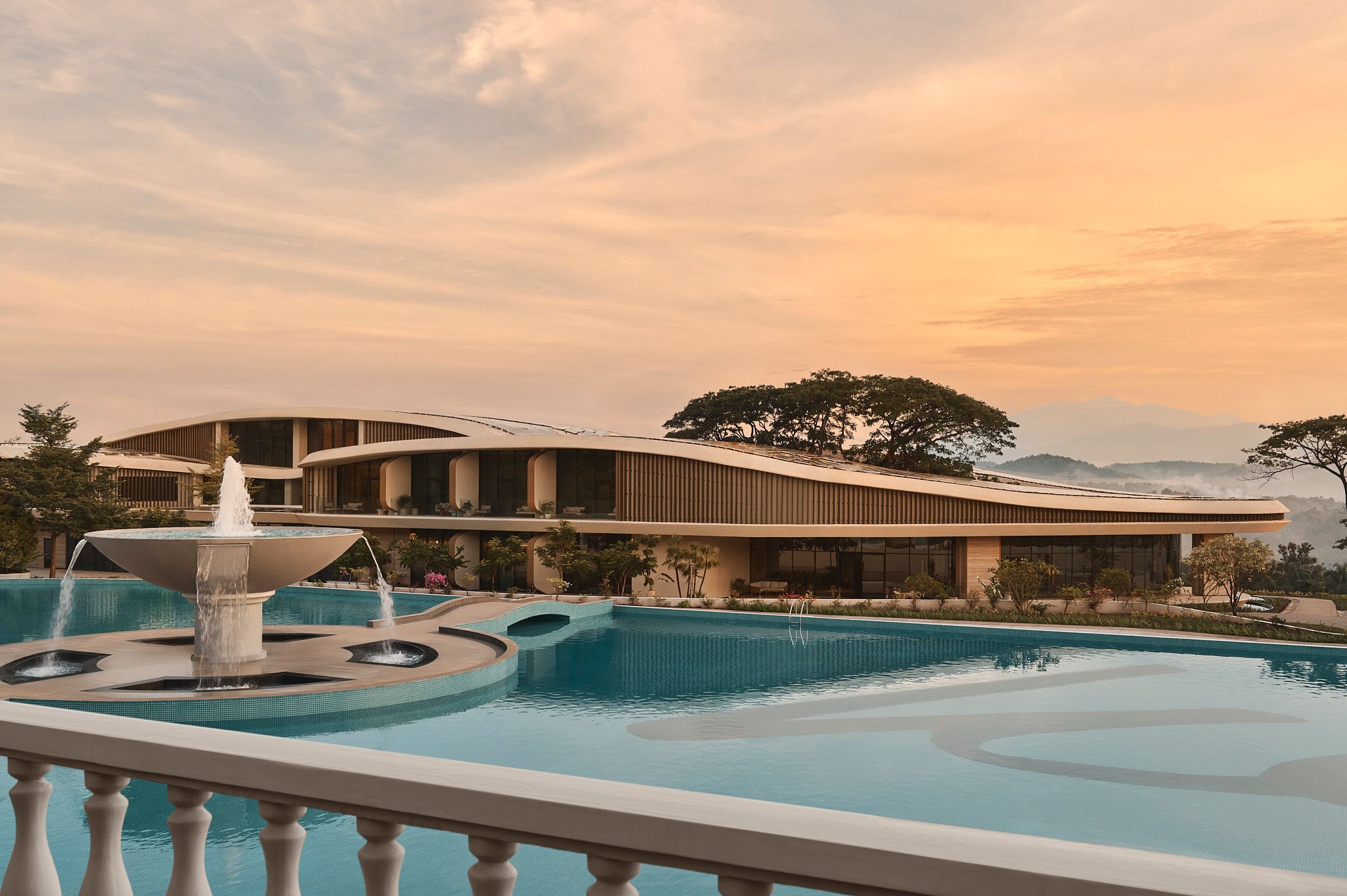
Tulah sits on 30 acres of land in Calicut surrounded by the Western Ghats, freshly rinsed from the monsoon and a shimmering green when I visited. This is where the founder, Faizal Kottikollon, was born, but it’s also where he healed. The Dubai-based billionaire industrialist turned philanthropist had suffered a compressed vertebra that damaged his nerves. It was Ayurveda he turned to when conventional answers ran out. He was prescribed brimhana, or tissue regeneration therapy, using a bolus made from goat meat blended with rice, milk, and spices. Three treatment cycles later, his cervical issue had resolved entirely, as per MRIs. The goat protein is believed to have pushed through the skin’s pores and into the nerves, where its RNA triggered regeneration of damaged tissue. It was this healing that seeded the idea of Tulah.
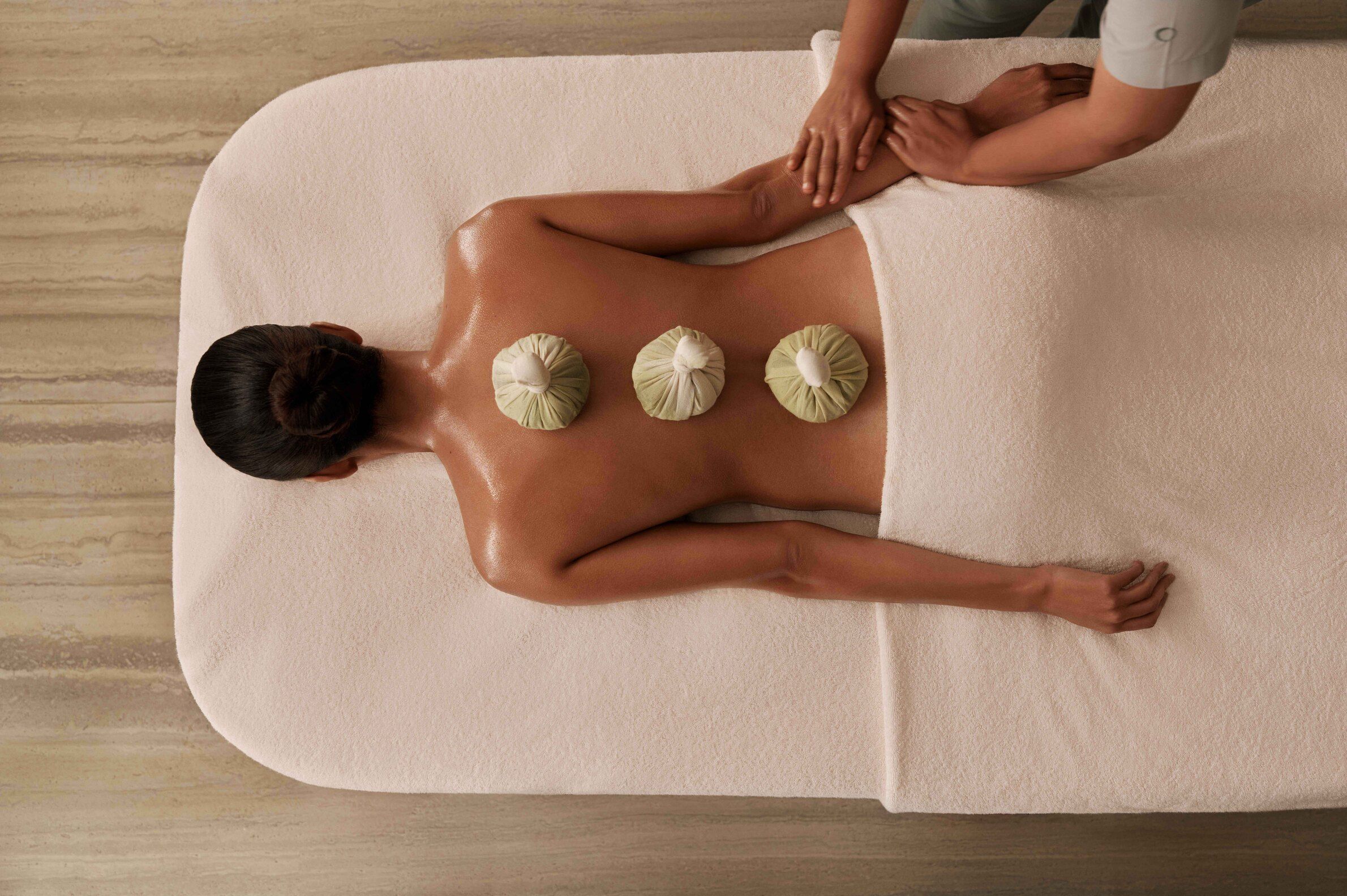
A little less stress, one treatment at a time
For my gut health, a 10-day panchakarma programme would have been the ideal fix, but with limited time my Ayurveda specialist settled for the next best thing—at-home remedies for my gut and cortisol-lowering treatments while I’m here.
My journey started with abhyanga, a four-hand massage so synchronised it felt like an orchestra. Gentle strokes with the palm and an herb-infused oil helped melt all the tension I’d walked in with. Later, I experienced shirodhara, where medicated buttermilk streamed over my forehead for nearly an hour. My favourite part of the treatment was that I could massage and shower in the same bed, courtesy of Vichy shower beds, which do away with the slippery walk to the shower once you’re done. On another day, I tried a Swedish massage, where my therapist, Manju, meticulously conquered every knot in my body. That evening, she also doubled as my watsu therapist. Floating in water, she cradled me like a baby, stretching my body and working in acupressure. I felt like I had been reborn.
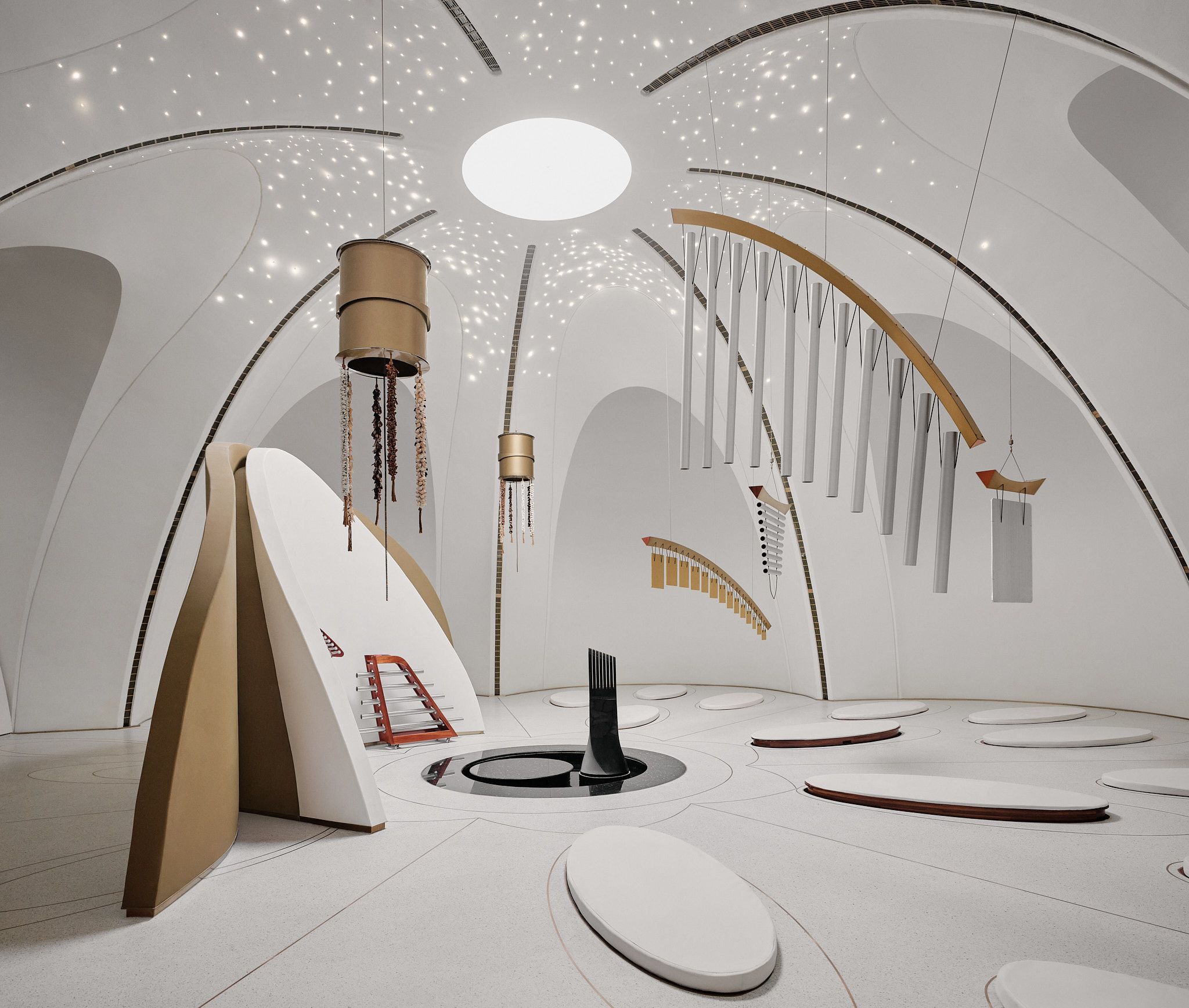
My healing journey continued at the sonorium, which is said to be the largest sound healing dome in the world. It has been designed to enhance sound frequencies, and each of the 47 instruments, from the singing bowls to the gongs and the chimes to the harps, has been custom-made in Puducherry. A few of the beds are sunk into the ground, so you can feel the vibrations go through you. Eyes closed, I felt like I was deep in an Amazon rainforest, with the sounds of birds calling, frogs croaking, trees swaying, and water flowing. Soon enough, my palms unfurled, my jaws loosened, and my shoulders finally came down from my ears.
Getting to the root of things
Tulah is big on technology, housing India’s first Exomind machine, an FDA-approved brain stimulator meant to treat anxiety and depression. While I did not need that, my tech neck was loosened up with a high-intensity electromagnetic treatment. It also houses a hospital with surgery rooms and intensive care units, and there’s a roster of 200 medics on call from the nearby Meitra private hospital, also owned by Kottikollon.
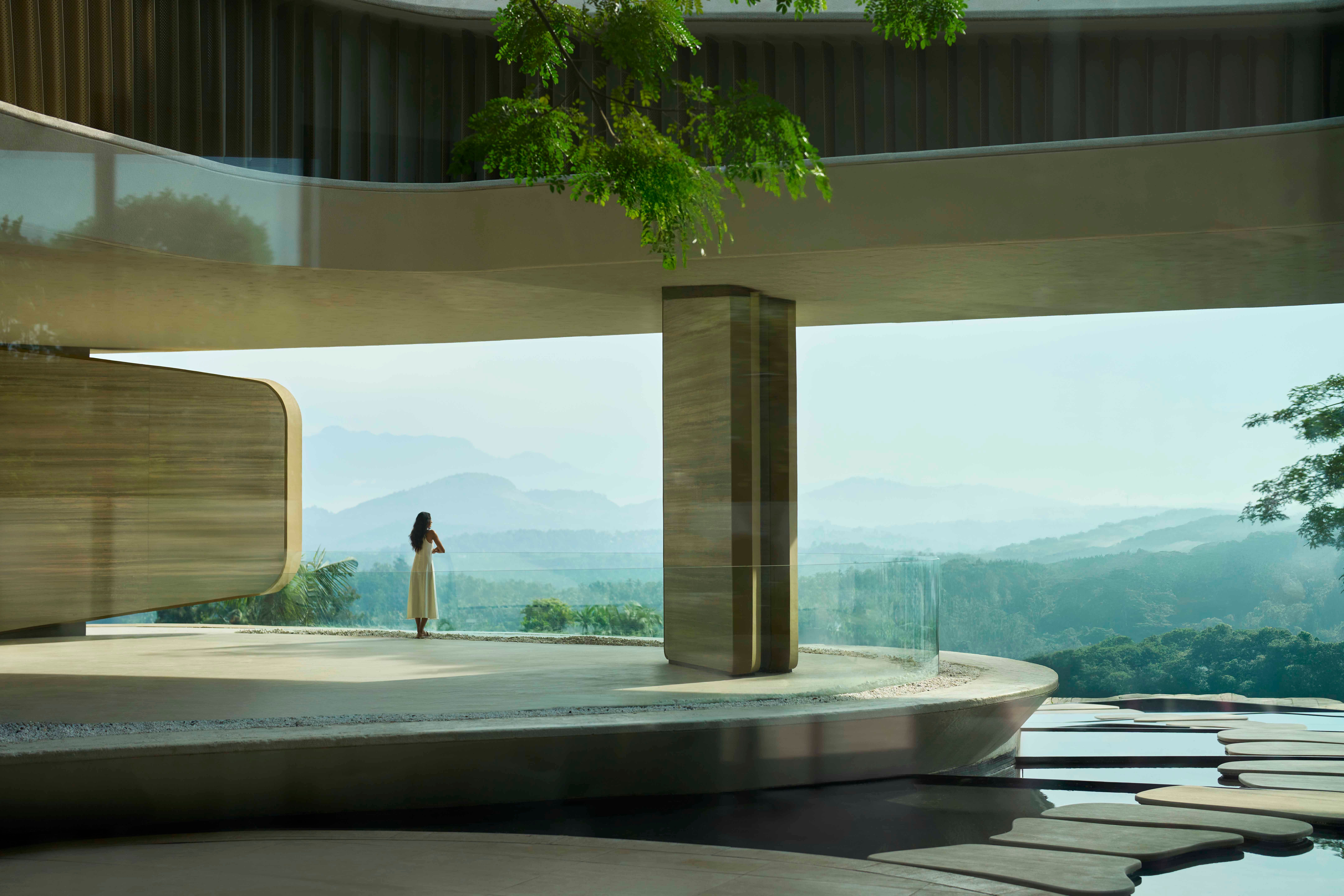
Between sessions, I took leisurely walks in the greenscapes and found myself in one of the many gardens crowned with fountains at the resort. Tulah’s central hub, with its many ebbs and flows, has a futuristic feel and has been built by Dubai-based Lami Architects, who were inspired by the works of the late Iraqi-British architect and Pritzker Architecture Prize winner Zaha Hadid. The 35 rooms and suites (more are slated to open) are spacious but minimalistic, dressed in muted tones. There’s attention to the tiny details—plug points are kept away from the bedside, and there’s a shelf stocked with books on wellness and travel. Nothing feels like an afterthought. Mornings begin with meditation, followed by any kind of movement, from pickle and padel to kayaking in the pool, which is as big as a lake. By day, a flautist serenades guests, and that melody even follows you into the steam room here. By night, the sonorium doubles up as a space for Sufi performances.
The reason many dread wellness resorts is the reason you should visit Tulah—the food. It’s wholesome and never feels restrictive. Think a healthy ramen for breakfast, zoodles and mezze platters for lunch, and lamb shorba, appam, and fish curry for dinner. And a whole lot of sugar-free desserts, from Basque cheesecake to beetroot halwa. Meal plans are devised with the help of a nutritionist, with an appropriate balance of carbs, fibre, and protein, and you’ll see nuts and seeds sprinkled on your salads so you also get your share of micronutrients and good fats.